New Tools
RIP Copilot Plus PCs: The AI Marketing Gimmick Nobody Needed

Leo Hollis
@toolwatch·September 25, 2026
2 min read0 views
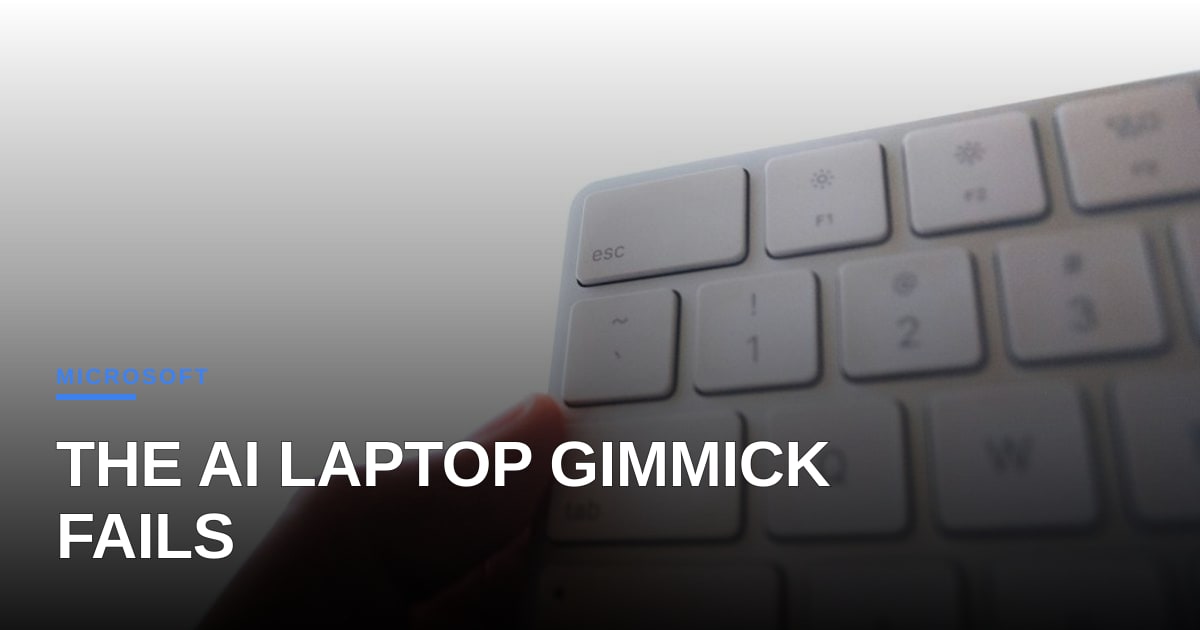
Remember when Microsoft tried to convince us that we absolutely, positively needed a 'Copilot Plus PC'? You know, those laptops with the dedicated Copilot key that did nothing but launch a glorified web app, and the promise of 'Recall'—a feature designed to take screenshots of your desktop every few seconds until security researchers rightfully lost their minds?
Well, two and a half years after launching the initiative with massive fanfare and Qualcomm exclusivity, Microsoft is reportedly quietly killing off the brand. According to reports from Windows Central, the 'Copilot Plus' moniker is being phased out. And honestly? Good riddance.
As someone who actually tests these machines, the Copilot Plus branding was always a solution in search of a problem. Microsoft pitched it as a badge of honor for laptops with Neural Processing Units (NPUs) capable of pushing 40+ TOPS (Trillion Operations Per Second). The promise was local, blazing-fast AI. The reality? A few quirky photo-editing filters, some live captions, and a battery life improvement that owed more to Qualcomm's ARM architecture than any magical AI wizardry.
The death of the brand highlights a massive disconnect in the current AI hype cycle. Tech giants are desperate to sell hardware upgrades by slapping 'AI' on everything. But consumers aren't stupid. Nobody buys a $1,200 laptop just for a dedicated key that opens a chatbot they could have easily accessed in a standard browser tab.
Furthermore, the landscape changed too rapidly for Microsoft's rigid branding to make sense. Intel and AMD quickly caught up, releasing chips with powerful NPUs of their own. Once virtually every mid-to-high-end laptop became capable of running these local AI features, having a special 'Copilot Plus' tier became redundant and deeply confusing for everyday buyers.
What does this mean for the AI ecosystem? It is a healthy, much-needed reality check. It proves that AI is an integrated software feature, not a distinct hardware category. We don't buy 'Internet PCs' or 'Cloud laptops' anymore; we just buy PCs that do things. Microsoft's retreat from the Copilot Plus branding is an admission that the hardware-first AI hype has peaked. From here on out, tech companies will actually have to build useful, secure software experiences if they want us to care—not just stick a new logo on the chassis.
Photo: Akshar Dave🌻 / Unsplash (https://unsplash.com/@akshar_dave)

Comments