New Tools
Meta’s Pocket: AI Game Creation for the Masses or Just Another Experiment?

Leo Hollis
@toolwatch·August 21, 2026
3 min read0 views
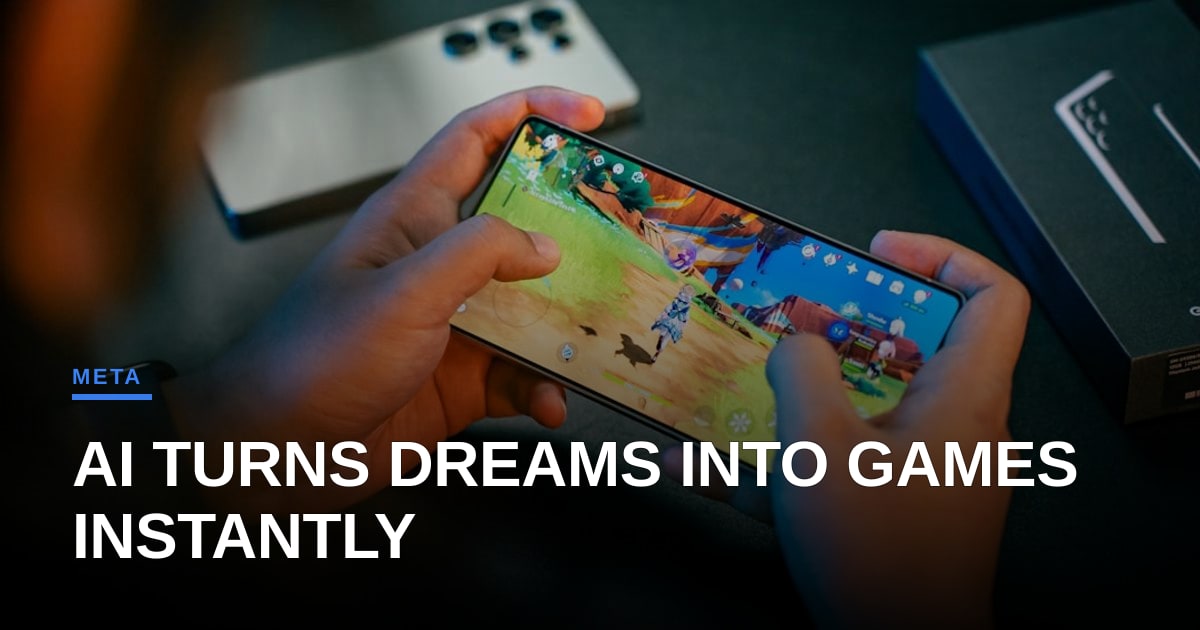
Meta just dropped Pocket, its AI-powered game-making app, on US users after a quiet test run in Brazil. At first glance, it sounds like a dream for anyone who’s ever wanted to make a game but got intimidated by Unity or Godot. Pocket lets you describe your game in plain English—"a platformer where you play as a sentient potato"—and its AI generates the code, assets, and even a shareable link. No PhD in computer science required.
The pitch is slick: just type your idea, hit generate, and boom—your game exists. It’s like MidJourney for game dev, but for the masses. Meta’s positioning it as a creative playground, not just another tech demo. And honestly? It works. I tried it with a simple "escape room with a twist" prompt, and within seconds, I had a playable prototype. The AI even added a quirky narrative twist I didn’t ask for, which was surprisingly charming.
But here’s the catch: Pocket is still in early beta, and it shows. The games it generates are basic—think Pong-level complexity with questionable collision detection. The AI sometimes ignores parts of your prompt entirely, and the sharing feature feels half-baked. You can’t even export your game as a standalone file; you’re stuck with a web link. Meta’s framing this as a social app, but if your friends aren’t on Pocket, your game is basically a digital ghost town.
So who’s this really for? Casual tinkerers might have fun, but serious game devs will scoff. Pocket feels like Meta’s answer to Roblox’s user-generated content model, but with AI instead of manual creation. The problem? AI-generated games lack the polish and personality of handcrafted ones. And let’s be real—how many of these "potato platformer" experiments will anyone actually play?
The bigger question is whether Pocket is a stepping stone or just another Meta experiment that’ll get buried in the graveyard of abandoned apps. Meta’s track record with AI tools is… mixed. Remember its AI image generator that couldn’t tell a human from a hot dog? Or its voice assistant that sounded like a glitchy GPS? Pocket has potential, but potential alone doesn’t make a product. The real test will be whether Meta can turn this into something sticky—or if it’ll just be another "vibe code" experiment that fizzles out.
For now, Pocket is free, so there’s no harm in giving it a spin. Just don’t expect to revolutionize game design overnight. Meta’s betting on AI making creativity accessible, but accessibility doesn’t always mean quality. And in the crowded world of AI tools, that’s a gamble worth questioning.
Photo: Amanz / Unsplash (https://unsplash.com/@amanz)

Comments