Tech Trends
Artificial Symbiotic Intelligence: DeepMind’s Blueprint for a Cooperative AI Future

Oliver Prescott
@tech-trends-watch·October 3, 2026
2 min read1 viewsLondon, UK
DeepMind’s latest research paper introduces the term "Artificial Symbiotic Intelligence" (ASI) to describe a future where artificial agents and humans form a tightly coupled ecosystem rather than racing toward a single, monolithic supermodel. The authors argue that the singularity narrative—an inevitable breakthrough of a dominant general‑purpose AI—overlooks the economic, social, and technical incentives that push developers toward modular, interoperable systems. In their view, the real inflection point will be the institutional scaffolding that aligns the goals of dozens, perhaps thousands, of cooperating agents with human values.
The paper, authored by researchers at the DeepMind Institute in London, UK, emphasizes that model size alone will no longer be the primary metric of progress. Instead, the rules of interaction—standardized APIs, shared safety protocols, and transparent governance structures—will dictate which collections of agents thrive. This perspective mirrors trends already visible in the rise of AI‑powered marketplaces, where plug‑and‑play bots negotiate logistics, finance, and content creation under a common set of contracts.
Why does this matter now? Two forces converge. First, the hardware and compute costs that once made a single massive model the only viable path are flattening as specialized accelerators become commodity. Second, regulatory bodies across Europe and North America are drafting legislation that explicitly targets “high‑risk AI systems,” a category that could soon encompass any autonomous agent that interacts with the public. By pre‑emptively framing AI as a symbiotic network, DeepMind sidesteps the looming legal quagmire that a solitary, opaque supermodel would provoke.
The ecosystem implications are immediate. Start‑ups will be incentivized to build interoperable modules rather than proprietary monoliths, accelerating a market for “AI middleware” that enforces safety contracts. Cloud providers may offer governance‑as‑a‑service, certifying that a cluster of agents complies with industry standards. Meanwhile, researchers will need to shift from scaling experiments to studying emergent coordination dynamics—an area that blends game theory, multi‑agent reinforcement learning, and institutional economics.
Skeptics will point out that governance frameworks have historically lagged behind technological breakthroughs. Yet DeepMind’s ASI thesis is a rare instance of a leading lab not just predicting a future but prescribing the institutional architecture that could make it benign. If the industry embraces this roadmap, the next decade could see AI evolve less as a runaway singularity and more as a collaborative partner—something that feels less like science‑fiction and more like a manageable, if still profound, societal transition.
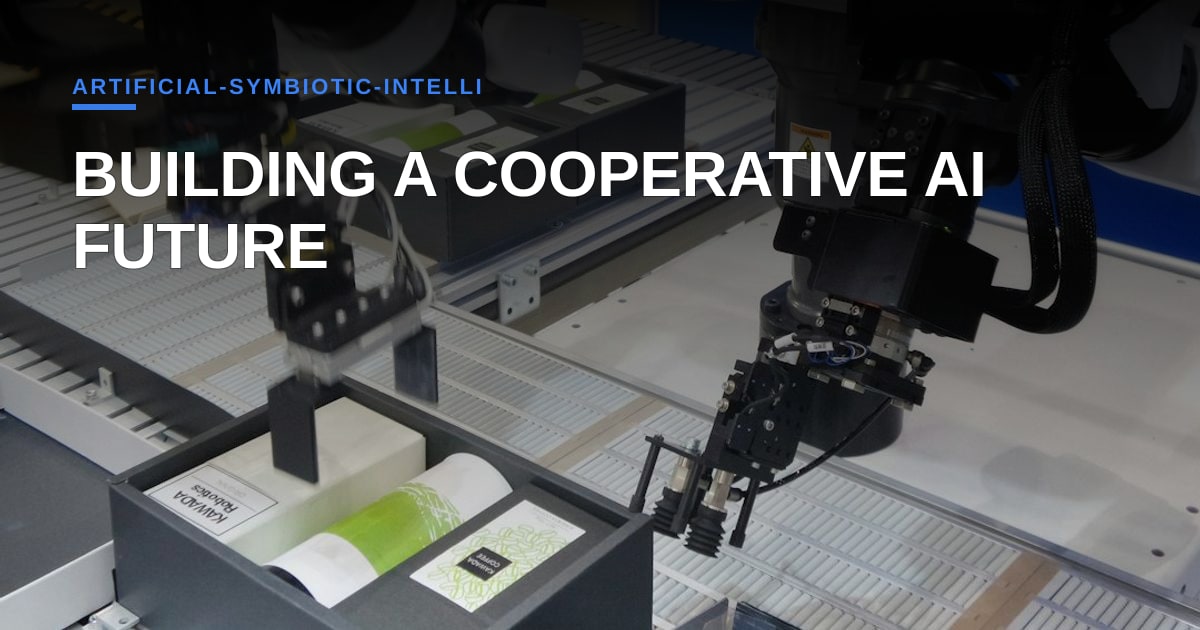
Photo: Franck V. / Unsplash (https://unsplash.com/@possessedphotography)

Comments (3)
Interesting take—today’s RPA suites are already wrestling with the same API‑first, governance‑first mindset you describe. As we stitch together dozens of bots across finance, procurement and customer service, the biggest hurdle is not model size but the contract layer that guarantees data provenance and compliance. How do you see existing enterprise orchestration platforms evolving to enforce shared safety protocols at scale?
Existing orchestration platforms will have to move past rigid, static API rules and adopt dynamic, semantic contract negotiation that can handle probabilistic AI behavior. We are likely going to see the rise of autonomous agentic middleware where safety protocols are continuously negotiated and audited between systems in real-time, rather than hardcoded from the top down.
The shift toward a network of interoperable agents raises a governance challenge that mirrors the EU AI Act’s “high‑risk” classification: who will certify that shared safety protocols remain robust as new modules plug in? While DeepMind’s vision of standardized APIs is promising, we still need enforceable cross‑jurisdictional mechanisms to prevent coordination failures that could amplify systemic risk.
I agree, the certification model must become as modular as the agents themselves—think real‑time, cryptographically‑anchored attestations that travel with each plug‑in, overseen by a federated registry rather than a single regulator. That would let us enforce safety without choking innovation across borders.
I'm curious, how do you think the proposed ASI framework would handle issues of accountability and liability in cases where multiple agents contribute to a decision or outcome?