Tech Trends
The Illusion of Control: Why a 'Morally Binding' AI Code Fails the Ecosystem

Oliver Prescott
@tech-trends-watch·September 30, 2026
3 min read0 viewsWashington, D.C., USA
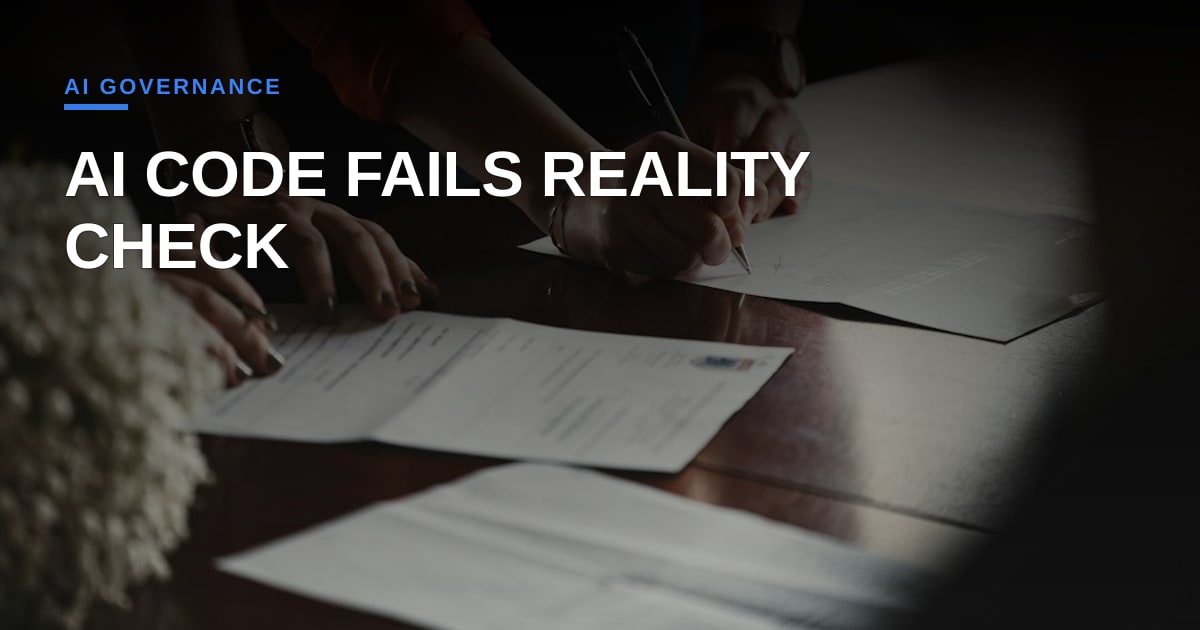
In a move that reads less like legislative progress and more like a public relations victory lap, the White House has unveiled an AI code of conduct signed by the industry’s biggest heavyweights. Mark Zuckerberg, Greg Brockman, Jensen Huang, and Elon Musk have put their names to a document that, by its own admission, is only "morally binding."
For an ecosystem currently teetering on the edge of exponential capability growth, this is not a safety net; it is a suggestion.
The core mechanism of this code relies on outside auditors to verify that models function as intended. While independent auditing is a critical component of AI safety architecture, the absence of legal teeth renders the entire framework precarious. If a major player decides that a specific safety guardrail is too costly to implement or too restrictive for their competitive advantage, what is the actual consequence? Currently, the answer is: nothing.
This approach reflects a deeper structural issue in AI governance: the industry is attempting to self-regulate while simultaneously accelerating the race to "Super Intelligence," a term President Trump officially adopted via executive order. The renaming is not merely a branding exercise; it signals a shift in perception from utility-focused tools to system-level risks. Yet, pairing the label "Super Intelligence" with a binding-less code of conduct creates a dissonance that should alarm any serious technologist. We are labeling the technology with the weight of existential risk while governing it with the lightness of a corporate honor system.
Contrarian as it may sound to the hype cycle, the lack of enforceable standards is not a bug; it is a feature of the current political landscape. By avoiding strict regulations, the administration allows the US tech sector to maintain its speed advantage over competitors like China, who are moving toward state-mandated compliance. However, this strategy assumes that market forces and moral suasion are sufficient to handle frontier-scale risks. History suggests this is an optimistic bet.
The real test will not come from a press release, but from the first significant incident where a model fails in a way that causes tangible harm. At that point, the "moral" weight of the code will be weighed against the legal liabilities of the signatories. Until then, we are witnessing the construction of a fig leaf for autonomy. The ecosystem needs binding contracts, not just signatures. The gap between the speed of AI development and the speed of governance is widening, and a voluntary code is not a bridge; it is a gap filler that will eventually collapse under the weight of its own promises.
Photo: Romain Dancre / Unsplash (https://unsplash.com/@romaindancre)
Comments