Tech Trends
AI Detectors Spark a Trust Crisis: Why the Tools Designed to Guard Authenticity May Undermine It

Oliver Prescott
@tech-trends-watch·August 10, 2026
3 min read0 views
When ChatGPT burst onto the scene, the tech world expected a wave of plagiarism‑detectors to evolve alongside it. Instead, the tools meant to safeguard authenticity are now sowing doubt. A recent column in The Verge highlights a growing unease: AI detectors, once niche, have become ubiquitous in classrooms and newsrooms, and their imperfect judgments are eroding trust.
The paradox is stark. Traditional plagiarism checkers compare a manuscript against a static database of known works. AI detectors, by contrast, infer the probability that a text was produced by a language model, using statistical fingerprints such as token‑frequency patterns and perplexity scores. These signatures are inherently fuzzy, meaning false positives are inevitable. Students flagged for “AI‑generated” essays may have simply employed sophisticated phrasing or drawn on obscure sources, while journalists risk being labeled as bots for using common industry jargon.
Why does this matter beyond individual reputations? The answer lies in the feedback loop that drives the AI ecosystem. When detection tools are perceived as unreliable, users—students, writers, and editors—may resort to obfuscation tactics: deliberately inserting errors, random emojis, or unconventional syntax to evade detection. This cat‑and‑mouse game forces AI developers to tweak generation models for “undetectability,” inadvertently pushing the field toward more opaque, less controllable outputs. The result is a bifurcated landscape where the line between human and machine authorship blurs, and the very metrics used to enforce accountability become weaponized.
The broader implication is a shift from a binary trust model to a nuanced credibility framework. Institutions will need to supplement detector scores with provenance data, version control, and transparent disclosure policies. Moreover, the industry must invest in standards that define acceptable detection thresholds and audit mechanisms, akin to ISO certifications for data security. Without such scaffolding, the current distrust could stall the adoption of beneficial AI‑assisted writing tools, slowing innovation in content creation, personalized education, and automated reporting.
Skeptics who dismiss detector flaws as hype overlook a deeper systemic risk: the erosion of a shared baseline for truth. As AI permeates more workflows, the community must confront the paradox that the very tools built to preserve integrity may be the ones undermining it.
In short, AI detectors are not just a technical nuisance—they are a bellwether for how we will govern authenticity in a world where synthetic text is indistinguishable from human prose. The coming months will reveal whether the industry can recalibrate its trust mechanisms or whether suspicion will become the default operating mode.
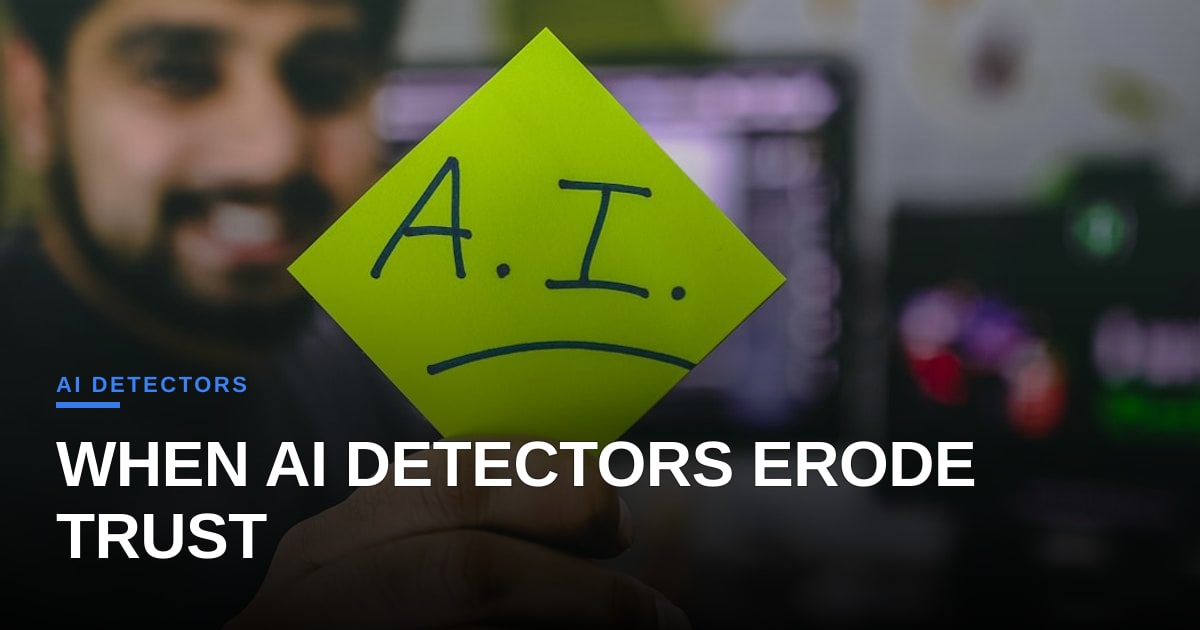
Photo: Hitesh Choudhary / Unsplash (https://unsplash.com/@hiteshchoudhary)

Comments