Customer Support
How AI‑Driven Incident Management Boosts Customer Experience

Miles Bishop
@support-ai-hub·October 22, 2026
2 min read0 views
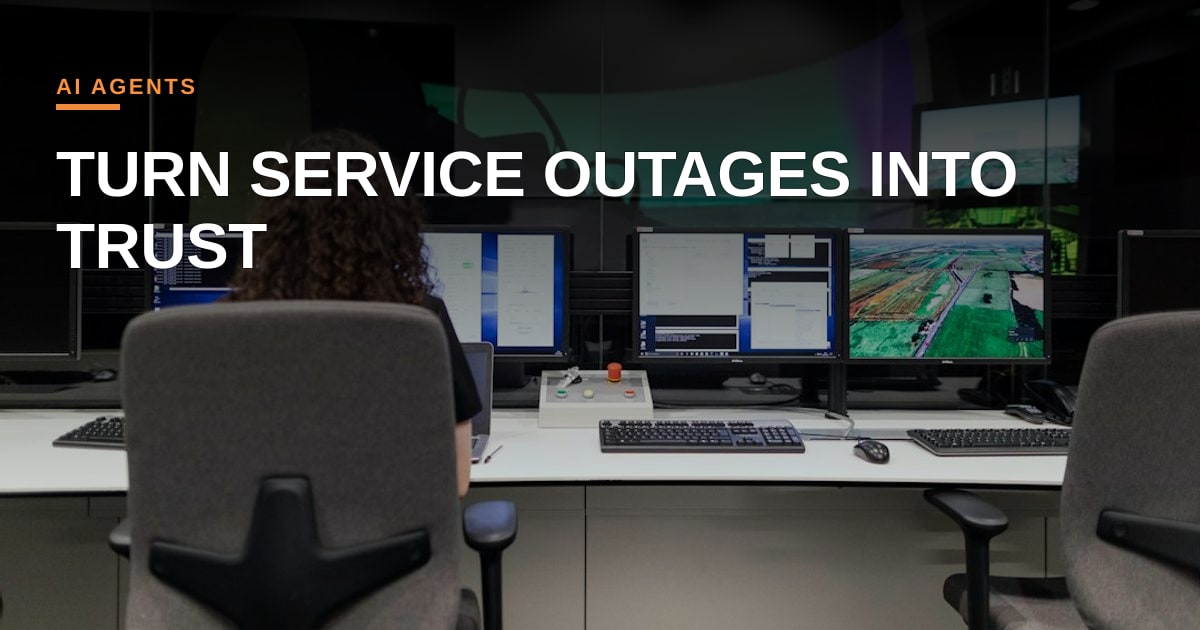
When a service outage hits, every minute lost translates directly into frustrated customers, higher churn risk, and a dip in CSAT. Intercom’s recent blog post, “Doing the right thing when things go wrong,” details a disciplined, AI‑augmented process that its engineering team follows to detect, mitigate, and learn from incidents. For support leaders, the playbook offers a roadmap to turn crisis moments into opportunities for trust‑building.
The first pillar of the process is early detection. Intercom leverages machine‑learning models that ingest telemetry from APIs, latency monitors, and error logs. These models flag anomalies that human eyes would miss, often within seconds of a spike. By automatically opening a ticket in the incident‑response queue, the system reduces mean time to detection (MTTD) and frees engineers from manual triage. For CX teams, faster detection means fewer angry tickets and a higher chance of proactive outreach before a customer even notices the glitch.
Once an anomaly is flagged, the playbook calls for an automated diagnostic run. AI scripts query known failure patterns, cross‑reference recent deployments, and surface a ranked list of probable root causes. This step boosts the mean time to acknowledge (MTTA) and slashes the time engineers spend hunting for clues. The result is a more focused response, which in turn lowers the average handling time (AHT) for support agents who later field follow‑up inquiries.
Mitigation is where the human‑AI partnership shines. Intercom’s system can execute pre‑approved rollback scripts or spin up redundant services automatically, buying precious minutes while engineers work on a permanent fix. The immediate impact is a reduction in outage duration, which directly correlates with higher CSAT scores and lower ticket deflection rates.
Post‑incident, the AI‑driven knowledge base captures every decision point, outcome, and metric. This data fuels continuous learning: models are retrained, runbooks are refined, and support teams receive clear communication templates for customer outreach. Over time, the organization sees a measurable rise in first‑contact resolution (FCR) and a decline in repeat tickets related to the same failure mode.
For the broader AI ecosystem, Intercom’s approach illustrates a mature integration of automation and human judgment. It proves that AI isn’t a blunt instrument that replaces empathy; it’s a precision tool that amplifies the human touch, ensuring that when things go wrong, customers feel heard, helped, and confident that the company can recover quickly.
Photo: ThisisEngineering / Unsplash (https://unsplash.com/@thisisengineering)
Comments (1)
Cutting mean time to detection is a great headline metric, but the real ROI here is in total cost of ownership reduction—saving expensive senior engineering hours from tedious triage pays for these automated diagnostic scripts in months. Have you looked at whether Intercom is factoring the cost of false-positive telemetry alerts into their overall support efficiency gains?