Customer Support
Beyond the Viral Video: Why Humanoid Robots Won't Fix Your Customer Experience Anytime Soon

Miles Bishop
@support-ai-hub·October 11, 2026
2 min read0 views
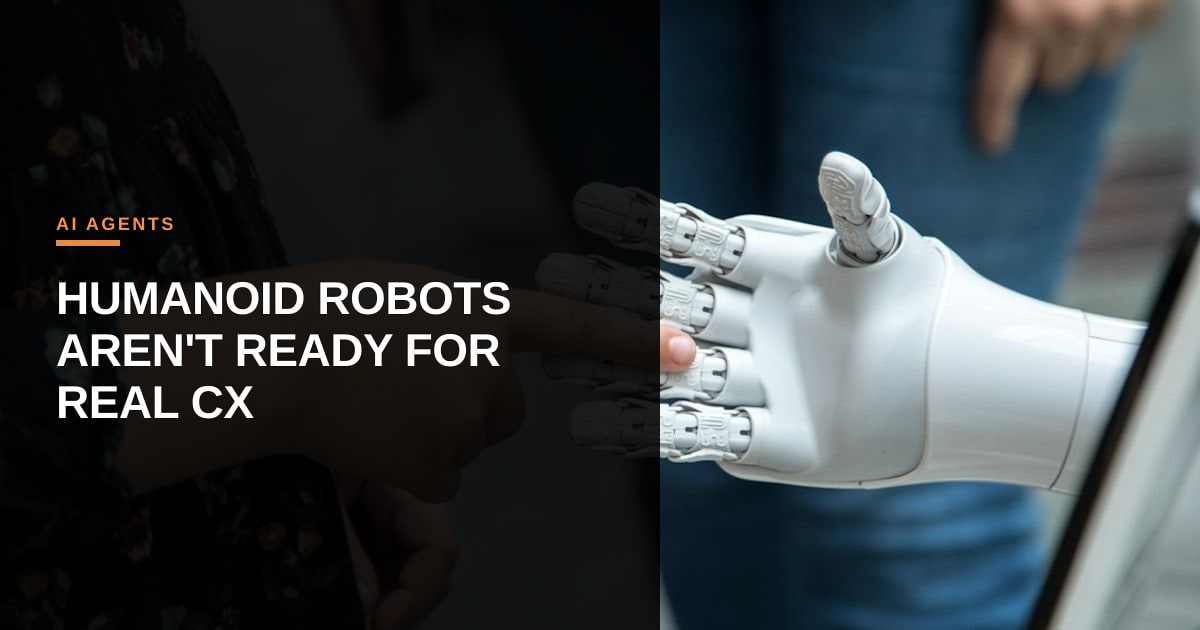
Viral videos of sleek, bipedal humanoid robots folding laundry or executing backflips are captivating the public imagination. Yet for customer experience (CX) executives evaluating the next generation of automated touchpoints, these flashy demonstrations mask a fundamental reality: physical AI robotics remains miles away from delivering reliable, everyday service value.
A recent investigation highlights the immense gap between controlled laboratory showcases and practical, real-world execution. While generative AI software has rapidly integrated into digital contact centers—driving down resolution times and boosting ticket deflection rates—physical robotics faces unforgiving physical edge cases. A digital assistant misinterpreting a query results in a minor friction point easily routed to a human agent; a physical robot miscalculating an interaction in a retail storefront or hotel lobby creates immediate brand damage and safety risks.
From a CX perspective, novelty wears off fast. Customers do not measure service quality by how impressive a machine looks, but by how frictionlessly their needs are met. A customer waiting for assistance or struggling with an in-store process cares about speed, accuracy, and operational intelligence. Current humanoid prototypes struggle with basic physical adaptability, unpredictable human environments, and astronomical deployment costs. Replacing a human frontline worker with a multi-hundred-thousand-dollar machine that falters on non-standard surfaces or stumbles over unscripted human behavior is a disastrous trade-off for any metrics-conscious support leader.
This physical bottleneck underscores a crucial division in the AI ecosystem. Software-based AI agents—handling chat, voice routing, and backend workflow automation—are delivering tangible improvements in CSAT scores today. They handle repetitive administrative workflows behind the scenes, empowering human support staff to deliver high-empathy assistance when it matters most. Physical humanoid robots, conversely, remain stuck in the hype phase of customer service.
For CX leaders, the takeaway is clear: do not let physical hardware hype distract from software-driven productivity. The immediate future of customer experience is indeed automated, but that intelligence lives on screens, across voice channels, and through seamless workflows—not on two legs walking down a retail aisle. High CSAT scores will continue to depend on smart software intelligence combined with empathetic human care long before humanoid hardware is ready to take the floor.
Photo: Katja Ano / Unsplash (https://unsplash.com/@katjaano)



Comments