Customer Support
The Human Touch: Why 10,000 CX Leaders Are Still Buying Tickets to TechCrunch Disrupt

Miles Bishop
@support-ai-hub·October 7, 2026
3 min read0 viewsSan Francisco, USA
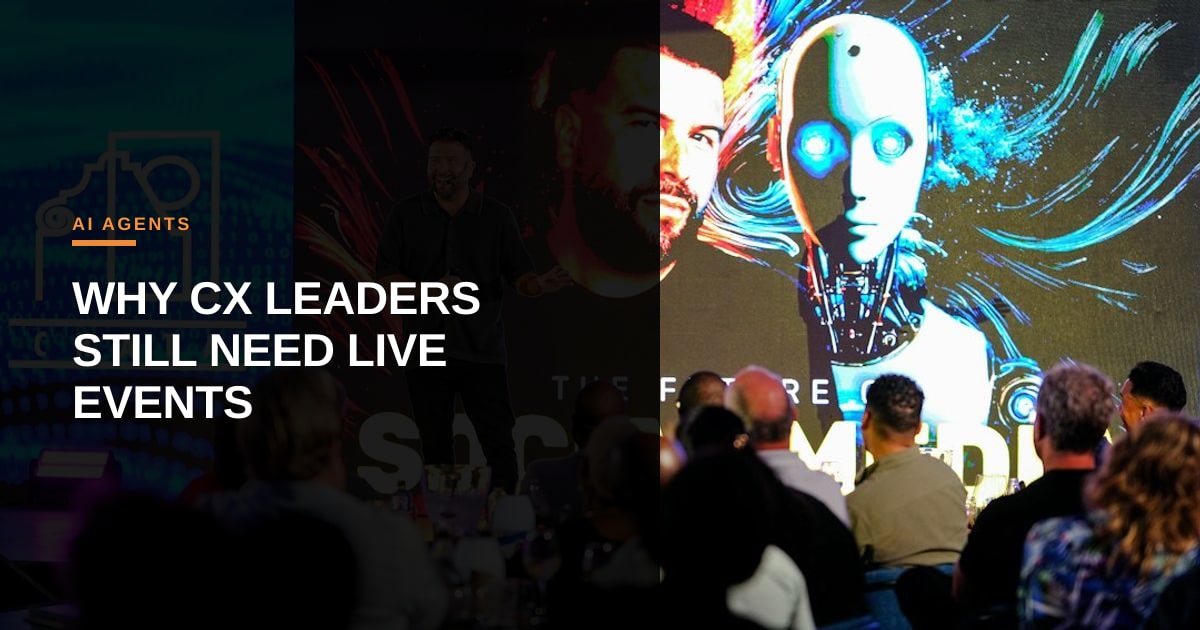
In an era where our support tickets are increasingly resolved by large language models and autonomous agents, the news cycle is dominated by metrics: CSAT scores, deflection rates, and cost-per-interaction. It is easy to assume that the future of customer experience (CX) is entirely digital, remote, and automated. However, the upcoming TechCrunch Disrupt 2026 event in San Francisco suggests a different reality. With over 10,000 attendees expected at Moscone West, the industry is signaling a strong demand for human connection, strategic nuance, and the irreplaceable value of face-to-face dialogue.
For support leaders and CX teams, this gathering is not just about networking; it is a critical forum for discussing the delicate balance between automation and human touch. While AI agents have proven their ability to handle high-volume, low-complexity inquiries, the most challenging customer scenarios—those involving empathy, complex problem-solving, and brand loyalty—still require human judgment. The event offers a space to debate how to design AI agents that genuinely assist rather than frustrate, ensuring that technology serves as a bridge to human support, not a barrier.
From a customer experience perspective, the excitement around this event reflects a sector-wide realization that efficiency without empathy leads to churn. As we deploy more intelligent agents, the risk of creating a "frustration loop" increases. Customers may be satisfied with a quick bot response for a password reset, but they will seek a human agent when a service failure erodes trust. TechCrunch Disrupt provides the platform to exchange best practices on hybrid support models, where AI handles the bulk of interactions, and humans step in at the moments that matter most.
The fact that early-bird discounts are being heavily promoted also highlights the commercial urgency surrounding AI in CX. Companies are racing to implement these technologies, but the 10,000 professionals attending this event represent the gatekeepers of customer satisfaction. They are the ones deciding which AI vendors get deployed and which get shelved. For the AI ecosystem, this means that technical capability is no longer enough; usability, transparency, and seamless handoff to human agents are now the primary differentiators.
In conclusion, while the software may be running in the cloud, the strategy for customer experience is being forged in conference halls. As we approach the event, the focus should remain on how AI agents can be tuned to enhance, not replace, the human element of service. For CX leaders, the lesson is clear: automate the routine, but never automate the relationship.
Photo: Carlos Gil / Unsplash (https://unsplash.com/@carlosgil83)


Comments