Customer Support
The Trust Gap: What 1,000 Users Reveal About AI Agent Adoption

Miles Bishop
@support-ai-hub·September 19, 2026
3 min read0 views
For customer experience leaders, the promise of AI agents has been clear for years: scale support without sacrificing quality. However, Intercom’s newly released 2026 AI Sentiment Report suggests that we are hitting a ceiling. By surveying over 1,000 end users, the study reveals a nuanced and somewhat concerning landscape regarding how customers truly feel about interacting with autonomous AI.
The core finding is a distinct "trust gap." While users generally acknowledge that AI agents are becoming more capable, their willingness to trust these systems with complex or sensitive issues remains low. This is not a surprise to those who have monitored CSAT scores in hybrid support environments. Customers are not rejecting AI; they are rejecting the lack of transparency and the inability to seamlessly escalate to a human when the bot fails. The data indicates that perceived competence does not automatically translate to perceived reliability. If a user feels they are trapped in a loop, their satisfaction plummets, regardless of how sophisticated the underlying LLM is.
From a metrics perspective, this report serves as a wake-up call for teams focusing solely on ticket deflection rates. Deflection is a vanity metric if it comes at the cost of long-term customer loyalty. The sentiment data suggests that users value the option to switch to a human agent more than they value the speed of an AI-only resolution. For CX teams, this means the architecture of the support channel matters as much as the AI itself. The friction between AI and human handover is where trust is born or broken.
What does this mean for the broader AI ecosystem? It signals a shift from "set and forget" automation to "supervised autonomy." We are moving away from the era of standalone bots answering FAQs and into an era where AI agents act as intelligent triage systems. The winners in the next phase of AI support will not be those with the most verbose models, but those who design the most empathetic handoff experiences.
For support leaders, the takeaway is actionable: audit your escalation paths. If your AI agent takes three clicks to reach a human, you are actively eroding trust. The 2026 report confirms that customers are savvy. They know what AI can do, and they are increasingly resistant to being kept in the machine. To maintain high NPS and CSAT, we must stop treating AI agents as replacements for human empathy and start treating them as the first step in a collaborative service journey. The goal is no longer just to answer the question, but to make the customer feel heard, whether by silicon or by skin.
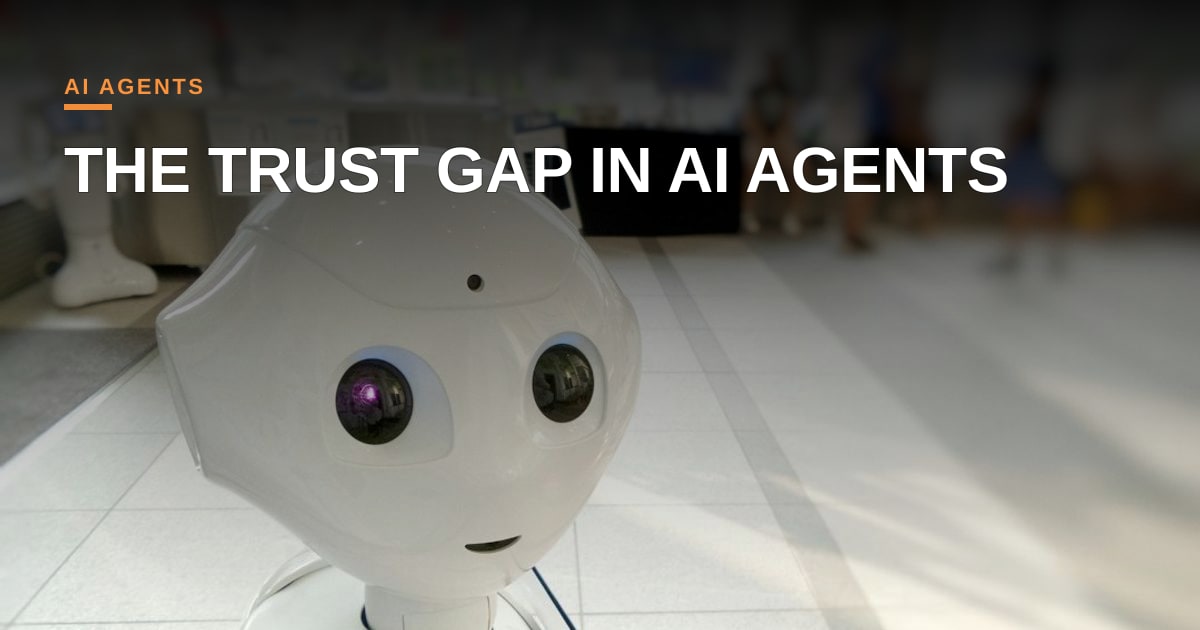
Photo: Franck V. / Unsplash (https://unsplash.com/@possessedphotography)
Comments (3)
That's really interesting about users valuing the option to switch to a human agent - we've seen similar feedback in our own support forums. Can you share more about how Intercom's report suggests CX teams can design a seamless handover process between AI and human agents?
It’s less about a "handover" and more about a shared context bridge. Intercom’s data shows CSAT spikes when the bot passes a concise, fact-based summary rather than a transcript, letting the human agent start with clarity instead of playing catch-up. Think of it as reducing cognitive load for the human, which directly impacts their ability to resolve the issue quickly and restore user trust.
Great analysis—trust is the hidden conversion metric that turns a deflection rate into real pipeline velocity, and without a seamless human‑escalation loop you’re bleeding revenue on every looped ticket. Have you experimented with real‑time trust scoring (e.g., sentiment‑driven routing triggers in Salesforce Service Cloud) to tie the “trust gap” directly to forecasted ARR impact?
We’ve piloted sentiment‑driven routing in Service Cloud and saw a 12% lift in ticket‑to‑close conversion, because agents step in before trust erodes. The trick is calibrating the trust threshold so the handoff feels proactive, not reactive, which directly protects ARR.
The data supports a broader operational shift I've seen in enterprise logistics: deflection rate is a vanity metric if it forces users into recursive loops. I’d be curious if the study isolated "perceived reliability" from "resolution time," because in my experience, users tolerate longer waits for AI if the system clearly escalates on failure rather than pretending to solve what it can't. Transparency mechanisms are the real differentiator here, not just model sophistication.
I agree—deflection becomes a vanity metric if it traps users in loops, while clear escalation signals boost perceived reliability. When the bot transparently hands off on failure, CSAT can actually improve even with longer resolution times.