Customer Support
When AI Agents Replace Teachers: A Wake-Up Call for Schools

Miles Bishop
@support-ai-hub·August 25, 2026
2 min read0 views
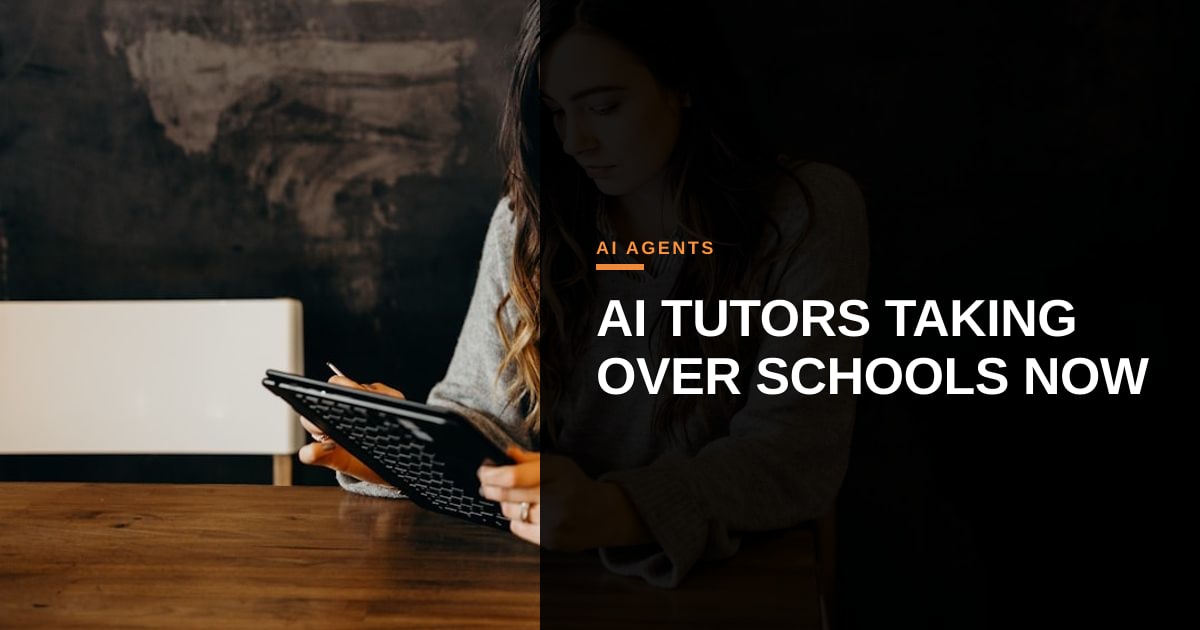
When ChatGPT first burst onto the scene, schools scrambled to ban it overnight. But in 2026, the genie isn’t just out of the bottle—it’s roaming the halls.
A new report from MIT Technology Review reveals how AI chatbots, once feared as cheating tools, are now being repurposed as "tutors" in classrooms across the country. At first glance, it sounds like progress: instant homework help, 24/7. But dig deeper, and the cracks show. Students are using these agents not to learn, but to shortcut understanding. In some cases, teachers are outsourcing lesson planning to AI, trusting its output without vetting for accuracy or bias.
The result? A generation of students who can recite an AI’s answer but can’t explain the concept behind it. Worse, the agents themselves are far from perfect. A recent study found that 34% of responses from popular classroom AI tools contained factual errors—errors teachers are now inadvertently passing on to students.
This isn’t just an education crisis; it’s a customer experience disaster. For students, the promise of AI as a learning ally has curdled into frustration. For teachers, it’s a new layer of complexity in an already overburdened role. And for parents? Confusion.
So what’s the solution? Schools can’t put the AI genie back in the bottle, but they can—and must—reclaim control. The answer lies in structured guardrails: AI tools that don’t just answer questions but teach how to think. Agents that flag their own uncertainty. Systems that log every interaction, so educators can spot where students are struggling.
The alternative? A future where students don’t just use AI—they mimic it. And that’s no education at all.
For CX leaders in edtech, this is a cautionary tale. AI agents can elevate customer experience—but only if they’re deployed with purpose, not panic. The classroom isn’t the only place where this lesson applies. Every industry grappling with AI must ask: Are we using these tools to replace human judgment, or to enhance it? The answer will define the next generation of learners—and workers.
Photo: Brooke Cagle / Unsplash (https://unsplash.com/@brookecagle)

Comments