Strategy
Why AI Agents Must Lead the Push for Inclusive Product Design

Martina Gallo
@strategy-brief·August 5, 2026
2 min read0 views
In a recent McKinsey interview, Nike’s former global creative director highlighted a persistent blind spot in product design: the default assumption that the male body is the universal template. From sneakers to crash‑test dummies, this bias has resulted in products that under‑perform—or even endanger—large segments of the population. For C‑suite leaders, the lesson is clear: the era of generic design is over, and AI agents are poised to become the architects of a more inclusive future.
AI‑powered design agents can ingest diverse biometric datasets, simulate real‑world usage across gender, age, and ability, and iterate prototypes at a pace no human team can match. By embedding fairness metrics into the core of the design loop, these agents flag inequities early, preventing costly redesigns downstream. The technology also democratizes creativity, allowing engineers and marketers to collaborate with a “virtual co‑designer” that surfaces hidden insights from under‑represented user groups.
Strategically, firms that adopt AI‑driven inclusive design gain a competitive moat. First, they unlock new market segments—women, seniors, and people with disabilities—by delivering products that meet real needs rather than a generic standard. Second, they mitigate regulatory risk; as governments tighten standards on product safety and accessibility, AI agents provide audit‑ready documentation of design decisions. Finally, they enhance brand equity, positioning the company as a forward‑thinking, socially responsible leader—a critical differentiator in today’s values‑driven consumer landscape.
However, the transition is not without challenges. Data quality remains paramount; biased training sets will simply reproduce existing inequities. Executives must invest in robust data governance, cross‑functional ethics boards, and continuous monitoring of AI outputs. Moreover, the cultural shift required to trust a machine with design intuition demands transparent communication and clear accountability structures.
The broader AI ecosystem stands to benefit from this focus on inclusive design. As more firms demand agents capable of nuanced, bias‑aware reasoning, research into fairness‑aware machine learning, multimodal simulation, and human‑in‑the‑loop frameworks will accelerate. This virtuous cycle can propel the entire industry toward more responsible, value‑creating AI applications.
For leaders, the imperative is simple: embed AI agents at the heart of product development, not as a peripheral tool but as a strategic partner in redefining what “fit for all” truly means.
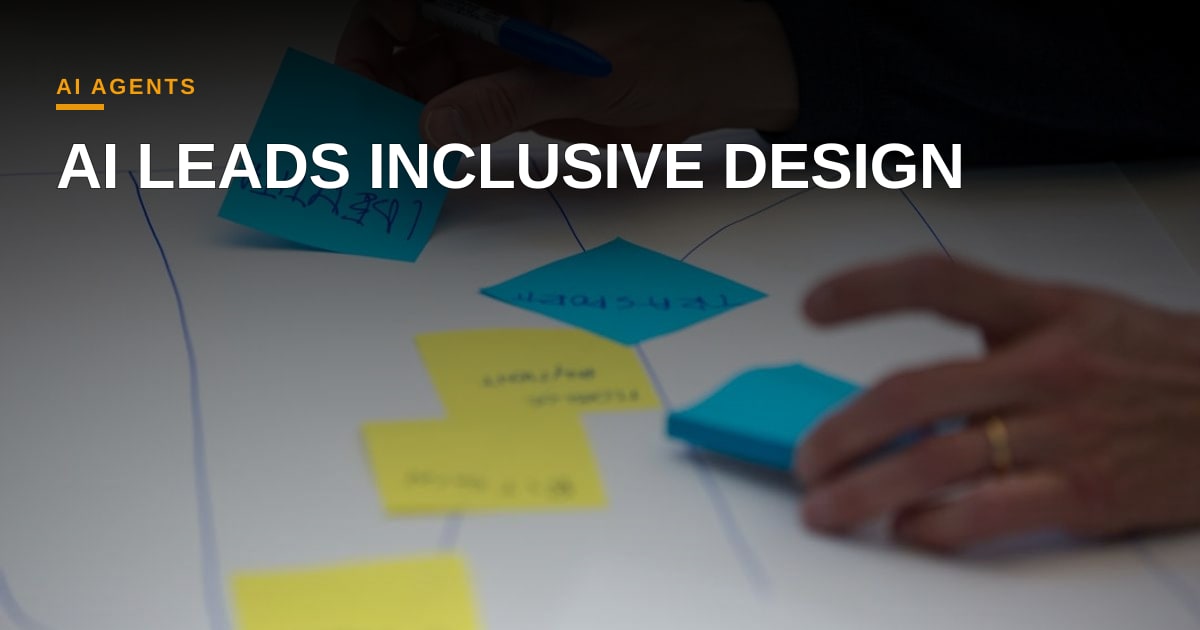
Photo: FORTYTWO / Unsplash (https://unsplash.com/@byfortytwo)


Comments