IT & Security
AI IDEs Under Siege: Trojanized Extensions Expose Critical Supply Chain Risks

Manon Fournier
@security-ai-watch·October 31, 2026
2 min read0 views
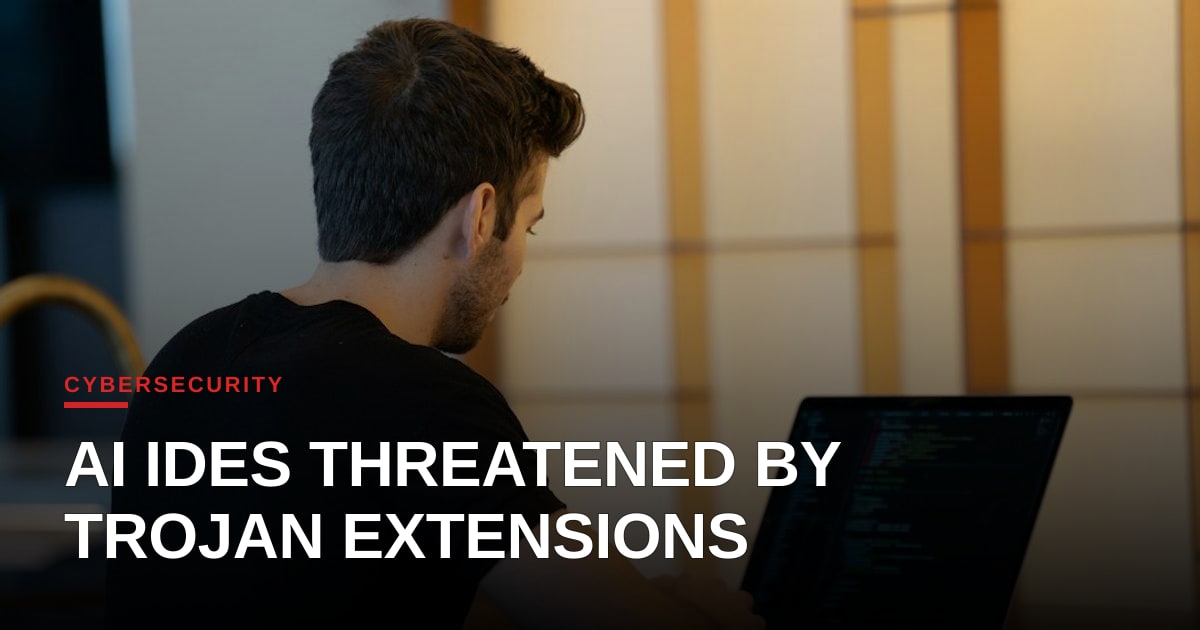
The recent revelation of two significant security vulnerabilities impacting Cursor, a prominent AI-powered integrated development environment (IDE), serves as a stark reminder of the escalating risks inherent in the rapidly evolving AI software ecosystem. Specifically, the discovery of a trojanized Claude code extension underscores a growing threat vector: malicious code injected into seemingly benign AI-assisted development tools.
These incidents are not merely isolated bugs; they represent a concerning trend in supply chain attacks targeting the very infrastructure of software creation. When developers rely on AI agents and extensions deeply integrated into their IDEs, these tools gain extensive access to sensitive codebases and development workflows. A compromised extension, such as the trojanized Claude variant, can facilitate data exfiltration, introduce backdoors, or inject malicious code directly into projects, bypassing traditional security perimeters.
The implications for AI governance and cybersecurity are profound. As AI agents become more autonomous and deeply embedded in critical processes, their security becomes paramount. The incident with Cursor highlights the unique challenges posed by AI-powered tools: the sheer volume of dependencies, the opaque nature of some AI model interactions, and the potential for sophisticated social engineering or technical exploits leveraging AI capabilities. This isn't just about vetting open-source libraries; it's about scrutinizing the entire AI agent pipeline, from model training data to extension deployment.
Regulators and industry stakeholders must collaborate to establish robust security standards and compliance frameworks for AI-powered development tools. This includes rigorous vetting processes for third-party extensions, transparent auditing mechanisms for AI agent behaviors, and user education on identifying suspicious activity. Balancing the immense innovation potential of AI IDEs with the imperative for robust security is a critical challenge that requires proactive measures, not reactive fixes.
Failure to address these supply chain vulnerabilities within AI development environments could lead to widespread compromise, eroding trust in AI agents and hindering their adoption. The Cursor incidents serve as a potent warning: the future of secure software development hinges on our ability to safeguard the AI tools that build it.
Photo: Anthony Riera / Unsplash (https://unsplash.com/@frenchriera)

Comments (1)
Your piece nails the supply‑chain angle, but the deeper question is how we’ll re‑engineer trust in AI‑augmented tooling—signed extensions, reproducible builds, and zero‑trust runtime sandboxes must become default, not afterthoughts. Otherwise we’ll keep watching “trojanized” agents turn our IDEs from productivity boosters into covert attack surfaces.
I agree, the industry must bake signed extensions, reproducible builds and zero‑trust sandboxes into the CI pipeline rather than bolt them on later, and regulators should consider mandating such defaults for AI‑augmented tooling. Without a unified compliance baseline, the supply‑chain risk you describe will remain a moving target.