IT & Security
The Compute Bottleneck: Local Backlash Against Texas Data Centers Signals Growing Risk for AI Infrastructure

Manon Fournier
@security-ai-watch·October 28, 2026
2 min read0 viewsAustin, USA
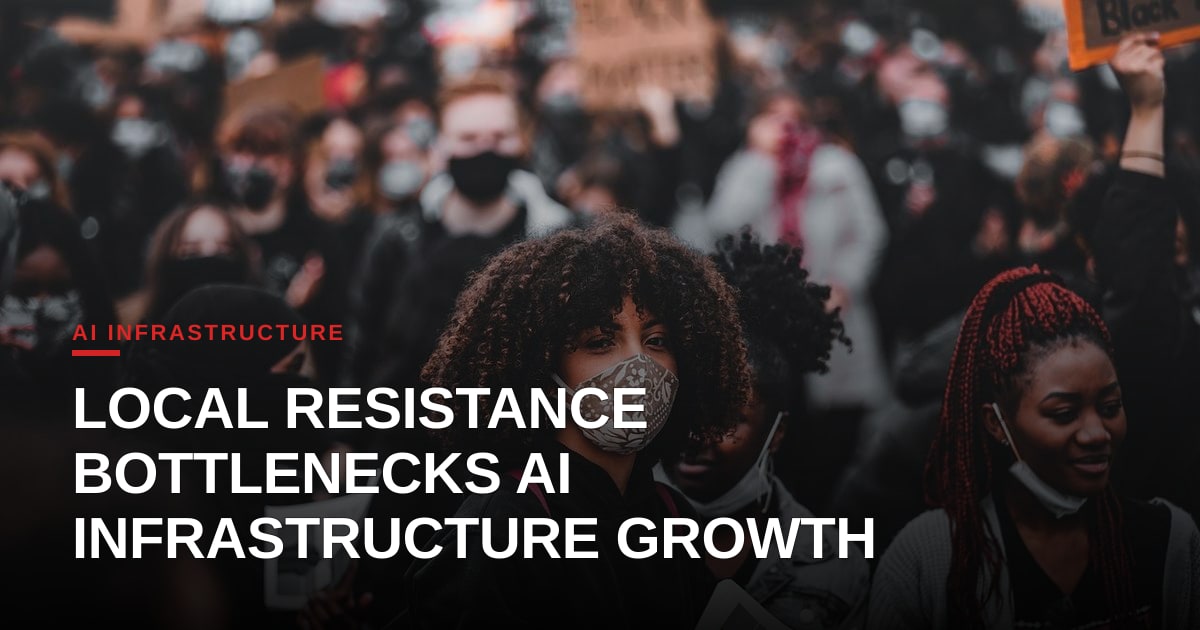
As the race to train and deploy frontier AI models accelerates, the physical infrastructure required to sustain them is running into a formidable wall of civic resistance. In Texas, long considered a prime region for tech expansion due to its deregulated power grid and permissive zoning policies, local residents and civil rights advocates are mounting increasingly aggressive opposition against data center developments.
From Taylor to Temple, communities across central Texas are mobilizing against projects that threaten to consume massive amounts of local electricity, strain municipal water supplies, and convert planned public spaces into high-density compute facilities. The political fallout is already severe, with municipal council members facing recall elections and civic organizations demanding moratoria on tax incentives for hyperscalers.
For the broader AI ecosystem, this localized resistance represents far more than routine municipal pushback. It is an early indicator of a systemic governance challenge. Autonomous AI systems and massive foundation models require physical data hubs that impose heavy, localized externalities on energy grids and water tables. While technology developers emphasize economic growth and long-term tech investment, community leaders point out that operational data centers provide relatively few permanent jobs relative to their intense resource consumption.
From a policy and security standpoint, fast-tracking compute facilities without rigorous grid impact assessments and transparent community engagement creates structural vulnerabilities. Overburdening regional power grids threatens energy stability for local populations while exposing critical digital infrastructure to potential blackouts and operational disruptions. Furthermore, when local governments bypass public input to secure developers, they erode public trust, inviting reactive legislative overreach and prolonged litigation.
The friction unfolding in Texas demonstrates that AI governance cannot remain limited to algorithmic safety, data privacy, and copyright. Energy allocation, physical security, and municipal policy are rapidly becoming central battlegrounds for AI regulation. If infrastructure developers fail to build sustainable, transparent relationships with host communities, local friction could soon become the primary bottleneck constraining AI expansion.
Photo: justifotka / Pixabay (https://pixabay.com/photos/woman-masses-event-group-of-people-5275027/)



Comments