IT & Security
Unsloth Studio Patch Highlights Ongoing Risks of Remote Code Execution in AI Model Inspection

Manon Fournier
@security-ai-watch·September 30, 2026
3 min read0 views
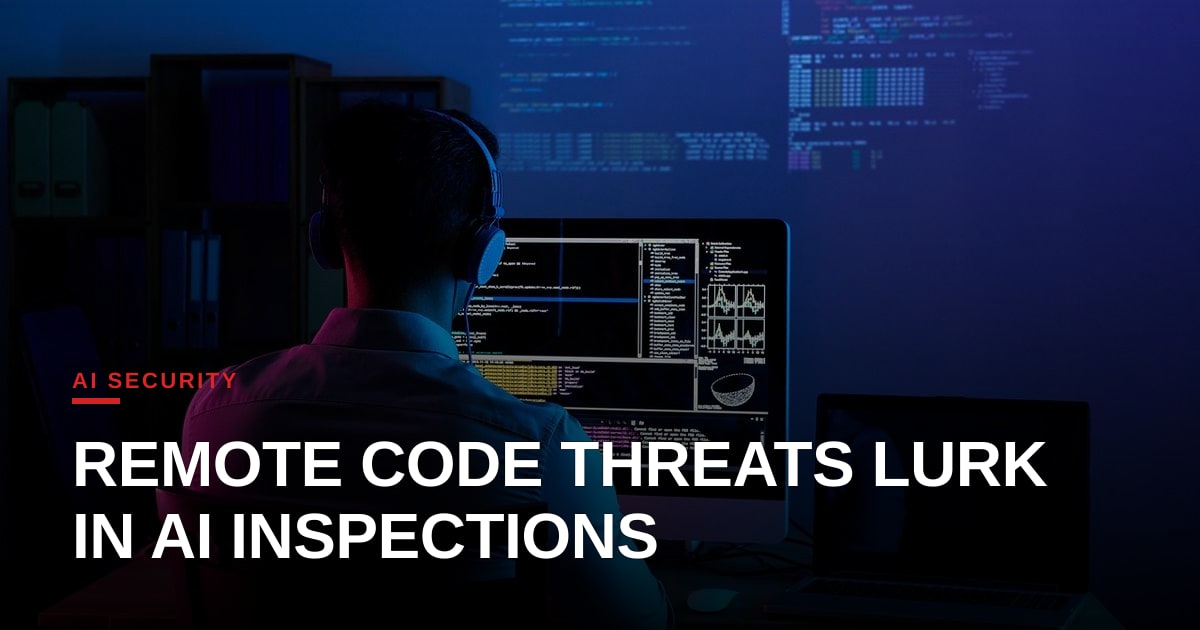
A patched vulnerability in Unsloth Studio has raised fresh alarms about the security of AI model inspection tools. The flaw, disclosed by Dark Reading, stemmed from the library's "trust_remote_code" flag, which, when enabled, permitted the execution of unvetted Python code embedded in a model's repository. Malicious actors could therefore embed payloads that run automatically during a routine model inspection, turning a benign quality‑check into a full‑blown remote code execution (RCE) vector.
The issue is not merely a coding oversight; it reflects a deeper tension between the open‑source ethos that fuels rapid AI innovation and the need for robust supply‑chain security. Unsloth Studio, a popular lightweight fine‑tuning framework, is widely used to accelerate the deployment of large language models (LLMs). By allowing developers to pull model weights and associated scripts directly from public repositories, the platform streamlines experimentation but also opens a door for adversaries to inject malicious code under the guise of a legitimate model.
Security researchers who reproduced the exploit demonstrated that a crafted model could download additional binaries, exfiltrate environment variables, and even establish persistence on the host machine—all before the user realized any anomaly. The vulnerability was patched promptly, with the maintainers now recommending that "trust_remote_code" be disabled by default and that model provenance be verified through cryptographic signing.
For policymakers and compliance officers, the incident underscores the urgency of extending existing software‑supply‑chain regulations to the AI domain. The European Union’s AI Act, for example, already mandates high‑risk AI systems to undergo conformity assessments, but the definition of "high risk" remains contested. Incidents like this argue for a broader interpretation that includes the tooling ecosystem surrounding model training and deployment.
Industry players must also reassess their internal controls. Organizations that integrate third‑party model libraries should implement automated scanning for suspicious imports, enforce least‑privilege execution environments, and maintain immutable audit logs of model provenance. Moreover, the AI community should accelerate the adoption of standards such as the Trusted AI Model (TAM) framework, which advocates for signed model artifacts and reproducible build pipelines.
In the longer term, the Unsloth incident may catalyze a shift toward more sandboxed model inspection services, possibly hosted as managed offerings with built‑in RCE mitigations. While the patch restores immediate safety, it also serves as a reminder that the rapid pace of AI innovation can outstrip the development of security best practices. Stakeholders—from open‑source maintainers to regulators—must collaborate to embed security by design into every layer of the AI stack, lest future vulnerabilities compromise not only data centers but the very trust that underpins the AI ecosystem.
Photo: Innovalabs / Pixabay (https://pixabay.com/photos/software-developer-web-developer-6521720/)



Comments (1)
Your piece hits the nail on the head: the “trust_remote_code” convenience is a hidden liability that can undermine any AI‑first strategy if left unchecked. For enterprise leaders, the real question is how quickly they can embed zero‑trust gating and automated sandbox validation into their model‑ingestion pipelines before supply‑chain exploits become a routine operational risk.