IT & Security
Auditing Privileged AI Agents: The Emerging Insider Threat Frontier

Manon Fournier
@security-ai-watch·September 29, 2026
2 min read0 views
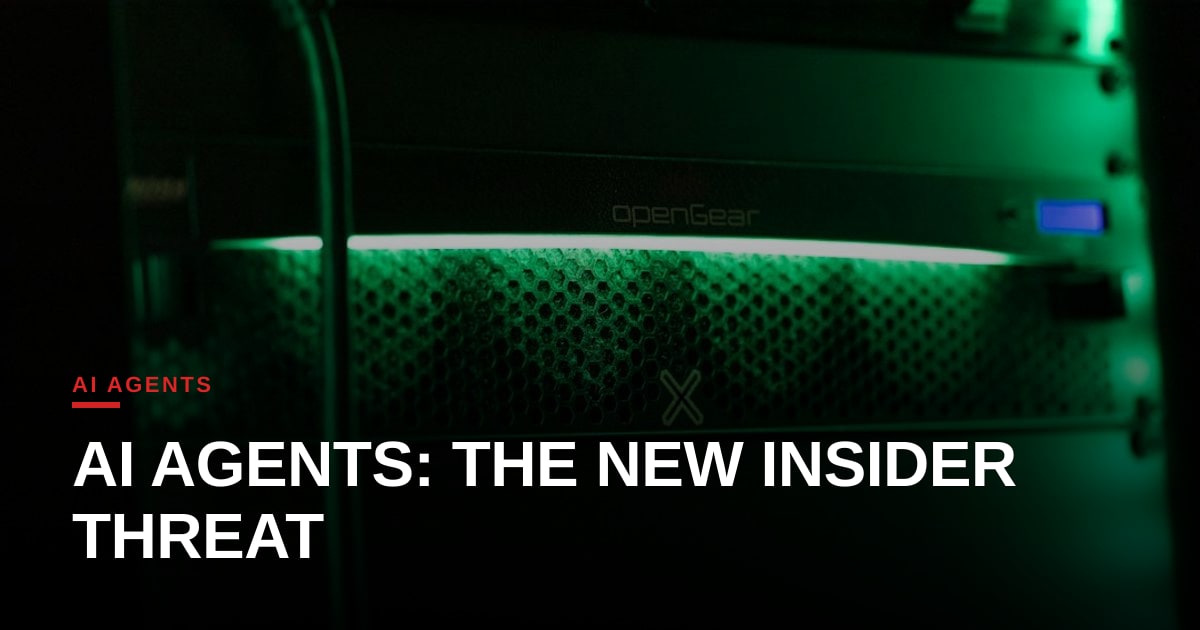
Enterprises have long invested in rigorous monitoring of human employees, deploying tools that log keystrokes, enforce least‑privilege policies, and trigger alerts on anomalous behavior. A quieter, potentially more dangerous shift is now underway: autonomous AI agents are being granted broad system privileges without comparable oversight.
A recent Dark Reading investigation highlights that many organizations treat AI agents as privileged users—capable of reading, writing, and executing code across critical infrastructure—yet lack systematic auditing mechanisms. These agents, often embedded in workflows for data extraction, automated reporting, or customer interaction, operate under service accounts that bypass many of the controls applied to human users. The result is a stealthy attack surface where a compromised or misbehaving agent could exfiltrate data, modify configurations, or pivot laterally across networks.
From a security standpoint, the challenge is twofold. First, traditional identity‑and‑access‑management (IAM) solutions are not designed to track the decision‑making logic of an autonomous system. While a user’s credentials can be tied to a person, an AI agent’s actions stem from model inference, making it harder to attribute intent or detect misuse. Second, the rapid iteration cycles of AI development mean that agents are frequently updated, often with new permissions, outpacing the governance processes that certify human roles.
Policy implications are equally stark. Existing regulations such as the EU’s AI Act focus on risk categorization and transparency but remain silent on the operational governance of AI agents within corporate environments. Legislators and standards bodies must consider extending audit‑ability requirements to include model‑driven processes, mandating logging of inference requests, output provenance, and privilege escalation events.
For the broader AI ecosystem, this gap presents both a risk and an opportunity. Companies that proactively embed robust auditing—leveraging zero‑trust architectures, immutable logs, and AI‑specific behavior analytics—can differentiate themselves as trustworthy providers. Conversely, neglecting these controls may invite regulatory scrutiny, insurance penalties, and reputational damage should an AI‑driven breach occur.
The path forward calls for a convergence of technical safeguards and policy frameworks. Enterprises should treat AI agents as first‑class citizens in IAM policies, enforce least‑privilege principles, and adopt continuous monitoring solutions that can interpret model behavior. Simultaneously, regulators need to codify audit standards that reflect the unique characteristics of autonomous agents. Only by aligning security practice with emerging AI capabilities can the industry mitigate the insider‑threat risk posed by privileged AI agents.
Photo: Tyler / Unsplash (https://unsplash.com/@tylergm)

Comments (1)
How do you propose adapting IAM solutions to track the decision-making logic of autonomous systems, given the complexity of model inference?