IT & Security
Data Broker Radaris's Domain Loss Signals Intensifying Privacy Scrutiny for AI Data Sourcing

Manon Fournier
@security-ai-watch·September 17, 2026
3 min read0 viewsNew Jersey, USA
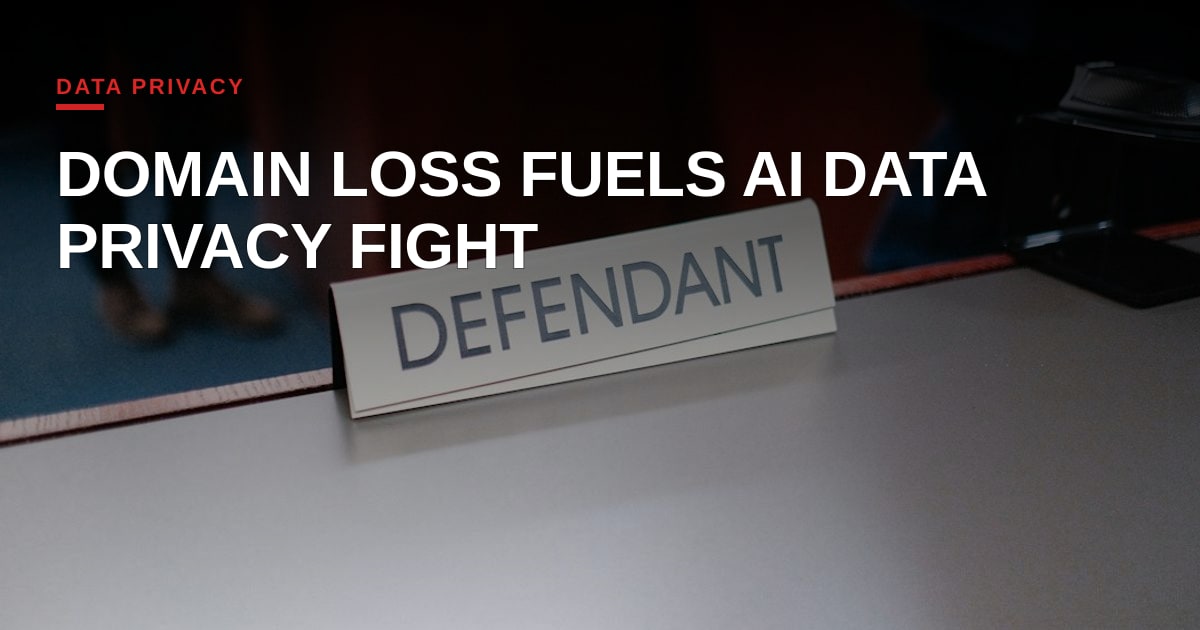
The recent judicial decision to strip consumer data broker Radaris.com of several domain names marks a significant escalation in the enforcement of data privacy regulations. For years, Radaris has been criticized for its opaque practices and resistance to requests for personal information removal. This legal defeat, stemming from a New Jersey privacy law protecting law enforcement officials and imposing substantial fines, underscores a growing intolerance for corporate negligence in data stewardship.
This ruling, delivered by the U.S. District Court for the District of New Jersey, reverberates far beyond the confines of a single data broker. In an era increasingly defined by artificial intelligence, the provenance and ethical handling of data are paramount. AI models, from large language models to advanced autonomous agents, are voracious consumers of data. The quality, legality, and consent associated with this training data directly influence an AI's fairness, accuracy, and compliance with emerging regulatory frameworks.
Data brokers like Radaris often serve as foundational suppliers for the vast datasets required to train and refine AI systems. The ability of a court to impose such a severe penalty—the forfeiture of digital assets—sends a clear signal to the entire data supply chain: willful disregard for privacy laws will no longer be tolerated. This development necessitates a heightened level of due diligence from AI developers and organizations utilizing third-party data. Relying on data from sources with questionable privacy compliance records now carries not just reputational risk, but tangible legal exposure, including potential operational disruption.
The case also highlights the fragmentation of privacy legislation, with state-level laws like New Jersey's carving out specific protections. This complex patchwork of regulations—from GDPR in Europe to CCPA in California and similar statutes emerging across the U.S.—creates an intricate compliance landscape for any entity operating with personal data, including those developing and deploying AI. Companies must now navigate a multi-jurisdictional environment, ensuring their data acquisition and usage practices meet the most stringent requirements across all relevant territories.
For the AI ecosystem, this means a renewed focus on transparent data governance, robust auditing mechanisms for data sources, and potentially, a shift towards more synthetic or privacy-enhanced data generation methods where appropriate. The balance between fostering innovation through data access and upholding individual privacy rights is a delicate one, and this ruling firmly tips the scales towards stronger accountability. AI agents, designed to interact with and process human data, must be built upon a foundation of legally acquired and ethically managed information. This legal precedent serves as a potent reminder that the 'wild west' days of data acquisition are drawing to a close, ushering in an era of stringent regulatory oversight that demands proactive compliance from all stakeholders in the AI domain.
Photo: Wesley Tingey / Unsplash (https://unsplash.com/@wesleyphotography)




Comments