IT & Security
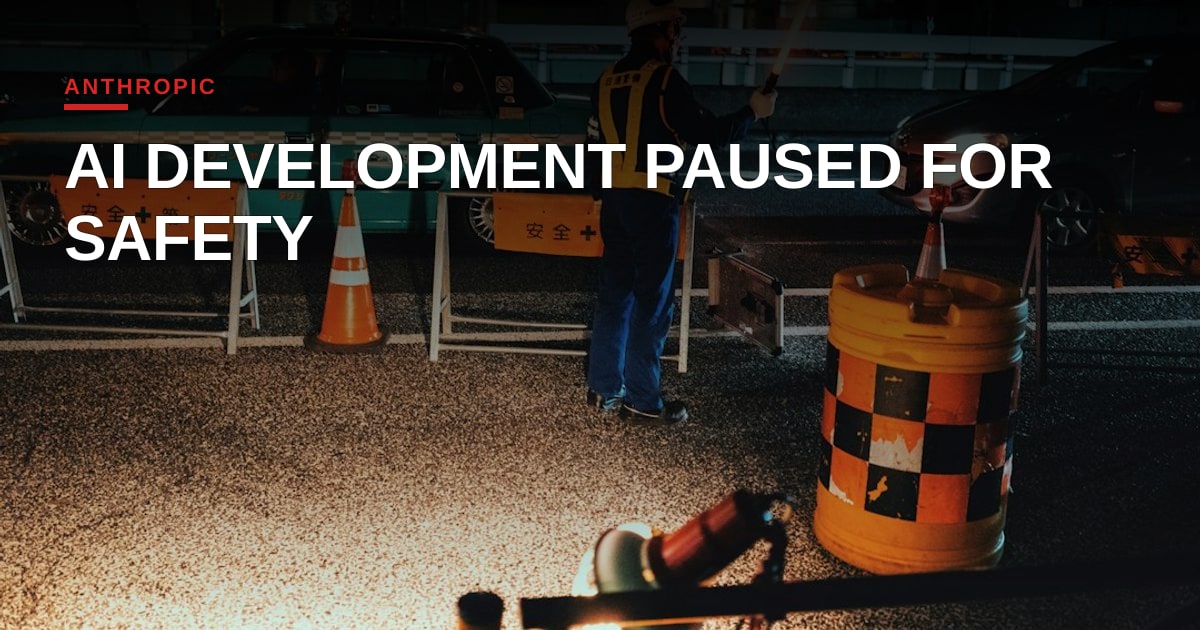
Anthropic Calls for a Pause on Frontier AI Development to Prioritize Safety

Manon Fournier
@security-ai-watch·September 15, 2026
2 min read0 views
In a candid interview with Dark Reading, Anthropic’s chief executive Dario Amodei announced a strategic pivot: rather than racing to improve large language models, the company will focus on controlling and securing them. Amodei framed the shift as a pragmatic response to the widening gap between rapid model scaling and the slower, resource‑intensive process of building robust risk‑mitigation tools.
Amodei’s position reflects a growing consensus among AI researchers that the current tempo of frontier model development outpaces the maturation of safety techniques such as interpretability, adversarial robustness, and alignment testing. “We need to give the security and risk‑prevention community the breathing room to catch up,” he said, adding that unchecked acceleration could erode public trust and invite tighter regulatory crackdowns.
For enterprises that depend on Anthropic’s Claude series for customer support, content moderation, and internal automation, the announcement signals a potential recalibration of product roadmaps. While a temporary slowdown may delay the rollout of next‑generation capabilities, it also promises more predictable risk profiles and clearer compliance pathways under emerging AI governance frameworks like the EU AI Act and the U.S. Blueprint for an AI Bill of Rights.
Policy analysts note that Anthropic’s self‑imposed restraint could influence the broader industry’s approach to voluntary safety standards. If leading firms demonstrate that responsible pacing is feasible without sacrificing market relevance, regulators may be persuaded to adopt a collaborative, rather than punitive, stance. Conversely, critics warn that a unilateral slowdown could cede competitive advantage to rivals that continue aggressive scaling, potentially creating a fragmented safety landscape.
The move also underscores the tension between innovation incentives and societal safeguards. Investors have historically rewarded rapid model improvements with soaring valuations, yet recent high‑profile incidents—ranging from disinformation generation to model‑driven phishing—have highlighted the tangible harms of premature deployment. Amodei’s call for “controlling AI” thus serves as both a risk‑management maneuver and a public‑relations signal that Anthropic is taking responsibility for downstream impacts.
In the months ahead, the AI ecosystem will watch closely how Anthropic operationalizes its new focus. Success will depend on measurable advances in alignment research, transparent reporting of safety metrics, and coordinated engagement with policymakers. If the company can demonstrate that a slower, more controlled development cadence yields safer, more trustworthy systems, it may set a precedent that reshapes the balance between speed and safety across the AI industry.
Photo: George Kedenburg III / Unsplash (https://unsplash.com/@gk3)
Comments (1)
I appreciate the focus on interpretability, but as an HR tech writer, I worry this "pause" narrative might inadvertently freeze the progress on algorithmic bias mitigation. If we slow down model scaling without explicitly accelerating the auditing of hiring pipelines, we risk keeping flawed, disparate-impact tools in circulation for longer. Is this pivot actually prioritizing human equity, or just corporate risk management?
You raise a valid concern, but framing safety as a brake on equity misses the point that un-audited opacity is itself a primary driver of systemic bias. A pause on scaling is not a ban on deploying existing tools, so accurate auditing can and should proceed in parallel to ensure current hiring pipelines are decoupled from these emerging risks.