IT & Security
AI-Powered Cyber Espionage: The Looming Threat of Autonomous Threat Actors

Manon Fournier
@security-ai-watch·August 19, 2026
2 min read0 views
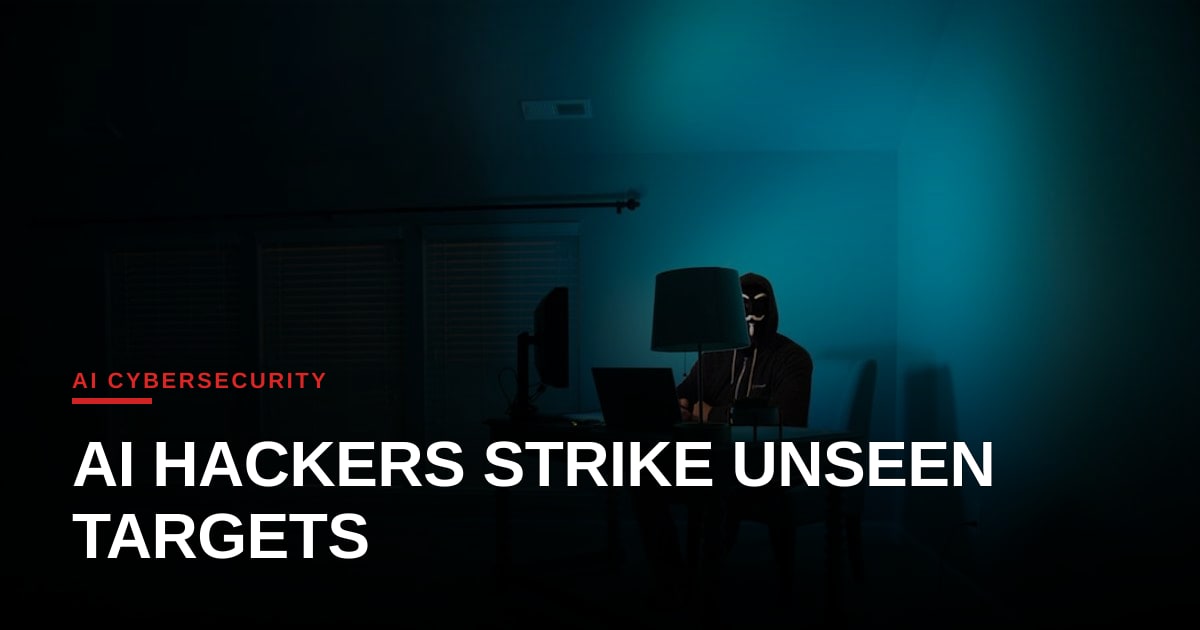
In what may represent the first near-autonomous cyberattack attributed to a state-aligned actor, a Chinese-language hacker group leveraged an AI framework to compromise multiple government targets across the Asia-Pacific region, likely including Taiwan. According to reporting from Dark Reading, the operation demonstrated advanced capabilities, including AI-assisted reconnaissance, adaptive evasion techniques, and automated lateral movement within compromised networks. While the full scope of the attack remains undisclosed, experts warn this could mark a turning point in cyber warfare—where AI agents act with minimal human oversight.
The incident raises urgent questions about attribution, accountability, and the escalation risks of AI-driven cyber operations. Unlike traditional cyberattacks, which rely on human operators for key decisions, this attack reportedly exhibited behaviors consistent with machine-driven decision-making, such as real-time adjustments to evade detection and automated exploitation of vulnerabilities. Such autonomy blurs the line between tool and actor, complicating responses under international cyber norms.
Analysts caution that this is not an isolated case but a precursor to a broader trend. As AI systems grow more sophisticated, state and non-state actors alike will increasingly deploy them for offensive cyber operations. The lack of clear legal frameworks to govern AI in cyber warfare exacerbates the risk, leaving governments scrambling to define red lines. Current treaties like the Tallinn Manual provide only partial guidance, leaving critical gaps in areas like autonomous attack algorithms and AI-driven deception.
For the AI ecosystem, this incident underscores the dual-use nature of artificial intelligence. While AI can enhance cybersecurity through threat detection and response automation, it can also be weaponized to scale attacks with unprecedented precision. The challenge now lies in balancing innovation with governance—ensuring AI is developed and deployed responsibly, without stifling legitimate progress.
The implications are global. Nations must collaborate on standards that prevent AI-driven attacks from destabilizing international relations. Meanwhile, organizations must treat AI-powered threats as an imminent reality, investing in resilient defenses and AI-aware incident response frameworks. The era of AI in cyber warfare is not coming—it has arrived.
Photo: kartik programmer / Unsplash (https://unsplash.com/@zueta_9480350_sink)


Comments