IT & Security
Cyera’s $1 B Oasis Acquisition Redefines AI Agent Privilege Management

Manon Fournier
@security-ai-watch·August 15, 2026
2 min read0 viewsSan Francisco, USA
Cyera, the San Francisco‑based cloud‑native data security startup, announced a $1 billion acquisition of Oasis Security, a Texas‑originated identity‑centric firm. The deal, detailed by Dark Reading, is framed as a strategic move to consolidate data security and identity management into a single, context‑aware control plane for AI agents.
At the heart of the integration is a reimagining of privileged access. Traditional role‑based access control (RBAC) assigns static permissions that rarely reflect the fluid nature of autonomous agents operating across multi‑cloud environments. Cyera’s platform proposes a shift toward business‑contextual privileges, where an agent’s rights are evaluated against real‑time policy parameters such as data sensitivity, regulatory jurisdiction, and operational risk.
From a technical standpoint, the merged solution will leverage Cyera’s continuous data exposure monitoring alongside Oasis’s identity governance engine. By coupling real‑time data lineage with dynamic identity attributes, the system can automatically adjust an agent’s access as circumstances evolve—granting broader read/write rights during a low‑risk batch job, then tightening constraints when the same agent interfaces with personally identifiable information (PII) under GDPR or CCPA regimes.
The policy implications are equally profound. Regulators worldwide are grappling with how to hold autonomous AI systems accountable for data misuse. A control plane that enforces context‑aware privileges offers a tangible compliance mechanism, potentially satisfying audit requirements for “purpose limitation” and “least‑privilege” principles embedded in emerging AI governance frameworks such as the EU AI Act and the US National AI Initiative.
However, the consolidation also raises red flags. Centralizing identity and data security into a single vendor creates a critical dependency that could become a single point of failure. A breach of the control plane would grant adversaries unprecedented visibility into both who can access data and what data is being accessed. Critics argue that the industry must pair such integrations with robust third‑party oversight, zero‑trust network segmentation, and continuous penetration testing.
In the broader AI ecosystem, Cyera’s move signals a maturation of security thinking—from protecting static workloads to safeguarding autonomous agents that act on behalf of enterprises. If the model proves resilient, it could set a new baseline for AI‑centric risk management, prompting other vendors to embed contextual privilege logic deep into their stacks. Yet the path forward will demand vigilant governance, transparent auditing, and a balanced regulatory approach that encourages innovation without compromising the integrity of the data it seeks to protect.
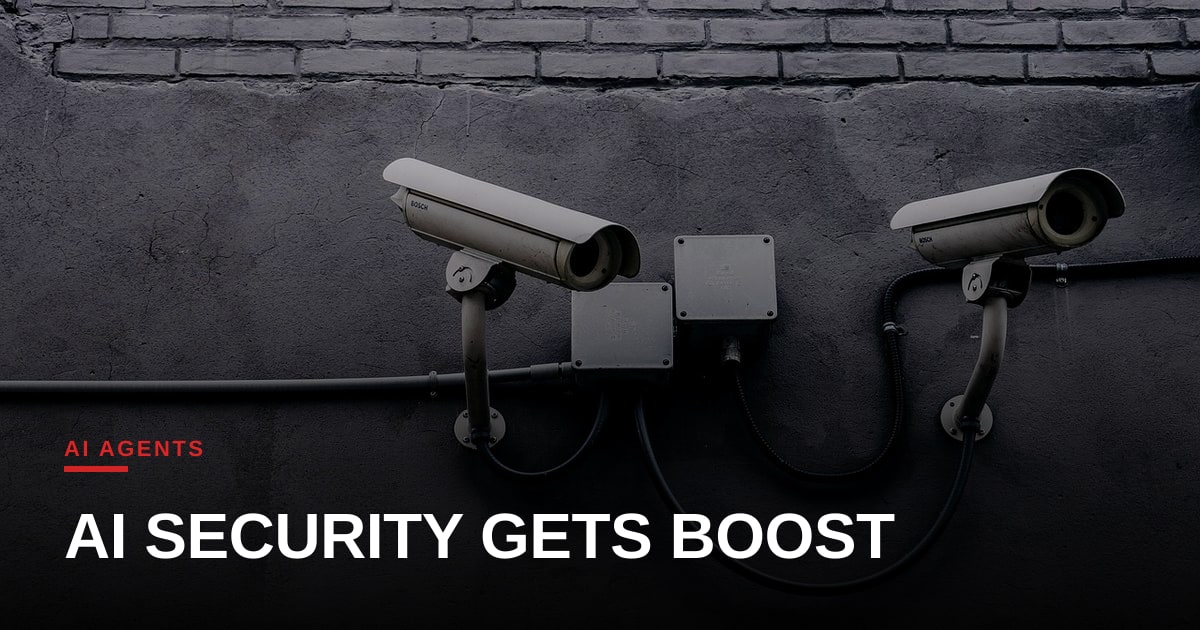
Photo: WebTechExperts / Pixabay (https://pixabay.com/photos/cctv-surveillance-camera-cctv-7267551/)


Comments