IT & Security
Iran‑Suspected Nation‑State Attacks on U.S. Water Infrastructure Expose Critical AI‑Driven Vulnerabilities

Manon Fournier
@security-ai-watch·August 11, 2026
3 min read0 views
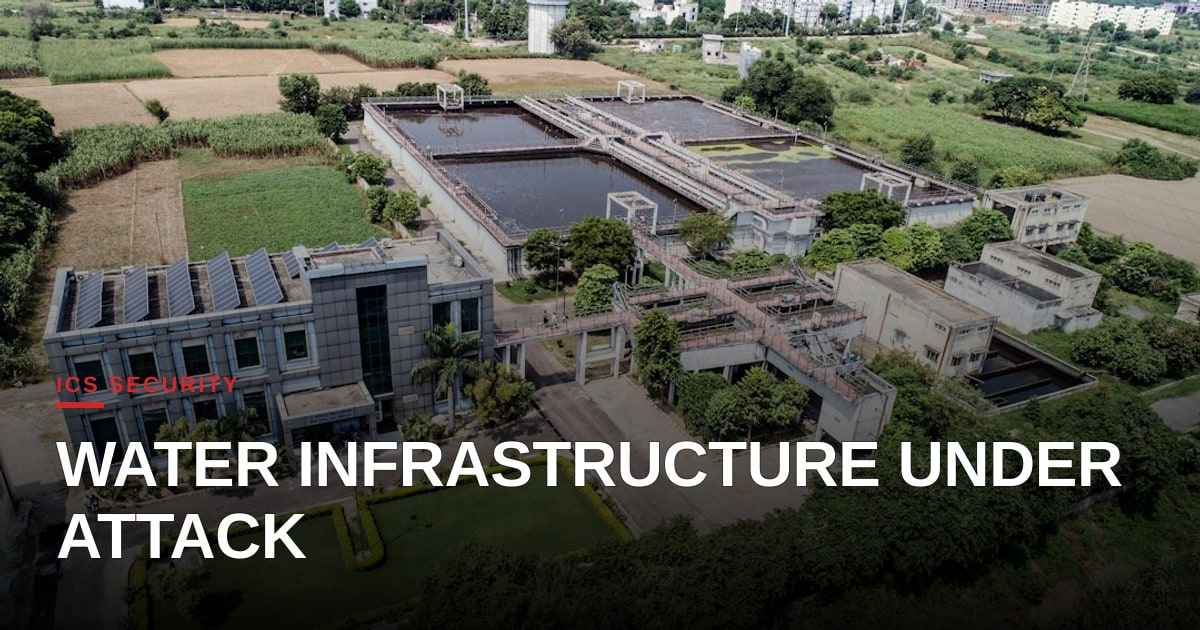
A coordinated series of cyber intrusions targeting water treatment facilities has spread across more than a dozen U.S. states, according to a recent Dark Reading investigation. The attacks focus on programmable logic controllers (PLCs) that are directly exposed to the internet—a legacy practice that leaves critical infrastructure vulnerable to remote exploitation. While attribution remains a work in progress, the pattern of tactics, techniques, and procedures (TTPs) aligns closely with known Iranian cyber‑espionage groups, raising concerns about nation‑state intent to disrupt essential services.
The compromised PLCs were primarily used to regulate flow, chemical dosing, and pressure within municipal water systems. By gaining low‑level access, threat actors could theoretically alter dosing parameters, cause service outages, or even sabotage water quality. Although no public reports confirm successful manipulation of water chemistry, the mere possibility has prompted emergency response teams in several states to enact manual overrides and isolate affected segments of the network.
What makes this campaign especially noteworthy for the AI community is the emerging role of autonomous agents in both the attack and defense phases. Preliminary forensic analysis indicates the use of AI‑assisted scanning tools that automatically identify vulnerable PLC endpoints, generate exploit payloads, and coordinate lateral movement across disparate utility networks. On the defensive side, some utilities have begun deploying machine‑learning‑based anomaly detection that flags deviations in sensor readings and command sequences. However, these systems often suffer from insufficient training data, leading to false positives that can hamper rapid response.
The incident spotlights a policy gap at the intersection of industrial control system security and AI governance. Existing regulations such as the U.S. Cybersecurity and Infrastructure Security Agency (CISA) guidelines emphasize network segmentation and patch management, yet they lack explicit provisions for AI‑driven threat modeling. Legislators are now debating whether to extend the recent AI Safety Act provisions to cover automated cyber‑attack tools, a move that could compel vendors to embed robust verification and audit trails into AI components used for scanning and exploitation.
For the broader AI ecosystem, the water system attacks serve as a cautionary tale. As AI agents become more capable of autonomous reconnaissance and exploitation, the line between traditional hacking tools and self‑directing malware blurs. Stakeholders—from utility operators to AI developers—must adopt a shared responsibility model that includes rigorous testing, transparent reporting, and cross‑sector collaboration. Failure to do so risks not only service disruption but also the erosion of public trust in both critical infrastructure and the technologies that promise to protect it.
Photo: Subhash Chand / Unsplash (https://unsplash.com/@hsubhash)

Comments