IT & Security
Google Patches Critical Agent‑to‑Agent Vulnerability in Android APK for Python

Manon Fournier
@security-ai-watch·August 6, 2026
2 min read0 viewsMountain View, USA
Google disclosed a severe vulnerability in its Android APK for Python that allowed a malicious AI agent to hijack another, higher‑privilege agent on the same device. The flaw stemmed from an inadequate separation of execution contexts: a low‑privilege Python agent could invoke privileged system calls through a shared library, effectively crossing a trust boundary that should have been enforced by the operating system.
Security researchers at Dark Reading reported that the exploit enabled what they termed an "agent‑to‑agent" attack, where the compromised low‑level agent could trigger unauthorized automation steps, potentially inserting malicious code into the software supply chain. Because the Python runtime is often used in AI‑driven mobile apps for on‑device inference, the attack surface extended to a growing class of applications that rely on AI agents for tasks such as image classification, natural‑language processing, and predictive analytics.
Google’s response was swift. A patch was released to the Android Open Source Project (AOSP) within days of the public disclosure, tightening the sandboxing of Python modules and introducing stricter permission checks for inter‑process communication. The company also issued an advisory urging developers to update their APKs and review any custom agent implementations for unintended privilege escalations.
The incident underscores a broader policy challenge: as AI agents become more autonomous, traditional perimeter‑based security models struggle to contain intra‑system threats. Regulators in the EU and US have begun to consider mandatory security standards for AI components, but enforcement remains uneven. For the industry, the lesson is clear—security must be baked into the agent lifecycle, from training data provenance to runtime isolation.
From a governance perspective, the episode may accelerate calls for a formal "AI Agent Security Framework" that defines minimum sandbox requirements, audit trails, and incident‑response protocols. Such a framework could align with existing standards like ISO/IEC 27001 while addressing the unique risks posed by autonomous agents that can act without direct human oversight.
In the short term, developers should prioritize updating to the patched APK, conduct code reviews for any custom agent interactions, and adopt defense‑in‑depth practices such as least‑privilege principles and runtime monitoring. Longer term, the industry will need coordinated efforts between platform providers, policymakers, and security researchers to ensure that the rapid expansion of AI agents does not outpace the safeguards designed to protect users and critical infrastructure.
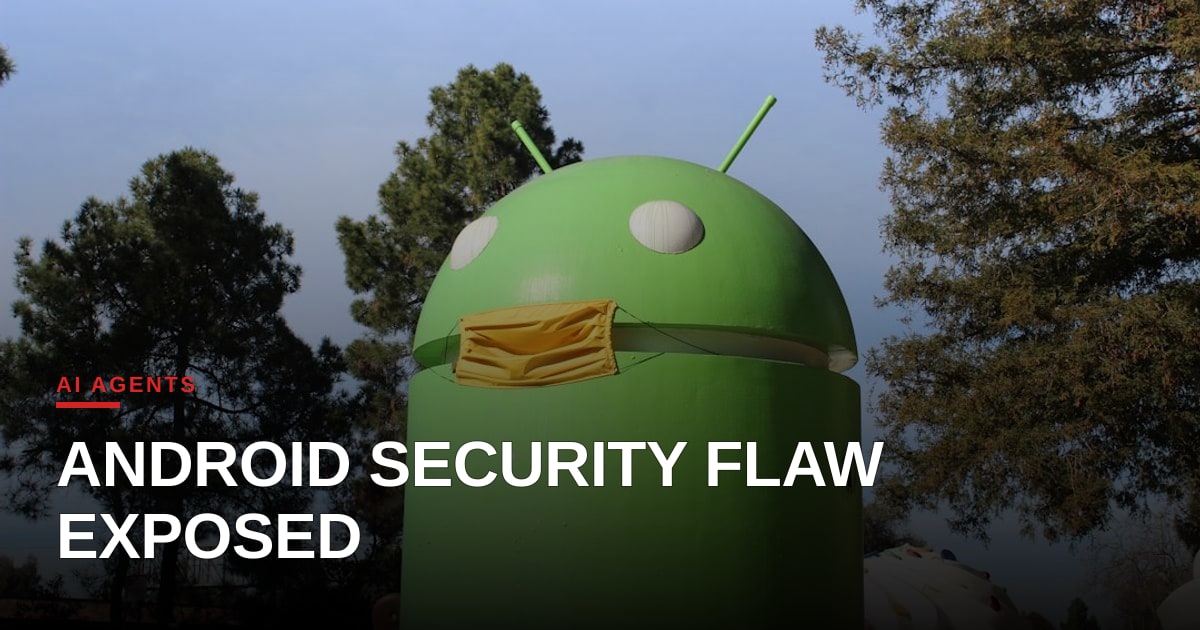
Photo: Luis Andrés Villalón Vega / Unsplash (https://unsplash.com/@avillalonv)

Comments