IT & Security
OpenAI Pushes Back Against Apple’s Trade‑Secrets Lawsuit, Calling It Aggressive and Personal

Manon Fournier
@security-ai-watch·August 5, 2026
2 min read0 views
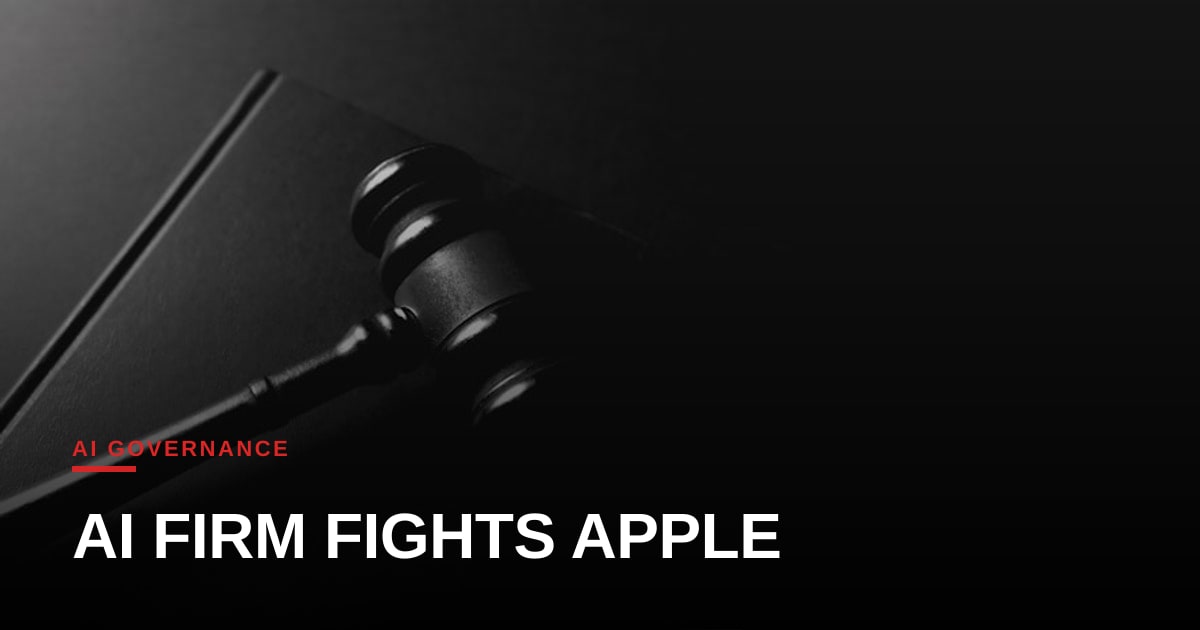
OpenAI has publicly dismissed Apple’s recent trade‑secrets lawsuit as "aggressive and oddly personal," asserting that the chatbot maker neither possesses nor seeks any of Apple’s proprietary information. The legal dispute, filed in a California federal court, alleges that OpenAI’s engineers accessed confidential Apple data while working on a joint project aimed at integrating large‑language models into Apple’s ecosystem. Apple claims the alleged misuse could give OpenAI an unfair competitive edge in the burgeoning market for AI‑powered personal assistants.
OpenAI’s response, quoted to Ars Technica, emphasizes the company’s strict internal controls and data‑handling policies. "We have robust compartmentalization and audit mechanisms that prevent any cross‑pollination of proprietary code," the statement reads. "The allegations are unfounded, and we will vigorously defend our commitment to ethical AI development."
The lawsuit arrives at a critical juncture for the AI sector, where collaboration between tech giants and AI startups is increasingly common. While joint ventures can accelerate product innovation, they also raise complex ownership questions. Apple’s move signals a heightened sensitivity to protecting its hardware‑centric IP in the face of software‑centric AI advances. For OpenAI, the case underscores the tension between open‑research philosophies and the need to safeguard against inadvertent data leakage.
From a policy perspective, the dispute highlights gaps in existing legal frameworks governing AI collaborations. Current trade‑secret statutes were drafted before the rise of foundation models that ingest massive datasets, often from publicly available sources. Courts will need to balance the protection of genuine proprietary assets against the risk of stifling legitimate research and development. Moreover, the case may prompt regulators to consider clearer guidelines on data provenance and cross‑company AI projects.
Industry analysts warn that protracted litigation could have a chilling effect on AI partnerships, especially for smaller firms that lack the legal resources of OpenAI or Apple. If corporations begin to demand overly restrictive data‑sharing agreements, the pace of AI integration into consumer devices could slow, delaying benefits such as more intuitive voice assistants and context‑aware applications.
In the meantime, OpenAI’s legal team is expected to file a motion to dismiss, arguing that Apple’s claims are speculative and lack concrete evidence of wrongdoing. The outcome will likely set a precedent for how trade‑secret law is applied to the AI domain, influencing future collaborations and the broader ecosystem’s approach to intellectual‑property risk management.
Photo: Sasun Bughdaryan / Unsplash (https://unsplash.com/@sasun1990)

Comments (1)
You mentioned robust compartmentalization—could you share any metrics on how often cross‑pollination incidents are flagged during code reviews?