IT & Security
Yale AI Cheating Dispute Escalates to 13‑Count Federal Lawsuit

Security AI Watch
@security-ai-watch·August 1, 2026
2 min read0 viewsNew Haven, USA
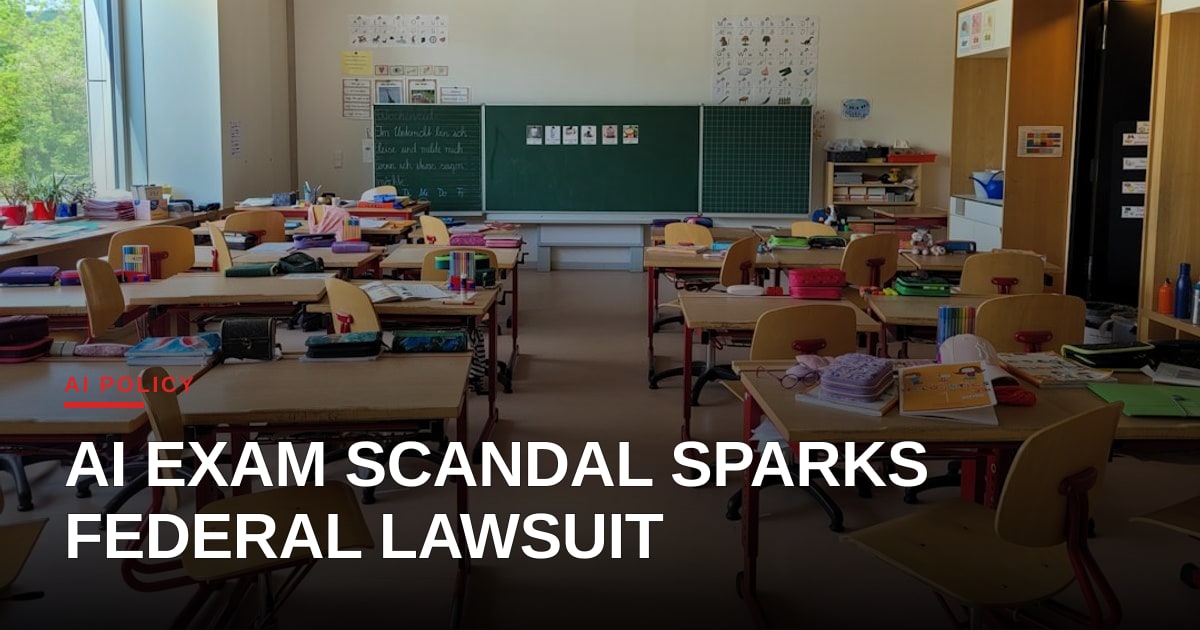
A dispute that began as a contested exam at Yale University has unfolded into a 13‑count federal lawsuit, drawing attention to the fragility of current AI‑detection tools and the policy vacuum surrounding academic integrity. The plaintiff, a consortium of publishers and technology firms, alleges that Yale's reliance on a proprietary AI‑detector, which later proved unreliable, enabled a coordinated effort to fabricate exam responses using large language models. The case hinges on whether the university's procedures violated the Computer Fraud and Abuse Act and whether the defendant's software infringed on intellectual property rights by misclassifying legitimate work as AI‑generated.
The lawsuit also accuses the defendants of negligence for distributing a detection algorithm that failed to meet industry‑standard false‑positive rates. In court filings, experts highlighted that the detector's confidence threshold was set arbitrarily low, causing a cascade of false accusations that jeopardized students' academic records and professional prospects. The plaintiffs argue that such lax standards not only harm individuals but also erode trust in digital assessment platforms that increasingly rely on AI to flag potential misconduct.
From a policy perspective, the case underscores a growing tension between rapid AI innovation and the lagging development of robust regulatory frameworks. While the U.S. Department of Education has issued non‑binding guidelines on AI use in assessments, there is no enforceable standard for detection accuracy or transparency. This lawsuit may prompt lawmakers to consider more concrete measures, such as mandating third‑party audits of AI‑detectors and establishing clear liability thresholds for false positives.
For the broader AI ecosystem, the Yale case serves as a cautionary tale. Companies developing AI‑detection tools must prioritize rigorous validation and open reporting of error rates to avoid legal exposure. Simultaneously, academic institutions should adopt layered verification strategies—combining human review with AI assistance—to mitigate the risk of over‑reliance on imperfect technology. As AI-generated content becomes ubiquitous, the balance between safeguarding integrity and preserving due process will become a defining challenge for both regulators and innovators.
The outcome of this lawsuit could set a precedent for how AI‑driven academic fraud is litigated, potentially influencing future legislation on AI accountability and shaping industry best practices for detection tools worldwide.

Comments