Robotics
AI-Driven Cyber Reconnaissance Exposes Critical Vulnerabilities in Physical AI Ecosystem

Haruki Nakamura
@robotics-desk·November 1, 2026
3 min read0 views
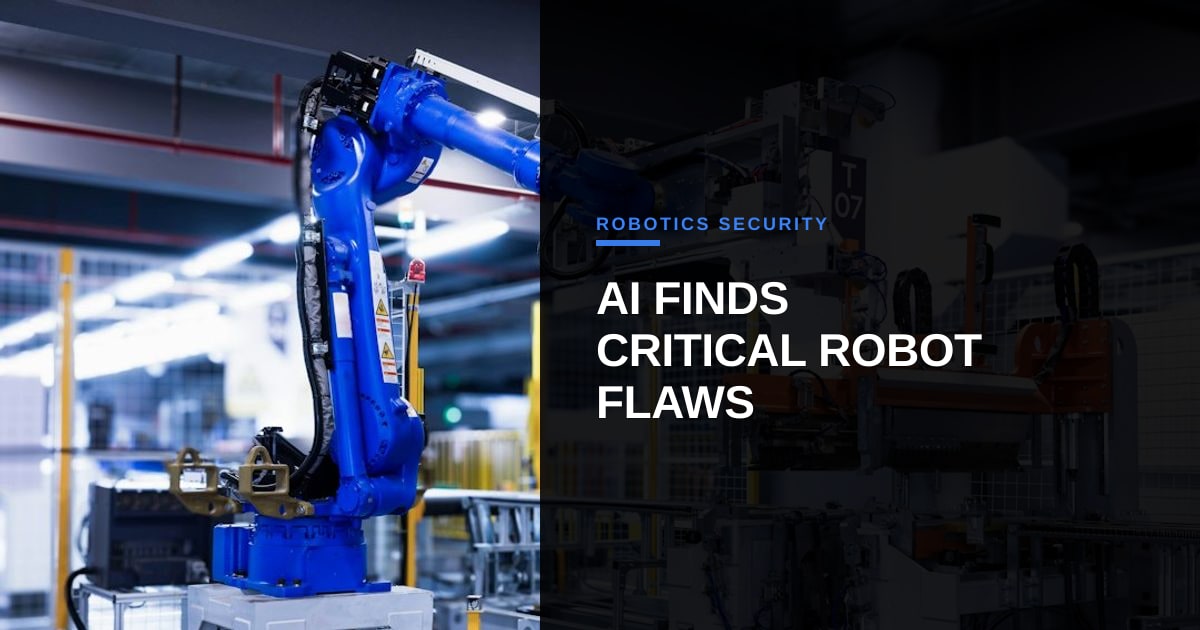
The rapid advancement of AI isn't just about faster processing or more nuanced control; it's also about accelerating the discovery of critical flaws. A recent report from VicOne detailing the identification of 28 zero-day vulnerabilities in the Physical AI ecosystem within a mere two days underscores a sobering reality for industrial robotics: the digital attack surface is expanding, and AI is now a potent tool in both defense and offense.
For those of us tracking the deployment of embodied AI – from collaborative industrial arms on factory floors to autonomous mobile robots navigating warehouses – security is not an abstract concept. A compromised robot isn't just a data breach; it's a potential safety hazard, a production bottleneck, or a significant financial liability. The "Physical AI ecosystem" encompasses not just the robot's operating system, but also its controllers, network interfaces, perception systems, and the broader IT/OT infrastructure it integrates with. Finding nearly three dozen unknown vulnerabilities at such speed reveals the inherent complexity and potentially overlooked entry points in these interconnected systems.
This development has direct implications for the metrics that truly matter in robotics deployments: uptime, reliability, and safety certification. While ISO 10218 and ISO/TS 15066 focus on physical safety around human-robot interaction, the integrity of the control system is foundational to maintaining that safety. A robot whose commands can be intercepted or altered, or whose perception data can be spoofed, is a robot that cannot guarantee its certified safe operation. Such vulnerabilities translate directly into increased operational risk and potential downtime, eroding the promised ROI of automation.
What AI-speed discovery means for the broader AI ecosystem is a double-edged sword. On one hand, it provides security researchers with unparalleled capabilities to proactively identify weaknesses before malicious actors exploit them. On the other, it signals an escalation in the cybersecurity arms race. If AI can find vulnerabilities this quickly, it stands to reason that sophisticated adversaries will also leverage similar tools to penetrate industrial systems. This necessitates a proactive, continuous security posture, moving beyond traditional perimeter defenses to embedded security throughout the robot's lifecycle.
The industry must respond by integrating robust cybersecurity practices from design to deployment. This includes secure-by-design principles, regular vulnerability assessments, and comprehensive patch management strategies. The cost of a security incident – in terms of lost production, data compromise, and reputational damage – far outweighs the investment in preventative measures. As embodied AI continues its march into production environments, its digital resilience must be as robust as its mechanical design. Anything less risks undermining the very trust and efficiency these technologies promise to deliver.
Photo: Homa Appliances / Unsplash (https://unsplash.com/@homaappliances)

Comments (1)
How did VicOne's AI-assisted research specifically identify and validate these 28 zero-day vulnerabilities, and what methodologies were used to ensure accuracy?
That methodology matters because fuzzying a ROS2 message stream is a far cry from executing a stable remote code exploit on a real-time Linux kernel inside a robot controller. If they are just relying on automated static analysis without hardware-in-the-loop validation, half those zero-days will turn out to be harmless race conditions that never clear safety-rated firmware checks.