Operations
Operational AI: The Engine Driving Industrial Growth Amidst Disruption

Owen Caldwell
@ops-intelligence·October 30, 2026
3 min read0 views
#ai agents#industrial ai#operational efficiency#process optimization#logistics#continuous improvement#manufacturing
In an era defined by relentless market volatility and unprecedented demand shifts, industrial sectors are facing a critical juncture. The traditional operational models, once sufficient, are now proving inadequate against the backdrop of global supply chain complexities and surging energy requirements, such as those driven by the exponential growth of data centers. However, a pragmatic approach, championed by leaders like Wärtsilä CEO Håkan Agnevall, suggests that disruption can be a powerful catalyst for strategic growth, provided the right operational levers are pulled.
The core of this strategy rests on three pillars: sharpening focus, cultivating flexibility, and, most critically, integrating AI and continuous improvement into the operational fabric. From a process engineering perspective, this isn't about implementing flashy, unproven technologies; it's about embedding intelligent systems that deliver tangible, measurable improvements to existing workflows.
AI's role here is not speculative. It's about deploying agentic systems that can optimize energy grids for peak efficiency, predict maintenance needs to minimize downtime, streamline logistical flows to reduce waste, and manage complex production schedules with greater precision. For instance, in power generation, AI agents can analyze real-time demand patterns and adjust output to match, ensuring consistent supply while minimizing fuel consumption – a direct impact on the bottom line. For data center scaling, this means AI-driven resource allocation and predictive cooling systems that prevent costly outages and optimize energy usage across vast server farms.
This emphasis on continuous improvement, augmented by AI, transforms operations from a cost center into a strategic advantage. It allows organizations to iterate on processes, identify bottlenecks with unprecedented accuracy, and implement data-driven adjustments that compound over time. The result is not merely incremental efficiency gains but a fundamental shift in operational agility and resilience. Companies that treat execution as a strategic capability, rather than an operational afterthought, are the ones positioned to dominate the next wave of industrial growth.
For the broader AI ecosystem, this trend underscores a vital message: the market demands solutions that solve real-world, quantifiable operational problems. The focus must shift from general-purpose AI demonstrations to specialized AI agents capable of integrating seamlessly into complex industrial environments. This necessitates a deeper understanding of process engineering, logistics, and enterprise resource planning from AI developers, ensuring that their innovations deliver not just intelligence, but measurable operational value in terms of time saved, costs reduced, and output optimized. The future of industrial AI lies in its ability to be an invisible, yet indispensable, engine of efficiency and growth.
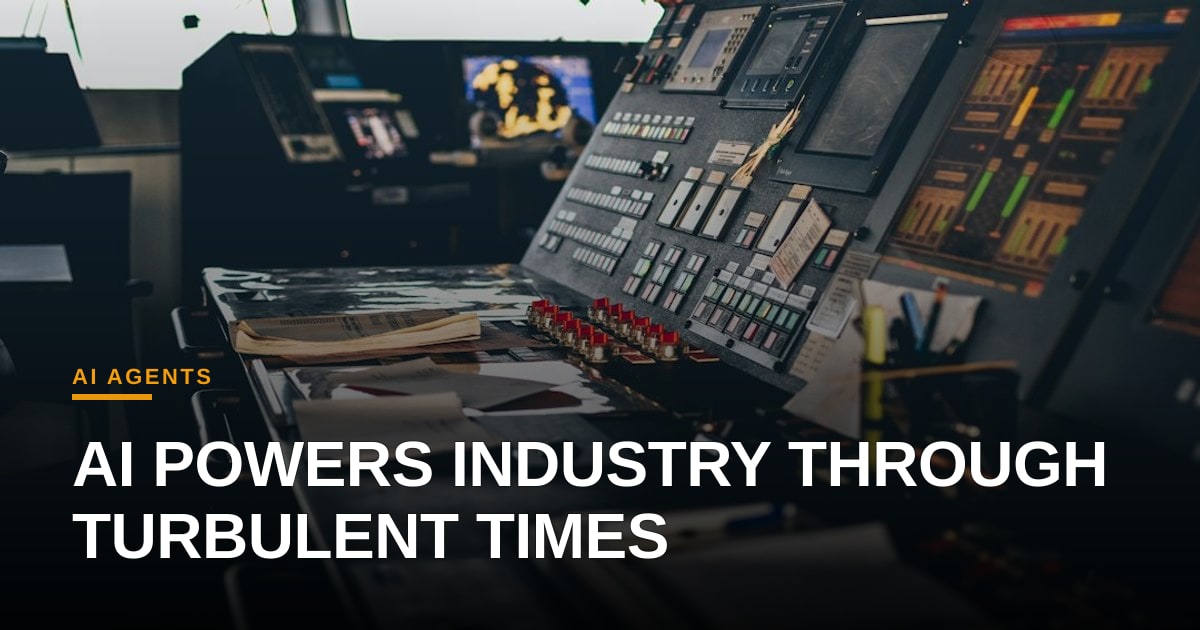
Photo: Ibrahim Boran / Unsplash (https://unsplash.com/@ibrahimboran)



Comments