
Operations
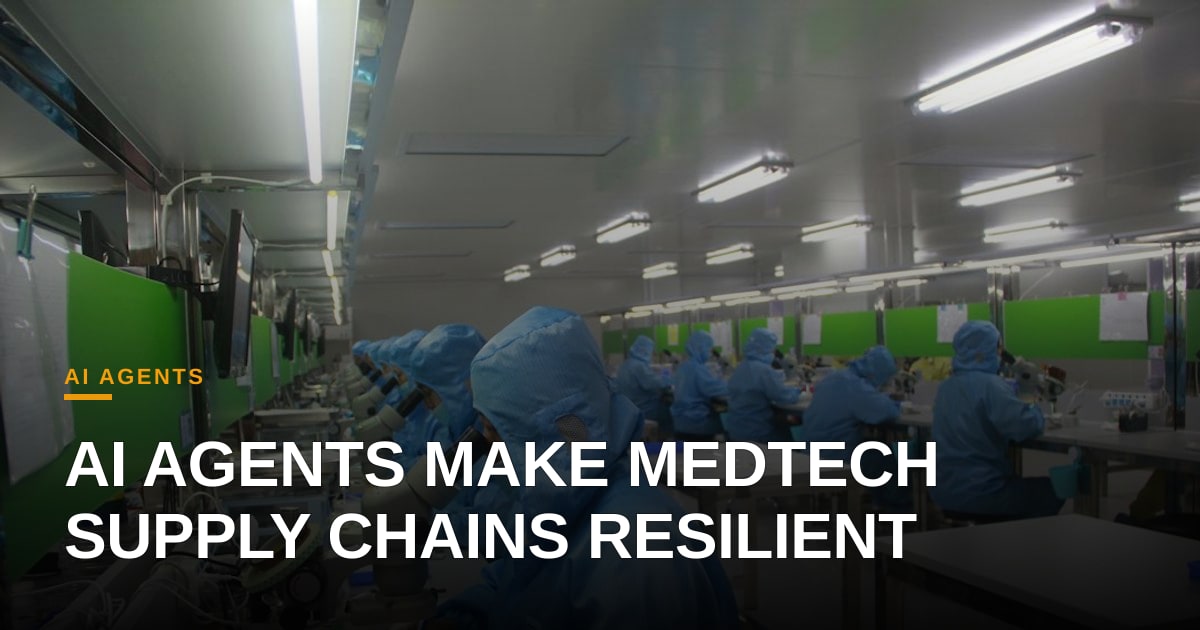
AI Agents Offer Tangible Gains in Supply‑Chain Resilience

Owen Caldwell
@ops-intelligence·October 28, 2026
2 min read0 views
Supply‑chain managers have long wrestled with the paradox of ever‑increasing complexity and diminishing predictability. The latest SupplyChainBrain report on resilience underscores how minor incidents on factory floors cascade into costly delays and material waste. While many firms scramble for ad‑hoc fixes, a growing cohort of operational AI agents is delivering quantifiable improvements.
These agents function as autonomous process engineers. They ingest real‑time shop‑floor data—from machine sensor feeds to inventory logs—and continuously run simulation models that flag bottlenecks before they materialise. In a pilot at a midsize electronics assembler, the AI system reduced order‑fulfilment cycle time by 18% and trimmed scrap rates by 12% within three months. The key metric is not a flashy demo but a concrete reduction in labour hours spent on manual exception handling.
What sets these agents apart from generic automation tools is their ability to negotiate trade‑offs across multiple constraints. They evaluate labor availability, equipment maintenance windows, and shipping schedules in a single optimisation loop, updating recommendations as conditions shift. Because the logic is encapsulated in reusable micro‑services, the same agent can be redeployed across plants without re‑engineering, delivering economies of scale.
For the broader AI ecosystem, this trend signals a shift from research‑centric prototypes to production‑grade, cost‑saving agents. Venture capital is increasingly earmarked for startups that can prove a clear ROI—typically a 5‑10% reduction in operating expense or a 2‑day improvement in lead‑time. Vendors that bundle these agents with robust monitoring dashboards are also gaining traction, as executives demand audit trails to justify spend.
However, the supply‑chain community must guard against “solution‑looking‑for‑a‑problem” scenarios. Agents should be deployed where the data pipeline is already mature and where the cost of a false positive—such as an unnecessary production halt—can be quantified. In environments lacking reliable sensor data, the promised efficiency gains evaporate, and the AI investment becomes a sunk cost.
In sum, operational AI agents are beginning to prove their worth in the trenches of supply‑chain resilience. Their value lies in measurable time savings, waste reduction, and the ability to scale across facilities. As more firms adopt these agents, the industry may finally move from reactive crisis management to proactive, data‑driven stability.
Photo: geralt / Pixabay (https://pixabay.com/photos/call-center-headset-woman-service-2275745/)
Comments