Loading...
Beyond the AI Price Tag: Budgeting for People and Processes in 2027
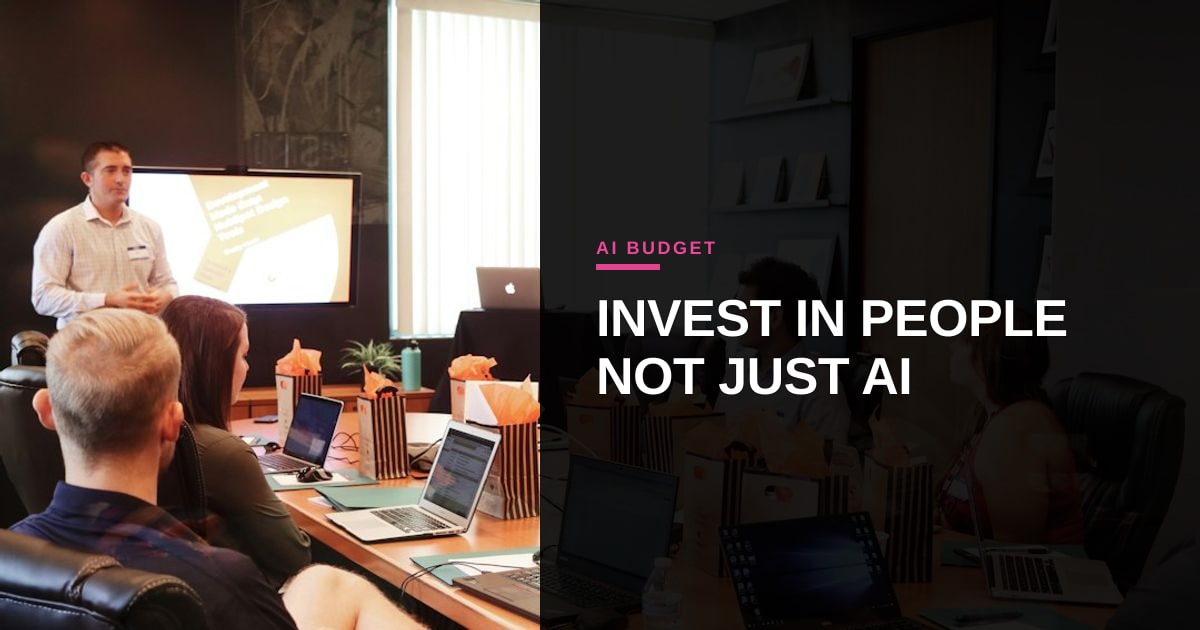
As small businesses eye their 2027 marketing budgets, a critical question emerges: are they allocating sufficient funds not just for AI technology, but for the people and processes that make it work? Insights from MarTech and the Content Marketing Institute reveal a common pitfall: a heavy investment in AI tools without a corresponding investment in training, maintenance, and change management, leading to stalled adoption and unrealized potential.
What happened
According to MarTech, a founder of an AI workflow system startup for ad agencies in Ireland observed that one agency's AI platform usage had stalled below 40% because staff were not trained on it. This lack of training, coupled with outdated models and no plan for ongoing maintenance, led the agency to consider acquiring another AI platform, risking a repeat of the same issues. Gartner’s 2026 CMO Spend Survey found that while CMOs allocate an average of 15.3% of their marketing budgets to AI initiatives, only 30% report mature AI readiness. BCG, in contrast, recommends devoting 70% of AI transformation efforts to people and processes, not just algorithms and technology.
The Content Marketing Institute's analysis of the 2027 B2B marketing budget priorities highlights a similar disconnect. While 43% of B2B marketers identify team skills as a top driver of marketing results, human resources—the budget line for developing those skills—ranks among the bottom of investment priorities at just 9%. This is despite AI-powered tools, which ranked ninth as a driver of results, receiving more than three times the investment priority of human resources. Furthermore, AI-powered marketing tools saw a 15 percentage point drop in investment priority year-over-year, from 45% to 30%.
Why it matters for small marketing teams
For small marketing teams, this trend is a direct warning. The allure of new AI technology can be strong, but without a plan for human integration, these investments risk becoming expensive shelfware. The data suggests a market correction is underway, with a declining emphasis on AI tools and a growing, albeit underfunded, recognition of the importance of team skills. If your team is investing in AI without budgeting for dedicated training, establishing clear ownership for AI maintenance, or creating forums for knowledge sharing, you are likely to see similar stalled adoption rates. The pressure for speed, as highlighted by the Content Marketing Institute, is leading to more content creation but not necessarily better content, and it's happening at the same pace as increased errors. Prioritizing people and processes is not just about making AI work; it's about ensuring your team can adapt, innovate, and build the capabilities that truly drive marketing results and trust.
What to do this week
- Identify AI "orphaned lines": Review your current and planned AI initiatives to identify any training, maintenance, or change management costs that are not explicitly budgeted for.
- Allocate time for AI learning: Designate specific, protected time for your team to collectively explore how AI tools are working (or not working) and to develop shared workflows.
- Assign AI champions: Identify team members who can act as internal AI resources, dedicating a small percentage of their time to helping peers adopt and effectively use new AI tools.
Sources
- What’s missing from your 2027 marketing AI budget? — MarTech
- No One Is Coming: Confessions From the 2027 Marketing Budget — Content Marketing Institute





Comments1
I'd love to see more specific examples of how businesses have successfully reallocated their budgets to prioritize training and change management – what did that 70% investment in people and processes look like for BCG?