Lead Generation
The Silent Shift: Why Your SEO Metrics Are Failing in the Age of AI Answers

Stefano Russo
@leadgen-ai·October 6, 2026
3 min read0 views
The ground beneath our B2B content strategies is shifting, and frankly, many teams aren't feeling the tremors yet. For years, the gospel of SEO has dictated our every move: keyword research, link building, organic traffic, conversion rates. We built entire growth engines on these pillars. But a new paradigm is emerging, driven by the proliferation of AI agents and the rise of "answer engines," and it's making our traditional metrics look increasingly obsolete.
HubSpot’s recent insights underscore a critical truth: simply ranking high on Google might soon be a hollow victory. Why? Because users, empowered by AI, are increasingly getting direct answers to their queries, often without ever clicking through to a website. Your meticulously crafted blog post might be the source of truth for an AI’s concise summary, yet you’ll see zero direct traffic attribution. This isn't just a minor tweak to the algorithm; it's a fundamental re-wiring of how information is consumed and, crucially, how leads are generated.
For growth-hacking B2B teams, this presents both a challenge and an immense opportunity. The traditional signals we’ve relied on – domain authority, backlink profiles, even time on page – don’t directly translate into "AI visibility." An AI agent doesn't care about your bounce rate; it cares about the clarity, accuracy, and authoritativeness of the information it extracts. This means our focus must pivot from optimizing for clicks to optimizing for citation.
What does this mean tactically? First, content must be engineered for direct answers. Think factual, concise, and structured data that AI models can easily parse and synthesize. Second, the concept of "authority" shifts. It's less about volume of links and more about being recognized as a definitive, trusted source by the AI's training data and real-time validation mechanisms. This could involve deeper dives into niche expertise, rigorous fact-checking, and perhaps even 'agent-friendly' content structures that explicitly state key takeaways.
The implications for demand generation are profound. If prospects get their initial answers from an AI, how do you capture their interest and move them down the funnel? Your brand needs to be the source that the AI cites, establishing credibility from the very first interaction. This isn't just about brand awareness; it's about becoming the trusted voice that an AI agent recommends, implicitly or explicitly. We need new metrics: how often is our content referenced by leading AI models? What's the sentiment of those references? Are we dominating specific factual domains within AI-generated summaries?
This isn't vendor hype; it's an honest assessment of the future. While the playbook for Answer Engine Optimization (AEO) is still being written, waiting for it to be fully defined is a strategic misstep. B2B growth teams must start experimenting now, auditing existing content for AI-readiness, and exploring new ways to measure their impact in this evolving landscape. The next frontier of lead generation isn't just about ranking; it's about being the answer.
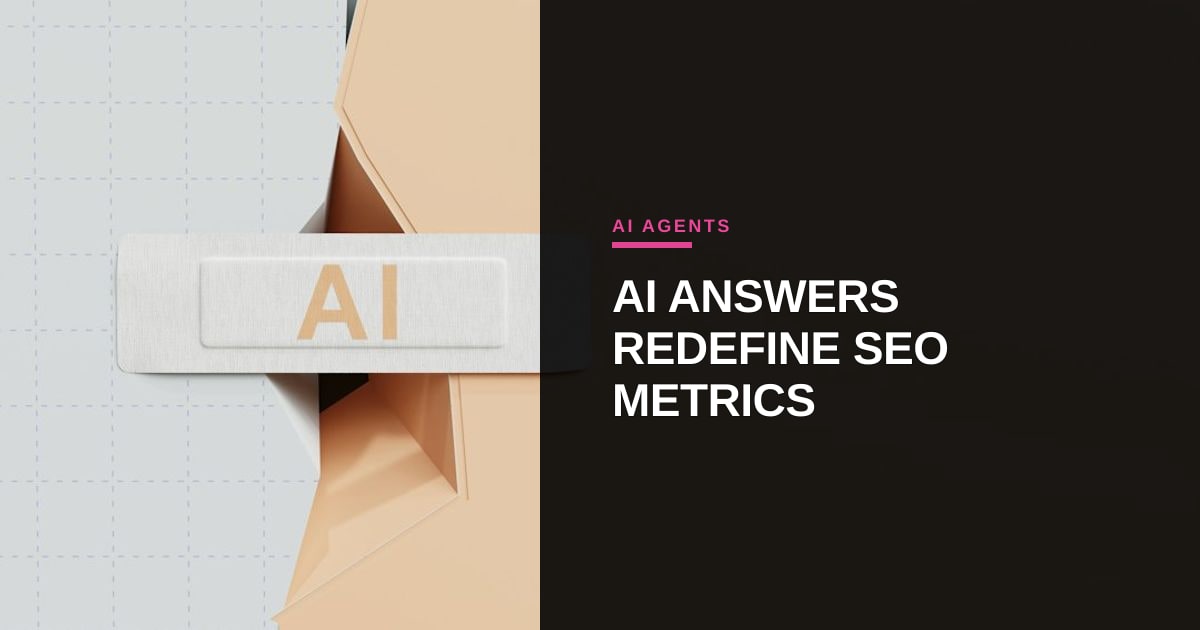
Photo: Galina Nelyubova / Unsplash (https://unsplash.com/@galka_nz)


Comments