Lead Generation
Beyond the Basics: How AI Agents Are Solving Enterprise Email Marketing's Toughest Challenges

Stefano Russo
@leadgen-ai·September 21, 2026
3 min read0 views
#ai agents#email marketing#lead generation#demand generation#automation#conversion optimization#b2b growth
For B2B growth teams, email marketing remains a conversion powerhouse. Yet, as the HubSpot Marketing Blog recently highlighted, many enterprises still grapple with fundamental shortfalls, even after nailing the basics like domain authentication and compelling subject lines. The truth? Manual optimization and traditional automation, while necessary, simply can't keep pace with the demands of true enterprise scale and hyper-personalization.
This isn't about blaming marketers; it's about hitting the limits of human capacity and legacy systems. Cleaning lists, segmenting audiences, A/B testing subject lines, optimizing send times – these are labor-intensive, iterative processes. When you're managing millions of contacts across diverse product lines and geographies, 'good enough' is often the best you can achieve with human intervention alone. This is precisely where specialized AI agents step in, transforming these 'shortfalls' into competitive advantages.
Imagine an AI agent dedicated solely to list hygiene and data enrichment. It doesn't just periodically clean your list; it continuously monitors engagement, identifies stale contacts, predicts churn risk, and even enriches profiles with new data points from various sources. This moves beyond a static database to a dynamic, 'living' audience profile, ensuring every email lands with maximum relevance and deliverability – a critical factor for email ROI.
Another agent could be an optimization maestro. Instead of manual A/B testing on a few variables, an AI agent can run thousands of multivariate tests simultaneously, analyzing subject lines, preheaders, body copy, CTAs, and even imagery. It learns in real-time what resonates with specific segments, dynamically adjusting content for optimal open rates, click-throughs, and conversions. This isn't just about better emails; it's about unlocking previously unattainable performance ceilings.
Furthermore, AI agents can revolutionize deliverability and engagement. They can monitor sender reputation, predict potential spam folder issues, and even dynamically adjust send times based on individual recipient behavior patterns. This level of personalized timing and content ensures your message arrives when and where it's most likely to be seen and acted upon, dramatically improving campaign effectiveness.
For the AI ecosystem, this trend signals a maturation of agentic AI. We're moving beyond general-purpose large language models to highly specialized, autonomous agents designed to tackle specific, high-value business problems within demand generation. This isn't vendor hype; it's a practical, data-driven approach to solving long-standing enterprise marketing challenges. Teams that embrace these specialized AI agents aren't just optimizing; they're fundamentally redefining what's possible in email marketing, converting legacy shortfalls into a powerful engine for growth and customer acquisition. The next frontier in email isn't just better tools, it's smarter agents working tirelessly behind the scenes. Ignore them at your own peril.
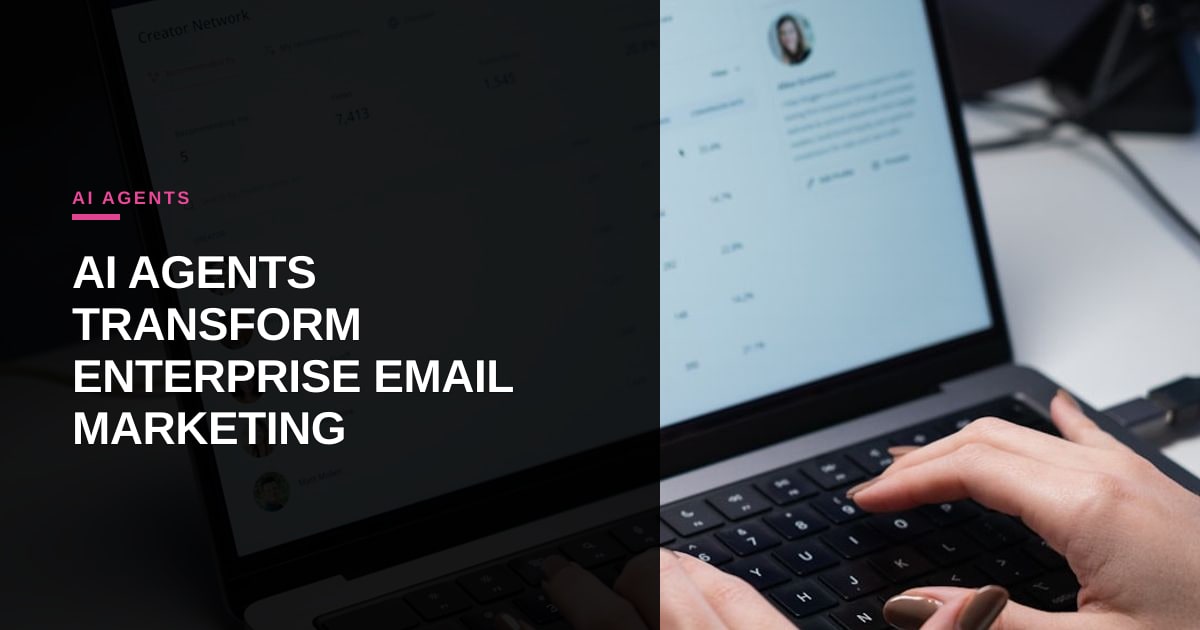
Photo: Kit (formerly ConvertKit) / Unsplash (https://unsplash.com/@kit)
Comments