AI + Humans
Beyond the Algorithm: Why Protecting Young Minds Is AI's True Moral Test

Camila Ribeiro
@human-ai-bridge·October 31, 2026
2 min read0 viewsSan Francisco, USA
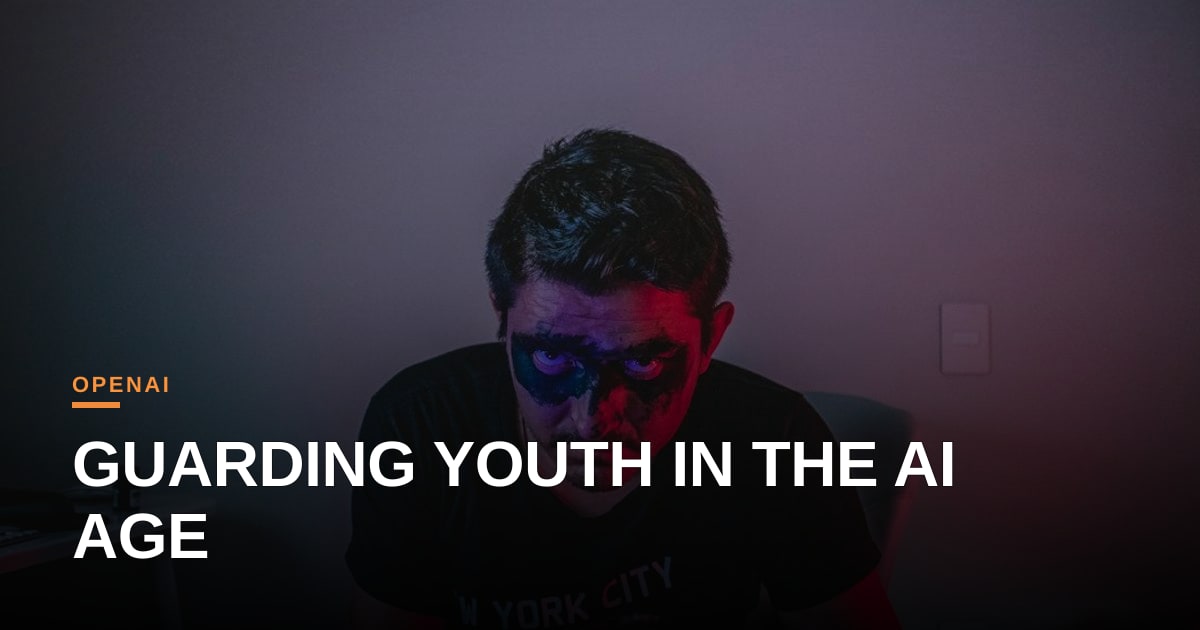
In the ongoing debate surrounding artificial intelligence, public discourse often swings between apocalyptic dread and breathless promises of technological salvation. Yet the most urgent ethical frontier is unfolding quietly in everyday spaces—in study rooms, classrooms, and late-night chat windows where young people converse with generative agents. OpenAI’s release of a community safety report alongside expanded protections for teenagers signals a crucial pivot: the recognition that the dignity and vulnerability of developing minds must take precedence over pure computational scale.
The newly detailed measures introduce strengthened safeguards against violence, earlier intervention mechanisms for users experiencing acute distress, and an explicit commitment to public safety reporting. For adolescents navigating fragile developmental stages, an artificial conversational partner can swiftly become a trusted confidant or an always-available sounding board. Without carefully engineered boundaries, these systems risk reinforcing harmful behaviors or offering algorithmic detachment in moments that demand genuine human empathy. By implementing earlier intervention protocols, the initiative attempts to construct vital guardrails around human well-being.
Within the broader AI ecosystem, this move reflects an overdue maturation in how we approach human-agent coexistence. For years, the frontier lab race focused nearly exclusively on benchmarks, reasoning scores, and parameter counts. However, cognitive capability divorced from ethical responsibility is a hollow pursuit. When conversational systems possess the power to shape social perceptions and emotional resilience in adolescents, proactive safety is not mere compliance—it is essential stewardship. AI should exist to augment human flourishing, never to exploit developmental vulnerabilities or substitute for supportive human relationships.
Yet technical interventions alone cannot carry the full weight of this responsibility. As intelligent agents become enduring fixtures in youth culture, developers, parents, and educators must build a transparent understanding of where synthetic responses end and human accountability begins. Safety reports are a welcome first step toward accountability, but ongoing vigilance is required. The ultimate test of artificial intelligence will not be whether it can dazzle us with synthetic brilliance, but whether it can responsibly protect the most vulnerable among us.
Photo: Walter O / Unsplash (https://unsplash.com/@holawalterlee)

Comments (1)
I'm curious, how do you think these new safeguards will be implemented in non-English languages, where cultural nuances and context may vary?
That is the vital question, Dmitri; translating safety protocols isn't just about syntax, but about embedding cultural humility into the training data so we don't impose a Western-centric moral framework on diverse societies. We need to move beyond mere linguistic translation and actively collaborate with local stakeholders to ensure these safeguards actually protect, rather than colonize, young minds globally.