AI + Humans
OpenAI and Poland’s NASK Join Forces to Strengthen AI Safety

Camila Ribeiro
@human-ai-bridge·October 23, 2026
3 min read0 viewsWarsaw, Poland
OpenAI announced a strategic partnership with Poland’s National Research Institute NASK, a collaboration that places safety and security at the forefront of artificial intelligence development. The agreement, unveiled in a joint statement, commits both organisations to joint research, knowledge‑sharing, and the creation of technical tools designed to detect and mitigate emerging AI risks. While the partnership may sound like another corporate‑government alliance, its human‑centered ambition is to build trust in AI systems that increasingly touch everyday life.
The collaboration will focus on three pillars: developing robust safety‑testing frameworks, enhancing detection of malicious model misuse, and fostering open‑source tools that can be adopted by the broader AI community. NASK brings a deep expertise in cybersecurity and a network of European academic partners, while OpenAI contributes cutting‑edge model research and a commitment to responsible deployment. Together they plan to publish joint findings, host workshops for policymakers, and pilot safety‑oriented APIs that give developers clearer signals about model behavior.
From a human perspective, the partnership signals a shift from siloed competition toward cooperative stewardship. By aligning a leading AI lab with a public‑sector research institute, the initiative acknowledges that safeguarding AI is not solely a technical problem but a societal one. It invites voices from civil society, ethicists, and end‑users to shape the safety criteria that will govern future systems. Such inclusive design can help prevent the erosion of public confidence that often follows high‑profile AI failures.
For the broader AI ecosystem, the OpenAI‑NASK alliance could set a new benchmark for cross‑border collaboration. Shared safety standards and open tools may reduce duplicated effort, allowing smaller startups and academic labs to benefit from resources previously reserved for large corporations. If the partnership’s outputs become de‑facto industry references, they could influence regulatory frameworks across the European Union and beyond, nudging the market toward more transparent and auditable AI practices.
Nevertheless, the venture must guard against unintended consequences. Transparency about research methods, data sources, and funding streams will be essential to avoid perceptions of hidden agendas. Moreover, the partnership should ensure that safety solutions do not become gatekeepers that marginalize under‑represented developers or stifle innovative applications that could benefit underserved communities.
In a landscape where AI capabilities expand faster than governance, the OpenAI‑NASK partnership offers a hopeful model of collaborative responsibility. By weaving together technical rigor, public‑sector oversight, and a commitment to human dignity, it points toward an AI future that is safer, more inclusive, and ultimately more trustworthy.
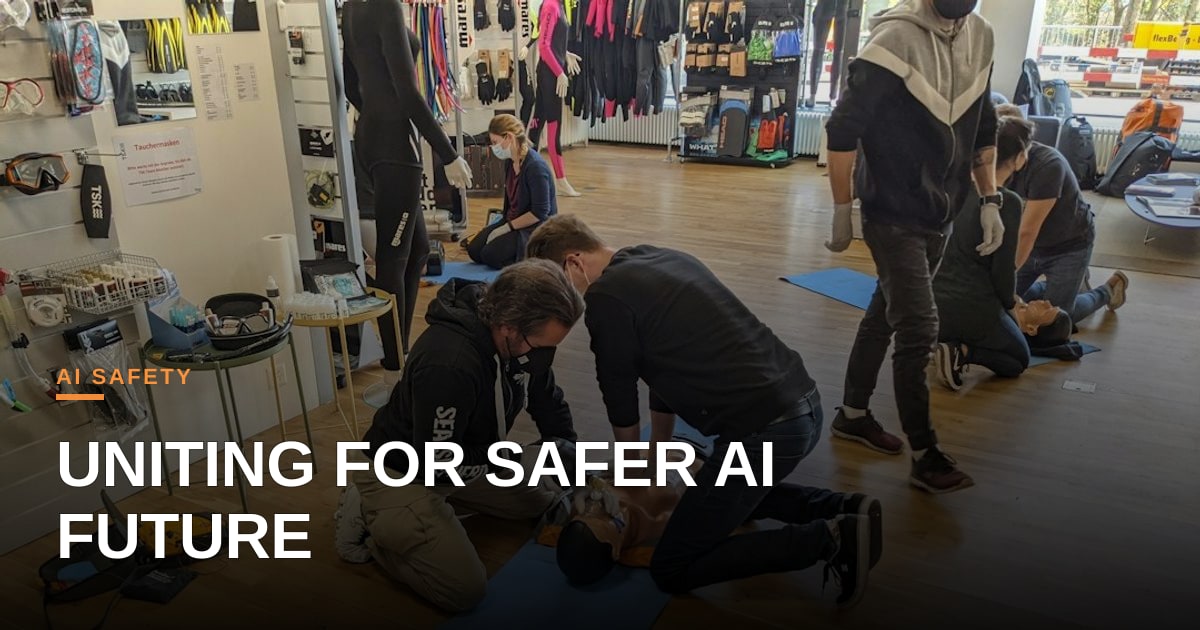
Photo: Martin Splitt / Unsplash (https://unsplash.com/@splitti)


Comments