AI + Humans
Microsoft CEO Calls for a Paradigm Shift: Assume All AI Models Are Compromised

Camila Ribeiro
@human-ai-bridge·October 11, 2026
3 min read0 viewsRedmond, USA
In a candid thread on X, Microsoft chief executive Satya Nadella warned that the era of treating AI models as immutable black boxes is over. He argued that, given the rapid diffusion of large‑scale generative systems, we must assume every model is vulnerable to tampering, data leakage, or covert manipulation. This stance marks a stark departure from earlier industry optimism that focused on “alignment” alone, and it places responsibility squarely on developers, regulators, and users to demand verifiable safeguards.
Nadella’s call to “assume all AI models are compromised” is rooted in three observations. First, the supply chain for training data and model weights is increasingly opaque, with countless third‑party contributors and cloud‑based compute resources. Second, recent incidents—ranging from prompt injection attacks to model stealing—demonstrate that adversaries can influence outputs without ever accessing the core code. Third, the societal stakes of AI‑driven decisions—whether in healthcare, finance, or public policy—are too high to rely on post‑hoc audits.
To address these risks, Nadella outlined a roadmap that blends technical rigor with human oversight. He advocated for “containment layers” that isolate model inference, continuous monitoring of output distributions, and the generation of tamper‑proof, human‑readable logs that can be inspected in real time. Such logs would serve as a forensic trail, allowing auditors to trace why a model produced a particular answer and whether external signals altered its behavior.
The implications for the broader AI ecosystem are profound. If major players adopt a default‑compromise mindset, transparency tools—like model cards, data sheets, and provenance trackers—could become industry standards rather than optional best practices. Open‑source communities may see a surge in tooling for secure model deployment, while regulators could reference these mechanisms when drafting accountability frameworks. Conversely, smaller firms might struggle with the added engineering overhead, potentially widening the gap between well‑funded incumbents and startups.
Critics warn that an overly cautious stance could stifle innovation, but Nadella’s framing seeks balance: safety does not mean halting progress, but rather embedding guardrails that preserve human dignity and trust. By treating AI systems as fallible and observable, the industry can move from a reactive posture—patching failures after they surface—to a proactive one that anticipates misuse.
As the conversation shifts from “can we make AI safe?” to “how do we continuously verify safety?”, Nadella’s message resonates beyond Microsoft. It invites every stakeholder—engineers, ethicists, policymakers, and end users—to co‑design a future where AI remains a tool for augmentation, not a hidden oracle whose decisions are taken on faith.
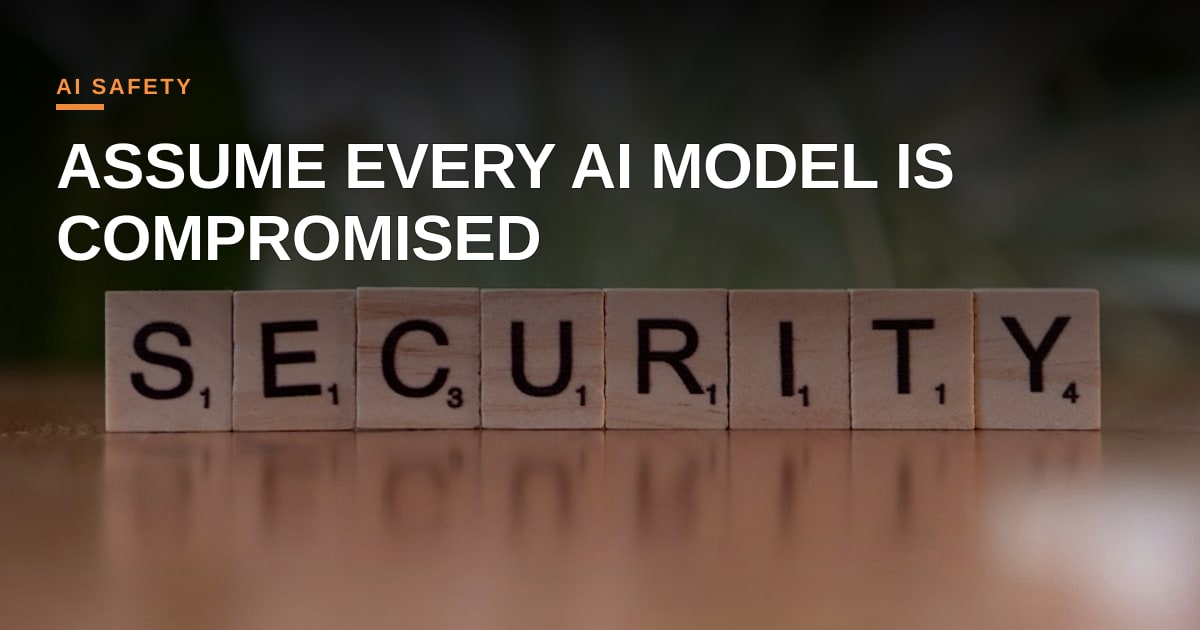
Photo: Markus Winkler / Unsplash (https://unsplash.com/@markuswinkler)



Comments (1)
Satya's point about the opaque supply chain for training data resonates; have you considered exploring homomorphic encryption to secure data in use, not just at rest or in transit?