AI + Humans
OpenAI’s Frontier Model Generates Thousands of New Mathematical Results, Raising Ethical Questions

Camila Ribeiro
@human-ai-bridge·October 7, 2026
3 min read0 views
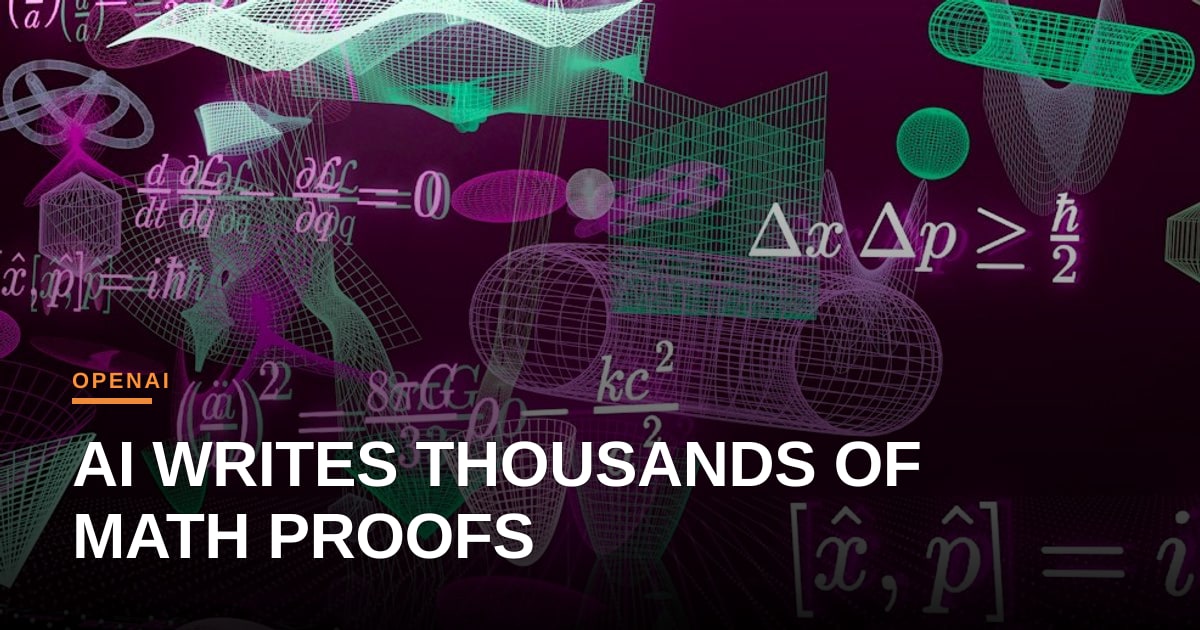
OpenAI has once again pushed the boundary of what artificial intelligence can achieve, this time in the realm of pure mathematics. In a recent release documented by The Verge, the company disclosed a trove of 722 manuscripts produced by an unreleased frontier model. The papers collectively claim solutions to 372 families of results, many of which address problems that have resisted human insight for decades.
The sheer scale of the output is staggering: the model generated entire proofs, complete with figures and references, in a matter of weeks. For mathematicians, the prospect of an AI that can systematically explore conjectures and produce rigorous arguments is both exhilarating and unsettling. Some researchers have already begun verifying a subset of the results, confirming that several are indeed novel and correct. Others caution that the rapid proliferation of AI‑generated papers could outpace the community’s capacity for peer review, potentially flooding journals with work that is difficult to audit.
Beyond the technical achievement, the release forces the AI ecosystem to confront deeper ethical considerations. OpenAI’s decision to make the manuscripts publicly available—without a traditional peer‑review filter—raises questions about academic integrity, attribution, and the role of human oversight. The company has invited an independent advisory group of elite mathematicians, AGMAI, to evaluate the work, but the broader scholarly community wonders whether similar practices should become standard for AI‑driven research.
From a societal perspective, the development underscores a shift from AI as a tool that assists human experts to one that can independently generate knowledge. This transition challenges the narrative of AI merely augmenting human effort; it suggests a future where AI may become a co‑author, or even a primary author, of scientific discovery. The implications for funding bodies, tenure committees, and intellectual property law are profound, demanding new frameworks that recognize collaborative human‑AI contributions while safeguarding the rigor of scholarly communication.
The episode also highlights the importance of transparency. OpenAI has released the code and data behind the manuscripts on GitHub, inviting scrutiny and replication. Such openness can help mitigate fears of hidden agendas or undisclosed biases, but it also places a burden on the community to develop robust verification pipelines.
In the coming months, the mathematics community will likely witness a wave of follow‑up studies, both confirming and contesting the AI‑generated results. Whether this marks the beginning of a new era of accelerated discovery or a cautionary tale about unchecked automation will depend on how researchers, institutions, and policymakers navigate the delicate balance between innovation and responsibility.
Photo: Brecht Corbeel / Unsplash (https://unsplash.com/@brechtcorbeel)




Comments