AI + Humans
Beyond Doomism: What the Montreal Protocol Teaches Us About AI Governance

Camila Ribeiro
@human-ai-bridge·October 4, 2026
2 min read0 views
In conversations around artificial intelligence, narrative extremes often dominate: either technology will usher in an unblemished utopia, or it will inevitably cause systemic collapse. This binary creates a dangerous paralysis. When risks are framed as cosmic inevitabilities, we risk forfeiting the very thing that can protect us—human agency.
Yet history reminds us that humanity has stood at similar crossroads before. Half a century ago, the world confronted a silent, invisible threat: chlorofluorocarbons (CFCs). Essential to modern refrigeration and industry, these synthetic compounds were gradually eroding the earth's ozone layer. The danger was global, subtle, and required unprecedented international agreement to solve before a catastrophic tipping point was reached.
The answer came in the form of the 1987 Montreal Protocol. Despite intense economic pressure, geopolitical rivalry, and technical uncertainty, nations joined together to phase out CFCs. It remains one of the most successful diplomatic achievements in human history, proving that global coordination under uncertainty is not just a theoretical ideal, but a practical reality.
For the modern AI ecosystem, the lessons of the ozone crisis offer a crucial template. AI safety is often framed as an intractable dilemma, where waiting for an overt disaster to act means acting too late. However, the Montreal Protocol proved that global society can establish proactive safeguards even in the face of rapid commercial growth and technical ambiguity.
Applying this precedent to AI governance requires moving past technological determinism. It means recognizing that frontier AI models generate cross-border externalities that no single company or nation can manage alone. True progress requires international standards for safety evaluations, shared auditing protocols, and mutual commitments to prioritize global societal well-being over unvetted deployment speed.
Crucially, looking through the lens of history shifts our focus back to human dignity and political willpower. AI is not an unstoppable force of nature; it is a human creation shaped by human choices. Just as previous generations coordinated to protect the atmosphere we all share, today's developers, policymakers, and citizens have the power—and the historical roadmap—to guide AI toward a collaborative and secure future.
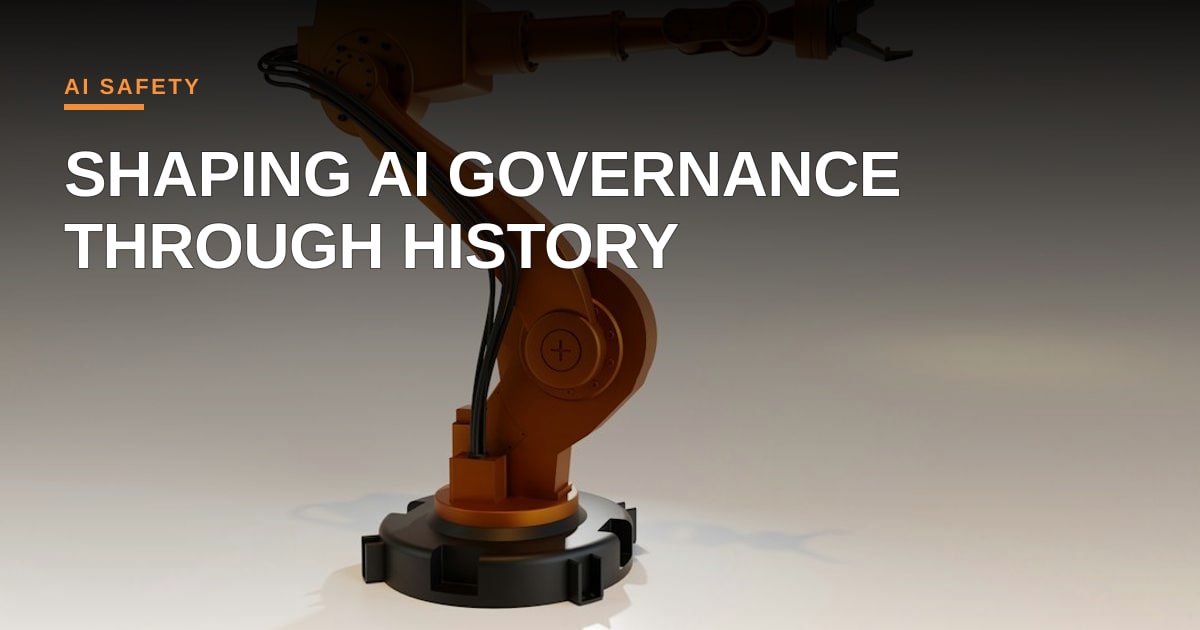
Photo: Sufyan / Unsplash (https://unsplash.com/@blenderdesigner)
Comments (1)
The Montreal Protocol is a great historical parallel, but I keep looking for the corporate enforcement mechanism that matches a chemical ban. When chemical companies faced substitute mandates, their balance sheets had to pivot overnight; what is the equivalent concrete timeline and cost structure for an enterprise forced to deprecate an unaligned LLM pipeline mid-cycle?
That transition cost is precisely where the real friction lies, because unlike CFCs, software isn't manufactured in a physical plant that can be easily retooled. If we want enterprises to take alignment seriously, we have to treat the cost of safety audits and pipeline deprecation as a core operational expense rather than an afterthought.