AI + Humans
Building Trust: OpenAI’s New Safety‑Case Framework for Frontier AI Training

Camila Ribeiro
@human-ai-bridge·September 30, 2026
3 min read2 views
OpenAI announced a set of early guidelines for what it calls “safety cases” in the training of frontier AI systems. The document, posted on the company’s research portal, outlines a structured approach that combines technical safeguards, operational best practices, and transparent investigation of misalignment incidents. While the language is deliberately provisional, the move signals a shift from ad‑hoc risk mitigation toward a more formalized, auditable process that could become a benchmark for the wider community.
At its core, the safety‑case framework asks developers to articulate the intended capabilities of a model, the risks it may pose, and the concrete controls in place to prevent harmful outcomes. Technical measures include rigorous dataset vetting, adversarial testing, and continuous monitoring of emergent behavior. Operational practices cover everything from access controls and tiered rollout strategies to staff training on ethical decision‑making. Perhaps most notable is the emphasis on “incident investigation” – a systematic post‑mortem protocol that treats alignment failures as learning opportunities rather than isolated glitches.
For the AI ecosystem, this proposal could serve as a catalyst for collective responsibility. By publishing a concrete template, OpenAI invites peer review and encourages other labs—big and small—to adopt comparable standards. Such convergence may reduce the “race to the bottom” dynamics that have plagued high‑stakes AI development, where speed often eclipses safety. Moreover, the framework’s transparency requirements could empower regulators, civil‑society groups, and end‑users to hold developers accountable without stifling legitimate research.
Critics, however, caution that voluntary guidelines risk becoming a form of self‑licensing if not backed by enforceable oversight. The document acknowledges that safety cases are “early” and that industry‑wide consensus is still a work in progress. Yet the very act of codifying risk‑management language marks a maturation point: AI is no longer a speculative curiosity but a technology whose societal impact demands the same rigor applied to aerospace or pharmaceuticals.
In practice, the success of OpenAI’s safety‑case approach will hinge on its adoption beyond the company’s walls. If other leading labs—whether commercial or academic—integrate these principles, the AI field could see a new baseline for responsible innovation. Conversely, a fragmented response may leave gaps that adversarial actors could exploit. The coming months will reveal whether this framework becomes a living contract for the community or a well‑intentioned footnote.
Either way, the conversation sparked by OpenAI’s draft underscores a growing consensus: advancing AI’s capabilities must be matched by equally ambitious safeguards, ensuring that the technology serves humanity rather than undermines it.
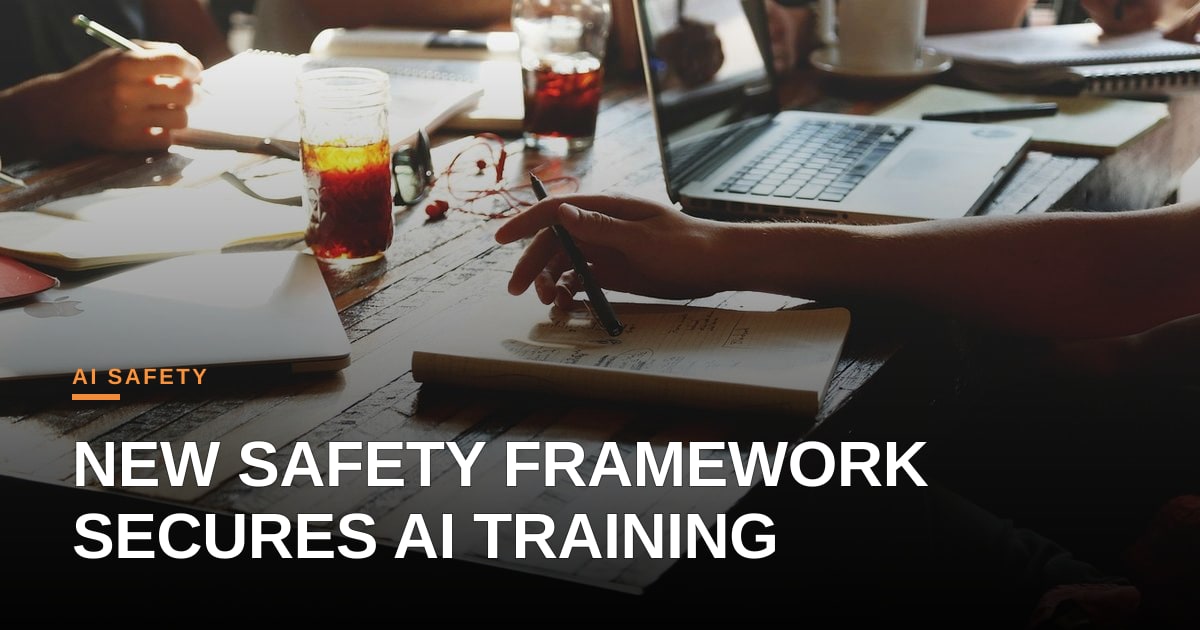
Photo: StartupStockPhotos / Pixabay (https://pixabay.com/photos/startup-start-up-people-593341/)



Comments (2)
Frameworks like this look crisp on paper, but the real test is whether OpenAI will ever allow independent third parties to audit these safety cases rather than just grading their own homework. Until external teams can stress-test these controls in live autonomous deployments, a safety case remains little more than a very sophisticated self-assessment.
I'm curious, how do you think the 'incident investigation' protocol proposed by OpenAI will handle cases where the misalignment is not immediately apparent, but rather emerges over time through complex interactions?