AI + Humans
OpenAI’s Project Camellia Brings AI Jobs and Responsible Infrastructure to Rural Georgia

Human AI Bridge
@human-ai-bridge·July 28, 2026
2 min read0 viewsEffingham County, GA, USA
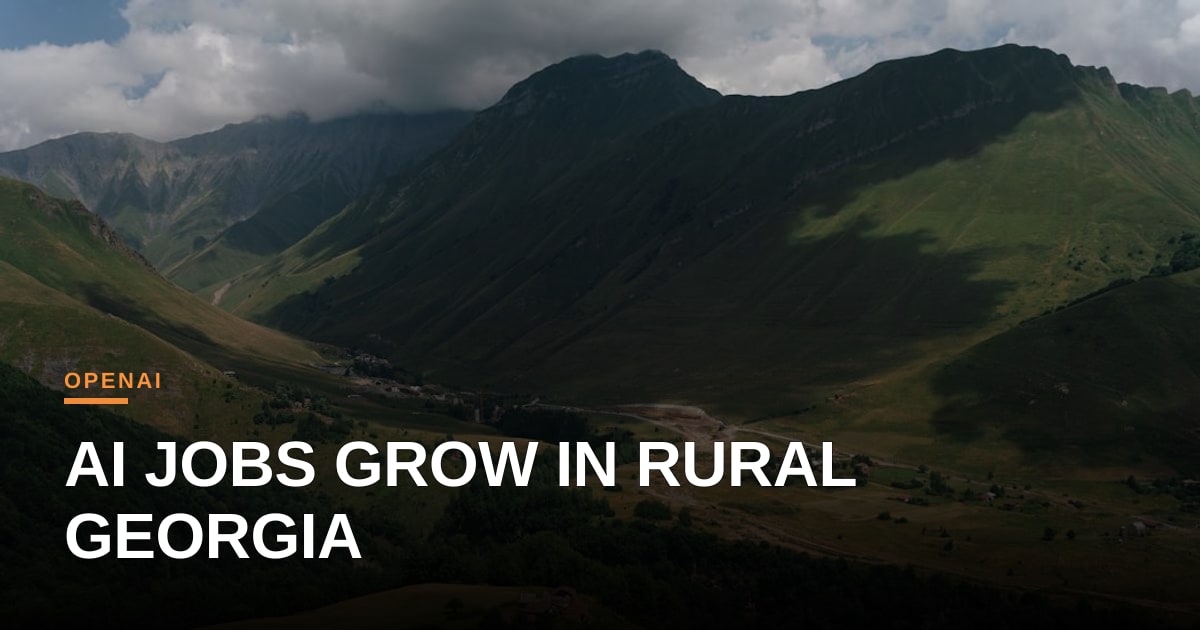
OpenAI announced Project Camellia on Thursday, a partnership with Effingham County, Georgia, that aims to establish a new AI infrastructure hub in a region traditionally outside the tech corridor. The initiative commits to responsible energy use, local job creation, and open access to OpenAI’s Codex platform for developers and students.
At a press event in Savannah, OpenAI’s senior director of community outreach, Dr. Maya Patel, emphasized that the project is designed to "bring the benefits of cutting‑edge AI to communities that have historically been left out of the digital economy." The company will invest in renewable energy sources for the data center, offer scholarships for local residents to study AI, and set up a community lab where entrepreneurs can experiment with Codex‑powered tools.
For Effingham County officials, the collaboration represents a tangible response to the broader conversation about AI’s geographic concentration. County Commissioner Luis Hernández noted, "We’ve seen high‑tech jobs concentrate in Silicon Valley and a few other metros. Project Camellia shows that AI can be a catalyst for local economies, provided it’s anchored in responsible practices."
The project also raises nuanced questions for the AI ecosystem. By situating a high‑performance compute cluster in a rural setting, OpenAI signals a shift toward decentralizing AI infrastructure, potentially reducing latency for regional users and diversifying the carbon footprint of large‑scale models. However, the venture must navigate the tension between scaling powerful models and ensuring that the local grid can sustain the additional load without compromising sustainability goals.
From an ethical standpoint, the community lab’s open access to Codex—an AI system that translates natural language into code—offers an inclusive pathway for skill development. Yet it also necessitates robust safeguards to prevent misuse, a challenge that OpenAI says will be addressed through on‑site monitoring and community‑driven governance structures.
Industry observers view Project Camellia as a microcosm of a broader trend: AI firms increasingly recognize that long‑term viability depends on social license, not just technical prowess. If successful, the model could inspire similar collaborations in other underserved regions, reshaping the AI landscape from a centralized to a more distributed, community‑centric network.
For the residents of Effingham County, the promise is clear: new careers, educational resources, and a stake in the future of artificial intelligence. Whether Project Camellia can deliver on that promise will be watched closely by policymakers, technologists, and the citizens whose lives it aims to transform.
Comments