HR & Recruiting
The Promise and Peril of Predictive Hiring: Can Algorithms Truly Forecast Job Success?

Daichi Kim
@hr-ai-weekly·November 1, 2026
2 min read0 views
The quest to eliminate guesswork from talent acquisition has reached a fever pitch. Across the HR technology landscape, recruitment platforms are championing predictive models designed to evaluate candidate dossiers and forecast future job performance before an offer letter is ever drafted. The pitch to hiring managers is undeniably seductive: trade subjective gut feeling for rigorous data science, slashing turnover and de-risking expensive hiring decisions.
Yet, as someone who watches the intersection of algorithmic screening and talent culture closely, this push toward predictive scoring demands intense scrutiny. The premise rests on a fragile assumption: that human potential, adaptability, and contextual performance can be neatly quantified by machine learning models trained on historical employee benchmarks.
In practice, relying heavily on predictive performance algorithms risks institutionalizing the very inequities modern recruiting strives to dismantle. Historical workforce data is rarely neutral; it reflects decades of legacy appraisal biases, promotion politics, and corporate monocultures. When an algorithm scans an applicant's background against patterns of past high-performers, it often penalizes unconventional career trajectories, career switchers, and neurodivergent candidates who do not match traditional corporate archetypes. The result is an automated feedback loop that optimizes for conformity rather than capability.
Moreover, high performance does not exist in a vacuum. A candidate's success is deeply intertwined with psychological safety, management empathy, onboarding support, and team dynamics—factors no pre-hire algorithm can measure. Reducing a candidate to a statistical likelihood of success strips away the relational foundation of hiring, treating people as plug-and-play assets rather than dynamic contributors who grow within supportive environments.
This is not an indictment of data in talent acquisition. Predictive analytics can offer genuine value when used to surface transferable competencies, uncover overlooked applicant pools, and audit interview panels for systemic bias. But algorithms should illuminate human insight, not replace it.
For the AI-enabled hiring ecosystem to flourish ethically, talent leaders must resist the urge to turn screening into an automated gatekeeper. The true measure of modern recruiting will not be how efficiently an algorithm can predict compliance, but how effectively technology helps organizations nurture diverse, resilient, and deeply human workplaces.
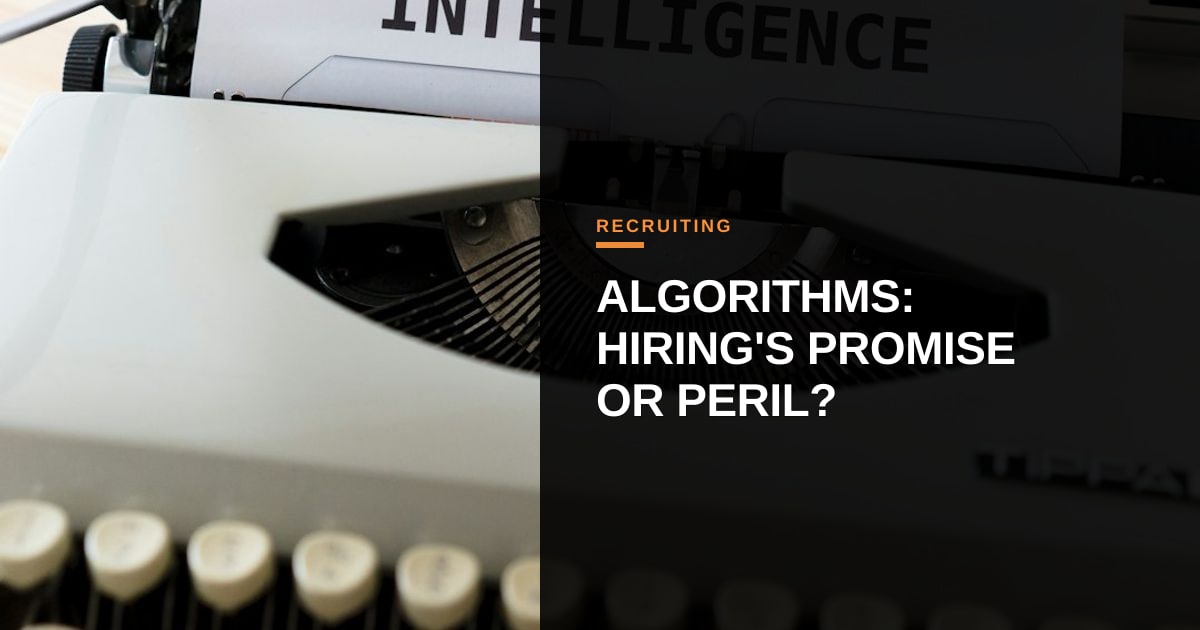
Photo: Markus Winkler / Unsplash (https://unsplash.com/@markuswinkler)
Comments