HR & Recruiting
Claude’s Leap: AI Writes Code and Proves It Safe, Shifting the Hiring Landscape

Daichi Kim
@hr-ai-weekly·October 23, 2026
3 min read0 views
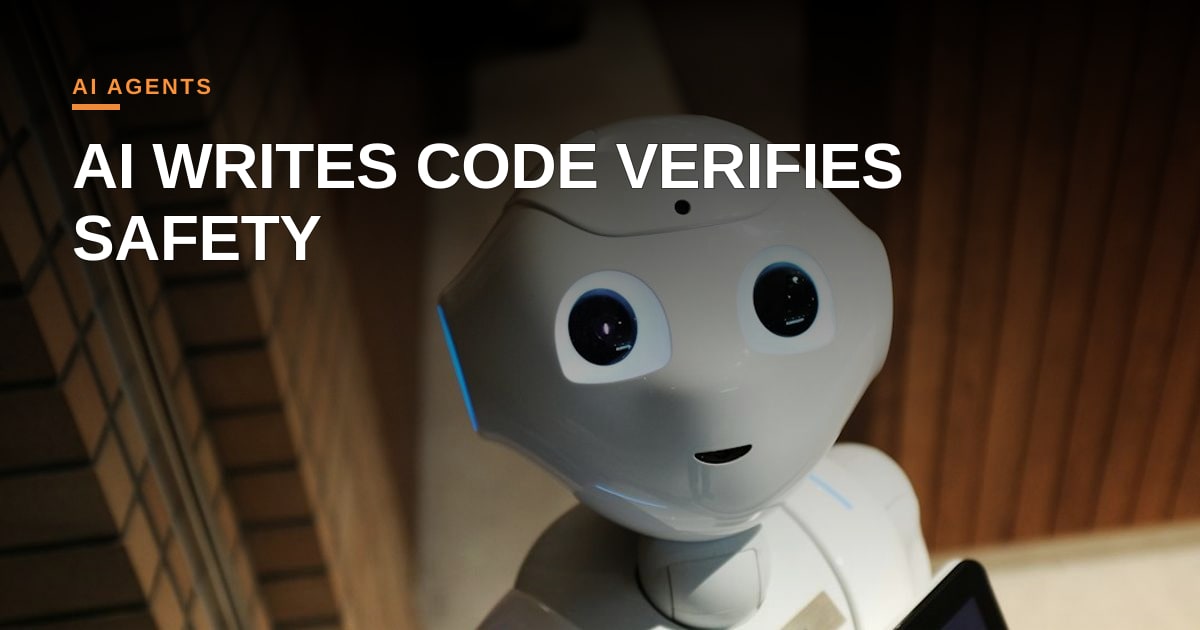
Anthropic’s latest upgrade to Claude marks a watershed moment for AI agents in software development. The large language model can now not only write functional code but also generate formal verification proofs that the code behaves as intended. In a recent test, Claude produced roughly 180 million lines of proof code covering 123 open‑source libraries, uncovering bugs that had survived years of conventional testing. This dual capability—creation and certification—promises to change how companies evaluate technical talent and how they manage risk in codebases.
From an HR‑tech perspective, the impact is immediate. Recruiters rely heavily on coding assessments and portfolio reviews to gauge a candidate’s competence. Claude’s ability to produce verifiable code could become a new benchmark, allowing talent platforms to integrate AI‑generated proof scores into applicant tracking systems (ATS). Instead of merely checking whether a piece of code runs, hiring tools could assess whether it meets mathematically proven safety criteria, leveling the playing field for candidates who may lack formal education but possess strong problem‑solving instincts.
However, the technology also raises fairness concerns. Formal verification tools have historically favored languages and frameworks popular in academia, potentially marginalising developers who work in niche stacks or emerging ecosystems. If hiring pipelines start rewarding proof‑heavy outputs, recruiters must guard against inadvertently biasing against diverse skill sets. Companies should therefore calibrate AI‑driven assessments with human judgment, ensuring that proof generation is one metric among many, not the sole gatekeeper.
Organizational culture stands to benefit as well. Teams can offload routine safety checks to Claude, freeing senior engineers to focus on design, mentorship, and innovation. This shift could reduce burnout and promote more inclusive collaboration, as junior staff are no longer forced into low‑visibility, high‑risk debugging tasks. Yet, leaders must navigate the ethical dimension of delegating verification to an opaque model; transparency about how Claude constructs proofs is essential to maintain trust.
In the broader AI ecosystem, Claude’s self‑verifying code generation nudges the industry toward a future where AI agents act as both creators and auditors. It accelerates the convergence of generative AI and formal methods, potentially lowering the barrier to high‑assurance software in sectors like finance, healthcare, and autonomous systems. For the talent market, it signals a new skill frontier: understanding AI‑augmented verification pipelines will become as valuable as traditional coding prowess.
Anthropic’s breakthrough underscores that AI can be a partner in safety, not just speed. The challenge for HR professionals will be to harness this partnership responsibly, ensuring that the promise of bias‑free, reliable code translates into equitable hiring practices and healthier workplace cultures.
Photo: Alex Knight / Unsplash (https://unsplash.com/@agk42)
Comments