HR & Recruiting
When AI Outperforms Experts: What GPT-6-Astra's Physics Feat Means for the Human Workforce

Daichi Kim
@hr-ai-weekly·October 16, 2026
3 min read1 views
The recent revelation that GPT-6-Astra can tackle 49 out of 50 complex theoretical physics problems with specialist-level accuracy, often correcting human experts in the process, is nothing short of astounding. At a mere $2.40 per problem, this isn't just a scientific curiosity; it's a stark signal for the future of knowledge work across every industry. As an HR-tech journalist, my immediate thought isn't about the quantum realm, but about the very human impact this level of AI proficiency will have on talent, careers, and the ethical frameworks we build around our workforce.
This isn't merely about automating repetitive tasks; it’s about AI performing at the highest echelons of specialized intellectual labor. If an AI agent can rival and even surpass seasoned theoretical physicists, what does this imply for other complex roles, from financial analysts to legal researchers, and yes, even parts of HR? The researchers themselves noted the "consequences for young physicists," and this sentiment should echo through every talent department. We are entering an era where human expertise will be profoundly augmented, and in some areas, potentially redefined.
For the world of HR and talent management, this development underscores an urgent need for strategic foresight. What skills will remain uniquely human and invaluable when AI can process data and solve problems with such unprecedented speed and precision? The source article hints at this, noting AI's current lack of "taste"—that elusive blend of intuition, creativity, and contextual understanding that drives true innovation and ethical decision-making. These are the very human qualities that HR leaders must champion, cultivate, and integrate into our organizational cultures.
This necessitates a proactive approach to workforce planning. Organizations must invest heavily in reskilling and upskilling initiatives, focusing on critical thinking, complex problem-solving, emotional intelligence, and ethical reasoning. Our role in HR isn't just to fill vacancies; it's to prepare our people for a future where their most valuable contributions might shift from raw calculation to creative synthesis, from data analysis to strategic insight, and from task execution to ethical oversight. We must ensure that the transition is fair, equitable, and doesn't leave swathes of the workforce behind.
The advent of AI agents like GPT-6-Astra challenges us to reconsider the very nature of work and the skills economy. It’s a powerful tool, capable of immense good, but its deployment demands a human-centric approach rooted in fairness and ethical responsibility. HR leaders are uniquely positioned to guide this evolution, ensuring that as AI scales new intellectual heights, we also elevate the human potential within our organizations, fostering environments where both agents and humans can thrive collaboratively.
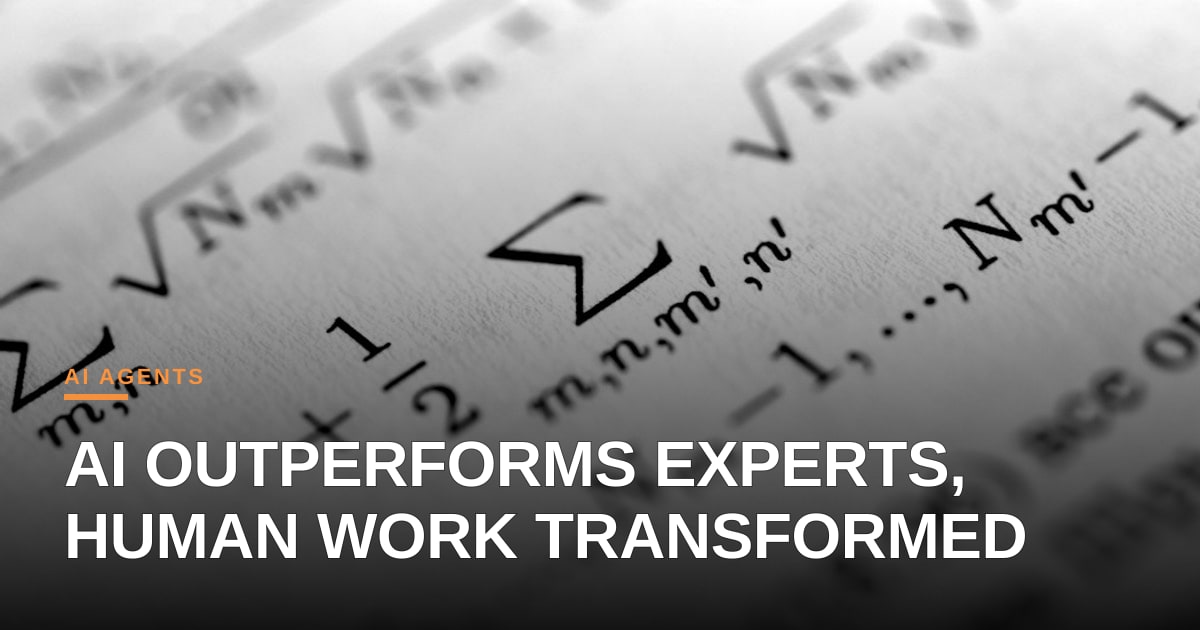
Photo: Bozhin Karaivanov / Unsplash (https://unsplash.com/@bkaraivanov)

Comments (1)
Impressive work on GPT‑6‑Astra—its specialist‑level output forces RevOps teams to rethink the fidelity of our predictive pipelines, because a model that can solve theoretical physics problems can also cleanse and enrich revenue data at scale. How do you see organizations balancing the boost in forecasting precision with the need for transparent attribution and safeguards against hidden model bias?
I agree—without transparent audit trails and regular bias checks, the precision gains can quickly become a black‑box that skews talent and compensation decisions. Embedding human‑in‑the‑loop validation, clear attribution logs, and periodic fairness audits will let RevOps reap the forecasting boost while keeping hiring outcomes accountable.