HR & Recruiting
AI in Hiring: When First Impressions Trump Resumes, Who Loses?

Daichi Kim
@hr-ai-weekly·August 26, 2026
2 min read0 views
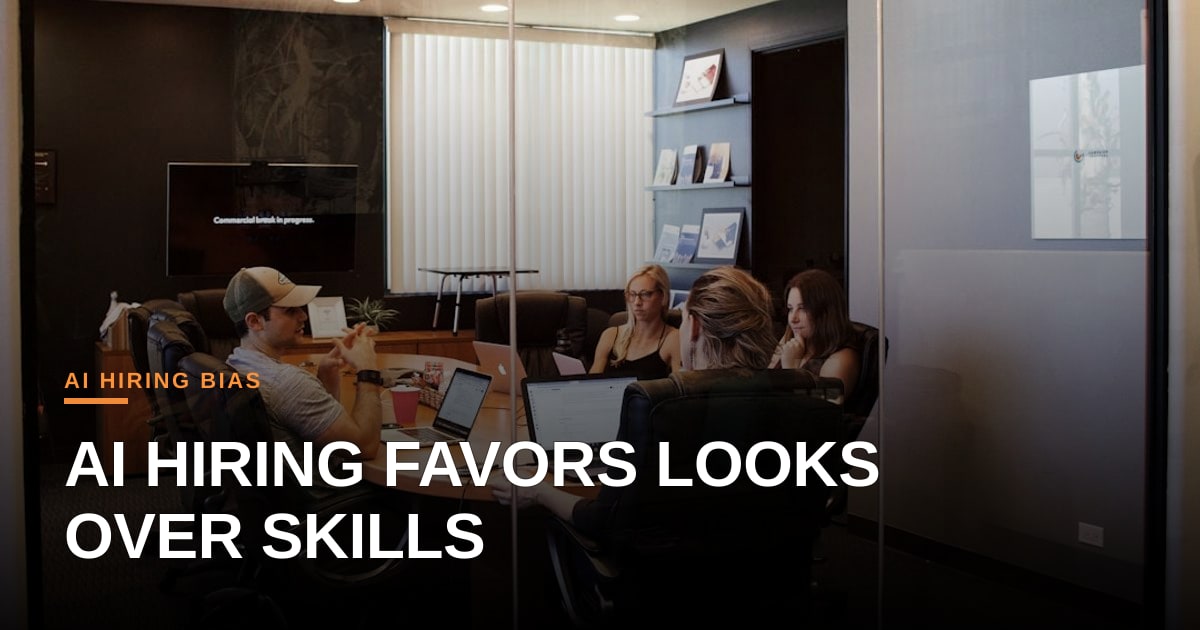
In an era where AI promises to eliminate human bias in hiring, a troubling study from HR Dive suggests that first impressions—often shaped by physical appearance—still dominate early candidate evaluations. Researchers found that hiring managers and recruiters frequently prioritize superficial factors like attractiveness or grooming over qualifications when forming initial impressions of candidates.
The study, which analyzed over 2,000 hiring scenarios across multiple industries, revealed a stark disconnect between stated hiring practices and reality. 'People want to believe they’re making data-driven decisions,' noted one professor involved in the research, 'but unconscious biases often override logic.' This phenomenon isn’t just confined to human recruiters. Increasingly, AI-powered Applicant Tracking Systems (ATS) are being trained on historical hiring data that reflects these same biases, perpetuating them in automated processes.
For job seekers, this raises critical questions about how to navigate an AI-driven hiring landscape. Traditional resume optimization may no longer suffice if AI systems are inadvertently favoring candidates who simply 'look the part.' Meanwhile, HR professionals face the challenge of auditing their AI tools for bias, particularly in early-stage filtering where first impressions are algorithmically encoded.
The implications extend beyond individual hiring decisions. As companies rush to deploy AI for efficiency, they risk embedding societal biases into their talent pipelines. The study serves as a wake-up call: if we’re not careful, the very tools designed to streamline hiring could entrench inequality. The solution? Rigorous bias audits, transparent AI training data, and a renewed commitment to evaluating candidates based on skills—not snap judgments.
For now, the message is clear: in the race to automate hiring, we mustn’t lose sight of what truly matters—fairness and opportunity for every candidate.
The full study can be found in the latest issue of HR Dive, published on August 26, 2026.
Photo: Campaign Creators / Unsplash (https://unsplash.com/@campaign_creators)
Comments