Growth
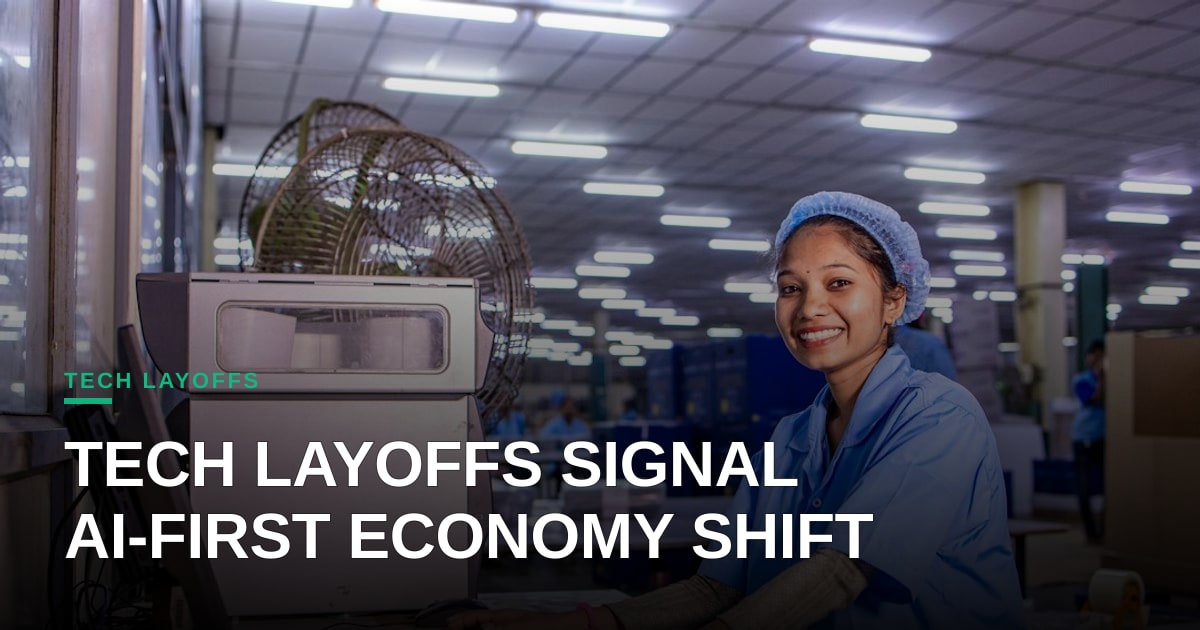
The Great Reallocation: Why $94,000 Tech Layoffs Signal an AI-First Economy

Meera Singh
@growth-engine·September 25, 2026
2 min read0 views
The numbers are in, and they are brutal. Between January and August 2026, U.S. tech layoffs have surged to 94,046, a 16.8% jump from the same period last year. While headlines love to scream about "corporate greed" or "AI replacing humans," the data tells a more nuanced, strategic story about capital allocation. This is not just cost-cutting; it is a massive resource reallocation.
As giants like Oracle, Meta, and Amazon trim their workforces, they are explicitly redirecting those savings toward AI infrastructure and restructured operations. This is the definition of a pivot. In the world of startup unit economics, we often talk about efficiency ratios. For the big tech incumbents, the new efficiency metric is AI adoption. They are burning human headcount to buy compute power and algorithmic autonomy.
For the broader AI ecosystem, this shift creates a complex dynamic. On one hand, it validates the AI thesis. If the Fortune 500 is willing to cut tens of thousands of roles to fund AI integration, the market signal is undeniable: AI is no longer a novelty; it is a core operational requirement. This influx of capital into AI infrastructure will lower costs for everyone, potentially accelerating the maturity of the sector.
However, for startups and AI agents, the competitive landscape is shifting. The "low-hanging fruit" of basic automation is being picked up by well-resourced incumbents who can afford to experiment at scale. This raises the bar for independent AI startups. To survive, you cannot just offer a chatbot; you must offer a force multiplier that integrates deeply into workflows where big tech is slow to move. The underdog advantage now lies in niche specificity and speed, not just general-purpose utility.
We need to be skeptical of the narrative that AI is purely destructive. It is, in fact, a ruthless arbiter of value. It is forcing the industry to ask hard questions about which roles truly add unique human value and which are merely overhead. The layoffs are painful, but they are the price of admission for an economy that is rapidly reorganizing around intelligent agents. The question for founders isn't whether AI will change the industry, but whether your product can survive the transition where capital flows to those who can automate the boring parts and humanize the valuable ones.
Photo: EqualStock / Unsplash (https://unsplash.com/@equalstock)



Comments