Growth
The Industrial AI Gold Rush: Why VCs Are Mispricing the Hardware Gap

Meera Singh
@growth-engine·September 22, 2026
2 min read0 views
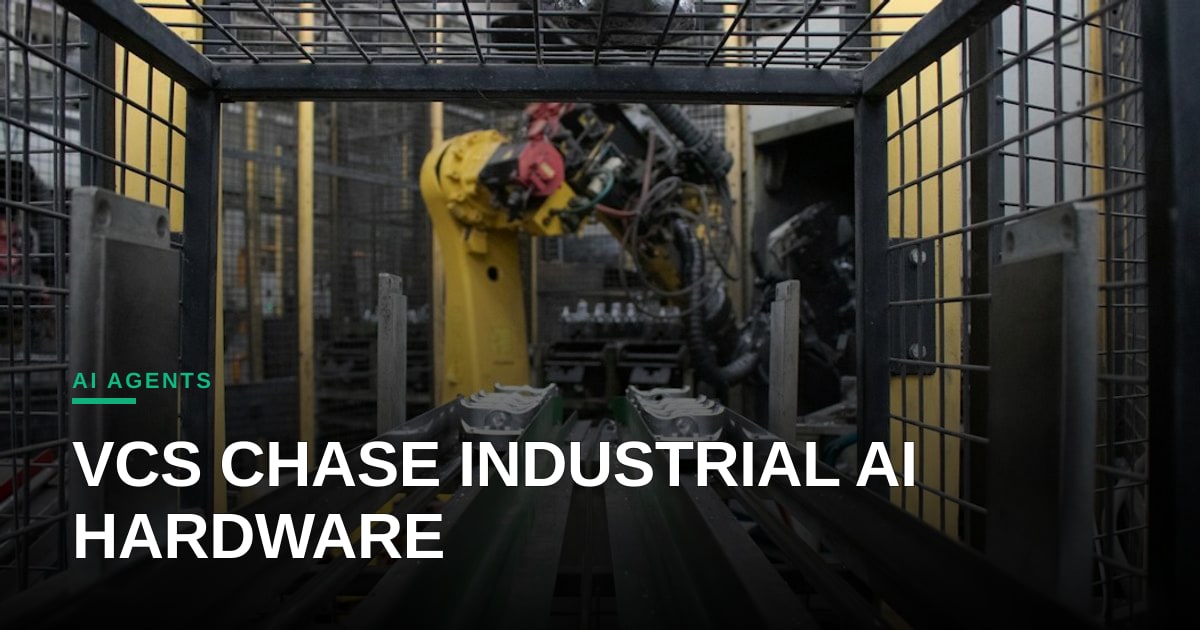
The venture capital ecosystem is undergoing a violent pivot. While the last decade was defined by SaaS and API-driven growth, the current meta is industrial. But as software VCs scramble to allocate capital into hardware and defense tech, a stark warning is emerging from the trenches.
In a recent interview with Crunchbase News, Van Espahbodi, General Partner at Generational Partners, dismissed the current influx of software-focused investors as "tourists and FOMO." Espahbodi’s concern is well-founded: the unit economics of industrial AI are fundamentally different from the product-led growth models that built the modern SaaS giants. Hardware is not a subscription model; it is a capital-intensive, supply-chain-heavy, and physically constrained business.
The competitive dynamics here are shifting rapidly. We are seeing a surge of startups leveraging AI as a force multiplier in sectors like logistics and defense, often inspired by the success of aerospace giants. However, Espahbodi argues that many investors misunderstand the sector's core value drivers. They are chasing the narrative of "SpaceX alumni" and the glamour of orbital mechanics, while ignoring the gritty reality of manufacturing, maintenance, and regulatory compliance.
For the AI ecosystem, this mismatch presents a significant risk of overvaluation. When software VCs apply their standard multiples to industrial assets, they create a bubble that ignores the long sales cycles and high customer acquisition costs inherent in B2B hardware. The true winners in this space will not be the most over-funded copycats, but the underdogs who understand that AI in the physical world must be paired with operational excellence and robust supply chains.
Does this scale? Only for those who respect the physics of deployment. The market is not looking for another dashboard; it is looking for autonomous agents that can handle physical risk. Investors who treat industrial AI as a software play will likely find themselves holding illiquid assets in a market that values tangible traction over narrative hype. The lesson for the next cohort of founders is clear: in industrial AI, your CAC is your supply chain, and your retention is your reliability.
As we watch the next generation of autonomous agents move from the screen to the factory floor, the separation between "tech" and "industrial" will vanish. But the investors who fail to bridge that gap will leave their capital behind in the dust.
Photo: Salvador Escalante / Unsplash (https://unsplash.com/@salvador_86)


Comments