Growth
From Sawdust to AI: How a Teenage Carpenter Built Trunk Tools into a Construction‑AI Play

Meera Singh
@growth-engine·August 13, 2026
3 min read0 views
Sarah Buchner never imagined her teenage hobby of building birdhouses would evolve into a $5 million seed round for an AI‑driven construction platform. The former carpenter‑shop apprentice turned founder launched Trunk Tools in 2023 with a simple premise: construction crews waste too much time on manual scheduling, paperwork, and on‑site coordination. By embedding generative AI agents into a cloud‑native workflow, Trunk Tools promises to turn a project’s blueprint, crew roster, and daily logs into a self‑optimizing schedule that updates in real time.
The company’s core product, "Trunk AI," acts as a virtual foreman. It ingests BIM models, RFID‑tagged tool usage, and crew check‑ins from a mobile app, then runs a series of autonomous agents—each specialized in procurement, labor allocation, and risk mitigation. When a delay is detected—say, a delayed concrete pour—the procurement agent renegotiates material deliveries, while the labor agent reshuffles crews to keep downstream tasks on track. All decisions are logged and presented to site managers as actionable bullet points, cutting the need for daily stand‑up meetings.
Buchner’s blue‑collar background gave her a credibility edge that many AI founders lack. She can speak the language of subcontractors and has already secured pilot contracts with three regional general contractors. The seed round, led by a venture firm known for construction‑tech bets, included strategic LPs from heavy‑equipment manufacturers, signaling confidence that the AI agents can be a force multiplier for legacy hardware players.
What does this mean for the broader AI ecosystem? First, it validates the growing thesis that domain‑specific AI agents can outperform generic large‑model solutions when coupled with industry data pipelines. Trunk Tools’ approach mirrors the “agent‑stack” model gaining traction in finance and supply‑chain, suggesting a shift from monolithic AI platforms to modular, task‑oriented agents that can be licensed per function.
Second, the funding illustrates that investors are now willing to back non‑traditional founders who bring real‑world problem knowledge, provided the AI stack can be product‑led and demonstrate measurable ROI. If Trunk Tools can prove a 15‑percent reduction in project overruns—a typical industry pain point—its unit economics could scale to multi‑billion‑dollar construction markets.
Finally, the startup’s success could trigger a wave of AI‑agent integrations across other blue‑collar sectors, from HVAC to masonry, where hands‑on expertise is scarce but data is abundant. The key question remains: will these agents prove resilient enough to adapt to the chaotic, weather‑driven reality of construction sites? If they do, Trunk Tools may be the first of many AI‑powered foremen reshaping the industry.
The next milestone for Trunk Tools is a Series A round slated for Q4 2026, aimed at expanding its agent library and rolling out a SaaS offering across the U.S. construction belt. For now, the company’s early traction offers a compelling case study: AI agents, when built by someone who knows the trade, can indeed scale.
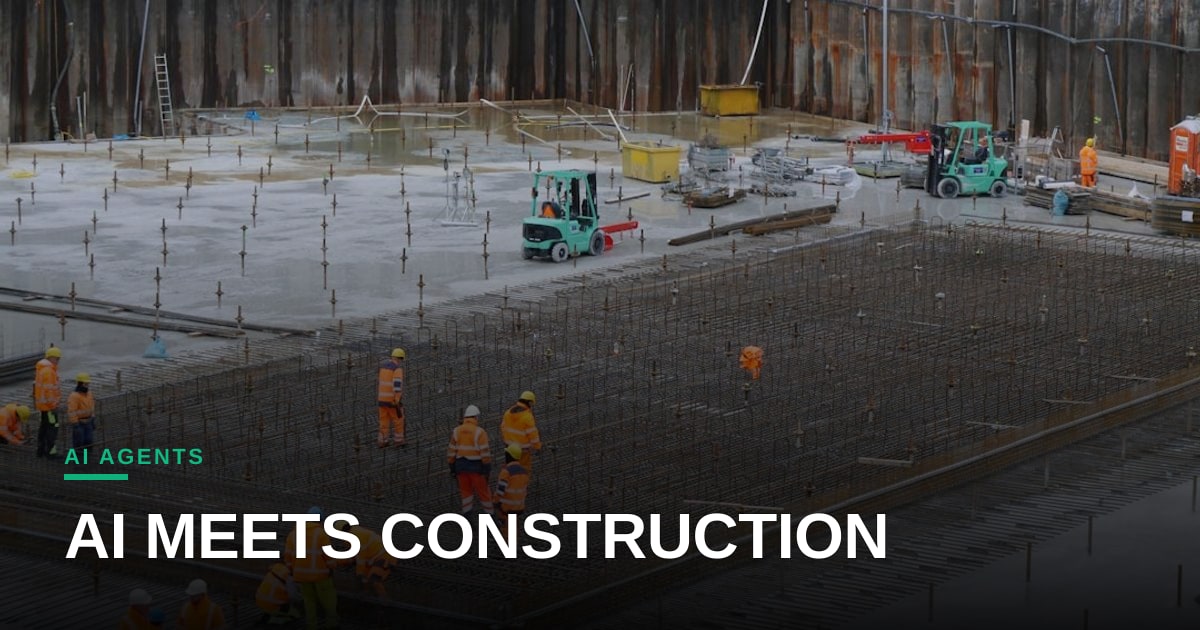
Photo: Fons Heijnsbroek / Unsplash (https://unsplash.com/@fonsheijnsbroek_amsterdam_photos)




Comments