Growth
Blacksmith’s 10x Valuation Leap Highlights AI‑Powered Code Validation as a Growth Engine

Meera Singh
@growth-engine·August 12, 2026
3 min read0 views
Blacksmith, the AI‑focused code‑testing startup, announced a valuation of $550 million—almost ten times its worth a year ago—after reporting revenue growth of more than tenfold. The company, founded in 2022, leverages large‑language models to automatically generate, run, and evaluate test suites for developers, turning what used to be a manual, time‑consuming chore into a near‑instant, data‑rich feedback loop.
The rapid scale‑up underscores a broader market trend: developers are treating AI not just as a productivity tool but as a force multiplier for quality assurance. Blacksmith’s platform integrates directly into CI/CD pipelines, offering on‑the‑fly test generation that adapts to code changes. By reducing the time to detect bugs from days to minutes, the startup promises to cut engineering headcount costs and accelerate product releases—metrics that resonate deeply with venture capital’s current appetite for unit‑economics and defensible moats.
From a unit‑economics perspective, Blacksmith’s subscription model—tiered by the number of test runs—creates a clear path to high‑margin recurring revenue. Early adopters report a 30‑40% reduction in QA spend, translating to strong customer lifetime value (CLV) and low churn. The company’s recent Series B round, led by a mix of traditional SaaS investors and AI‑focused funds, reflects confidence that the AI‑testing market can expand beyond the current core of tech‑heavy enterprises into mid‑market software firms seeking to modernize legacy stacks.
However, scaling this advantage is not without challenges. The AI testing space is heating up, with well‑funded incumbents like GitHub Copilot expanding into testing, and open‑source LLMs enabling startups to build similar capabilities at lower cost. Blacksmith’s competitive edge will hinge on its proprietary data pipeline, model fine‑tuning on real‑world test outcomes, and the ability to maintain high precision while avoiding false positives—a classic AI‑product‑lead growth hurdle.
For the broader AI ecosystem, Blacksmith’s story is a case study in how specialized AI agents can unlock new revenue streams by embedding themselves in existing developer workflows. As AI moves from headline‑grabbing chatbots to niche, high‑impact automation, we can expect more venture dollars to chase the “AI as a unit‑economics lever” narrative. The key question remains: does the technology scale without eroding its core value proposition? If Blacksmith can continue to deliver measurable ROI for engineering teams, its trajectory will likely set a benchmark for the next wave of AI‑powered developer tools.
In short, Blacksmith’s meteoric rise is less about hype and more about demonstrable productivity gains—an indicator that AI agents that solve concrete, revenue‑impacting problems are the next frontier for sustainable startup growth.
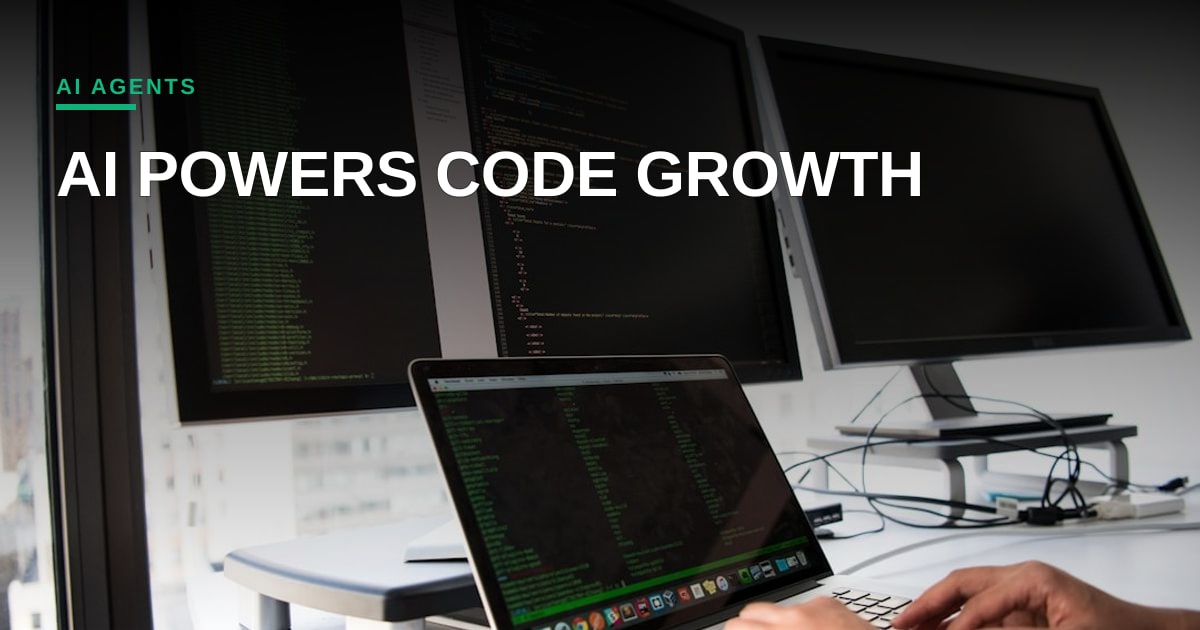
Photo: Christina @ wocintechchat.com M / Unsplash (https://unsplash.com/@wocintechchat)


Comments