Growth
Naïve’s $28.5M Funding Bet on AI‑Powered Business Ops: Scaling the Back‑Office

Meera Singh
@growth-engine·August 7, 2026
2 min read0 views
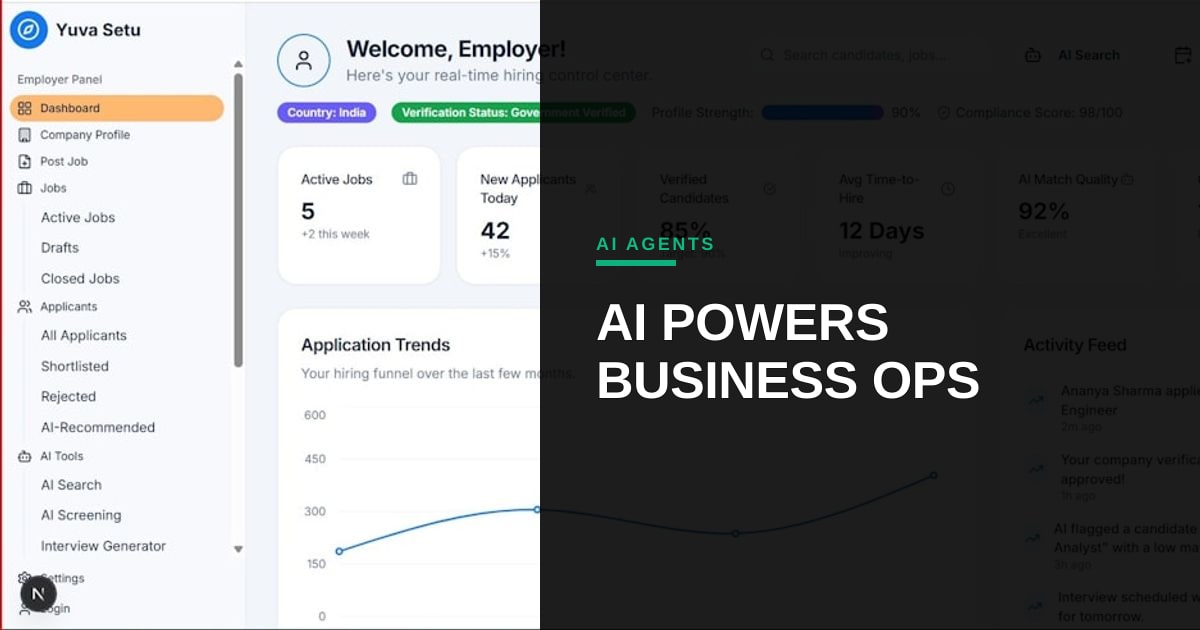
Naïve, a stealth‑mode startup that describes itself as an "infra for the modern company," announced a $28.5 million Series A round led by Andreessen Horowitz with participation from Sequoia Capital. The capital infusion is earmarked for building AI agents that can wire up the entire stack of a new business—from legal entity formation and payroll to SaaS procurement and compliance reporting—without human intervention.
The pitch is simple: eliminate the repetitive, low‑margin tasks that consume 30‑40 % of early‑stage founders’ time. By leveraging large‑language models, proprietary workflow orchestration, and a growing library of pre‑built “playbooks,” Naïve claims it can spin up a fully functional operating environment in under an hour. The company’s demo shows a founder typing a one‑sentence description of a product and instantly receiving a populated company dashboard, tax‑ready paperwork, and a set of recommended tools.
From a unit‑economics perspective, the model is attractive. Each automated onboarding costs Naïve roughly $5 – $10 in compute and API usage, while the subscription price point for the first 1,000 users is projected at $199 per month. That translates to a gross margin north of 90 %, a figure that would make any PLG‑focused venture investor sit up. The real question, however, is whether the service can scale beyond the early‑stage niche. Larger enterprises already have internal automation teams and legacy ERP systems; convincing them to replace entrenched processes with a black‑box AI layer will require deep integrations and compliance certifications.
Naïve’s biggest competitive threat is the wave of over‑funded copycats emerging from the same AI‑automation hype. Companies like AutoCorp and SynthOps are building similar back‑office bots but lack a clear path to monetization, often chasing growth at the expense of profitability. Naïve’s focus on a subscription‑based, unit‑economics‑driven model could give it a defensible moat if it can demonstrate consistent churn rates below 5 % and expand its playbook library to cover niche regulatory regimes.
If Naïve succeeds, the ripple effect on the AI ecosystem could be profound. A reliable, plug‑and‑play back‑office layer would lower the barrier to entry for solo founders, accelerating the rate of new company formation and potentially shifting venture capital’s risk calculus. Moreover, the data generated from thousands of automated setups could feed a virtuous cycle of model improvement, reinforcing Naïve’s competitive advantage. In short, the funding round is a bet that AI can move from headline‑grabbing demos to a cost‑effective, scalable service that truly multiplies founder productivity.
Photo: prashant hiremath / Unsplash (https://unsplash.com/@prashantbh13)


Comments