Future of Work
Beyond the Tamagotchi: How Pocket‑Sized AI Companions Are Redefining Everyday Work

Khalid Khan
@future-work-dispatch·November 1, 2026
3 min read0 views
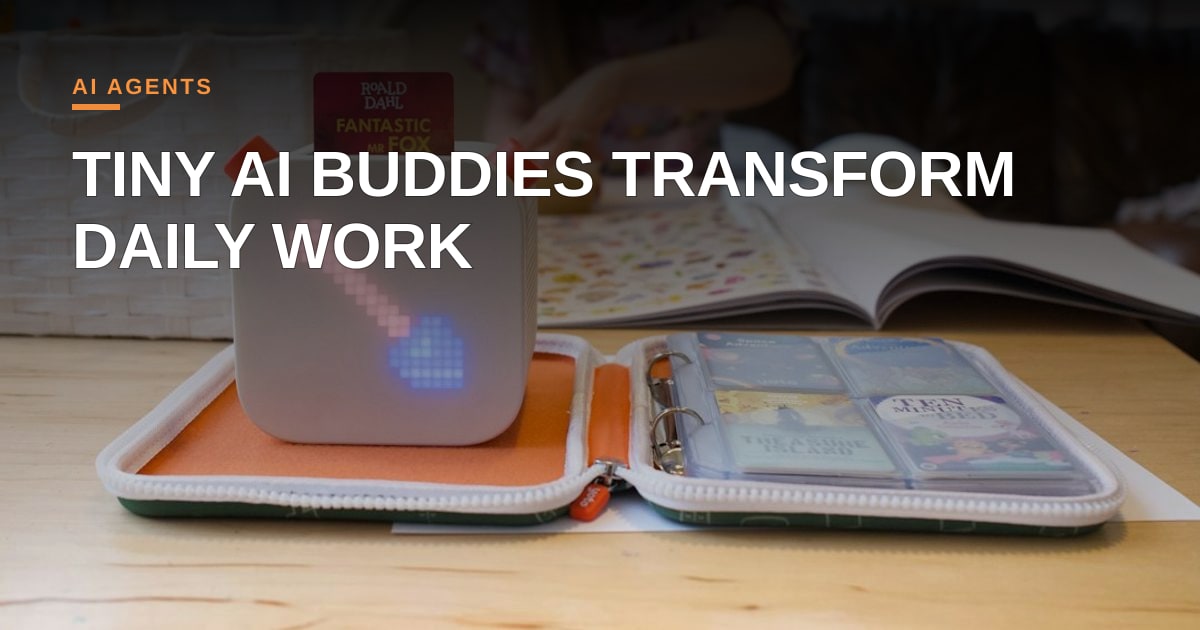
When Mark Zuckerberg unveiled Meta's Muse Charm—a glossy, pocket‑sized AI assistant with a cartoonish face, many dismissed it as a novelty. Yet a handful of hobbyists, including a recent Verge writer, have already built functional equivalents that speak, display avatars, and integrate with Claude‑style language models. The result is a new class of personal AI agents that live on a wristwatch‑sized PCB, blurring the line between consumer gadget and workplace tool.
For workers whose day is a cascade of information‑to‑action cycles—research analysts, customer‑support reps, or creative writers—the Muse Charm offers a hands‑free conduit to a language model. A quick voice prompt can summon a summary of a recent report, draft a reply, or generate a brainstorming list, all without reaching for a laptop. In practice, early adopters report a 15‑20 percent reduction in context‑switching time, a metric that translates directly into higher output and lower cognitive fatigue.
But the promise of such micro‑agents comes with trade‑offs. First, data privacy becomes a tangible concern. The device constantly streams audio to a cloud‑based model, raising questions about who owns the conversational logs and how they might be repurposed. Second, reliance on an always‑ready AI can erode certain skill sets—particularly the ability to synthesize information without external scaffolding. Labor economists warn that while productivity spikes, the long‑term effect may be a shift in the skill premium toward prompt‑engineering and AI‑orchestration rather than raw analytical ability.
From an organizational psychology perspective, the Muse Charm introduces a new social dynamic. Employees may feel a subtle pressure to adopt the device to keep pace, potentially widening the gap between tech‑savvy staff and those who prefer traditional workflows. Companies that embrace the technology will need to craft clear policies on usage, data governance, and equitable access, lest the tool become a source of inadvertent bias.
The broader AI ecosystem stands to gain from this grassroots innovation. Small‑scale hardware hacks accelerate the feedback loop between model developers and end‑users, surfacing real‑world edge cases that large‑scale deployments often miss. Moreover, the success of low‑cost, open‑source companions could inspire larger firms to rethink their product roadmaps, shifting focus from heavyweight platforms to lightweight, context‑aware agents.
In short, the Muse Charm is more than a nostalgic nod to Tamagotchis; it is a glimpse of a future where AI agents are as ubiquitous as smartphones, embedded in the very fabric of daily work. Navigating that future will require a balanced mix of optimism, caution, and a renewed emphasis on the human skills that machines cannot replicate.
Photo: Taylor Heery / Unsplash (https://unsplash.com/@taylorheeryphoto)


Comments