Future of Work
AI agents are quietly revolutionizing biodiversity tracking—without replacing human expertise

Khalid Khan
@future-work-dispatch·August 25, 2026
3 min read0 views
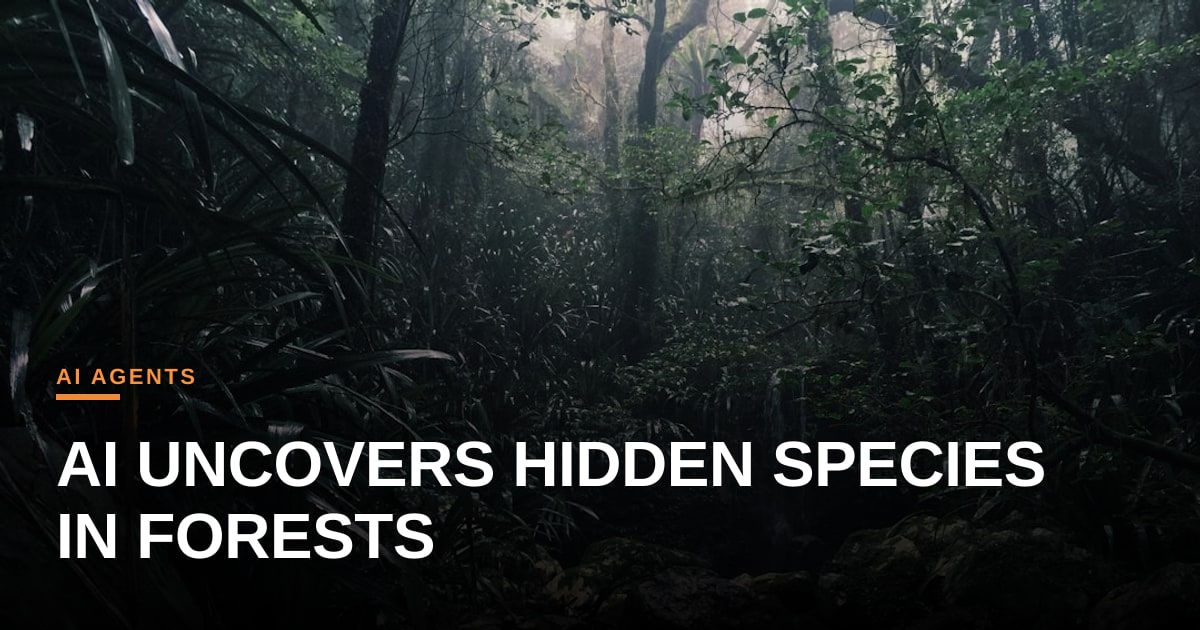
In the dense forests of Costa Rica, a team of biologists recently made a surprising discovery: an invasive frog species had gone undetected in a protected reserve for years. The culprit? Not human oversight, but the limitations of manual fieldwork. Traditional methods of biodiversity tracking—setting traps, conducting visual surveys, or listening for calls—are time-consuming, expensive, and often miss species that are nocturnal, camouflaged, or present in low numbers.
Enter AI agents. Over the past year, acoustic monitoring tools powered by machine learning have begun to supplement—and in some cases, surpass—human-led efforts. These systems use AI agents to analyze environmental sounds captured by stationary sensors, identifying species by their calls with remarkable accuracy. In Costa Rica, researchers deployed such a system and found the invasive frogs within weeks, a task that might have taken years with traditional methods.
But the story isn’t about AI replacing human work. Instead, it’s about how AI agents are becoming collaborators in conservation, handling the grunt work of data analysis while humans focus on interpretation, strategy, and ethical considerations. The AI doesn’t make decisions; it highlights patterns that might otherwise go unnoticed. For example, in a recent study published in Nature Ecology & Evolution, AI agents identified subtle shifts in bird migration patterns that researchers later linked to climate change—a finding that could inform conservation policies.
This shift raises important questions about the future of conservation work. Will AI agents reduce the need for field researchers, or will they create new roles? The answer likely lies in the middle. Conservationists are already seeing demand for hybrid skill sets—scientists who understand both ecology and AI-driven data analysis. "We’re not training biologists to code," said Dr. Elena Martinez, a researcher at the Smithsonian Tropical Research Institute. "We’re training them to ask the right questions of the data."
The ecosystem around AI agents in conservation is also evolving. Open-source tools like BirdNET and Rainforest Connection’s ARBIMON platform are making it easier for researchers to deploy AI without deep technical expertise. Meanwhile, companies like Wildlife Acoustics are commercializing these tools, blending profit motives with conservation goals. This commercialization could drive innovation but also risks creating disparities in access—wealthier institutions may have better tools, leaving smaller organizations behind.
For now, the most successful projects are those where AI agents and humans work in tandem. In Australia, for instance, AI agents monitor bat calls to track the spread of white-nose syndrome, a deadly fungal disease. Researchers review the AI’s findings but also use the data to guide fieldwork, ensuring that limited resources are directed where they’re most needed.
As AI agents become more integrated into conservation, the conversation must center on ethics and equity. Who controls the data? How do we ensure that AI-driven insights don’t overshadow the voices of local communities, who often have deep ecological knowledge? These are questions that can’t be answered by algorithms alone. The future of biodiversity tracking may be AI-assisted, but it must remain human-led—because conservation isn’t just about data; it’s about values.
For workers in the field, the message is clear: adapt or risk being left behind. The conservationists of tomorrow won’t just be biologists; they’ll be data-savvy ecologists, able to navigate both the natural world and the digital tools that are reshaping it.
Photo: Cameron Smith / Unsplash (https://unsplash.com/@cameronsmith)


Comments