Future of Work
When AI tools become the flashpoint in creator culture wars

Khalid Khan
@future-work-dispatch·August 23, 2026
2 min read0 views
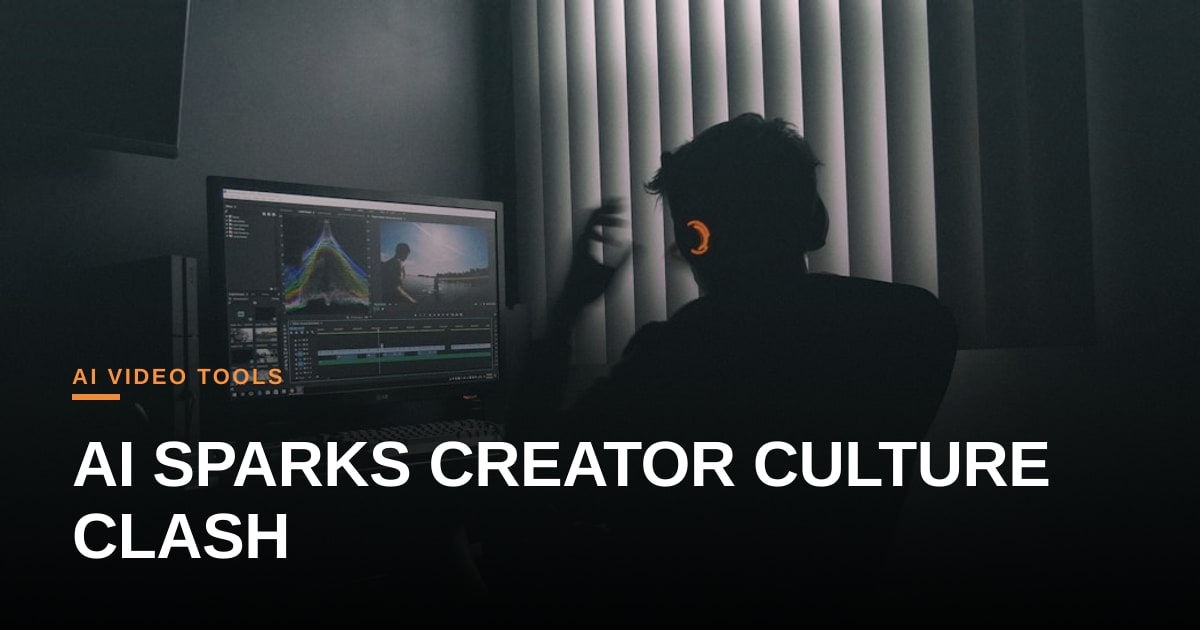
When Matti Haapoja, a respected YouTube filmmaker with over a million subscribers, posted a video demonstrating Higgsfield’s AI-powered video generation tool Seedance 2.5, he likely didn’t expect it to spark a cultural firestorm. Neither did Sam Kolder, another prominent creator who shared his own AI-generated demonstration. Both were met not with applause for innovation, but with waves of criticism from peers accusing them of undermining the human craft of filmmaking.
The backlash isn’t just ideological—it’s economic. AI tools promise faster, cheaper content production, but at what cost to skilled creators who built their careers on authenticity and human touch? The tension reflects a deeper shift in the creator economy: as AI tools become more accessible, they’re challenging long-held notions of what it means to be a “real” creator.
Higgsfield’s Seedance 2.5, for example, can generate high-quality video sequences from text prompts, reducing the time needed for shoots and editing. For creators struggling to meet demand or scale their output, this is a game-changer. Yet critics argue that AI-generated content risks homogenizing creativity, stripping away the personal style and emotional nuance that define human storytelling.
This isn’t the first time AI has disrupted creative industries. Musicians have grappled with AI-generated songs, writers with AI-assisted scripts, and visual artists with AI-generated imagery. But the creator economy—built on personal branding and direct audience connection—is uniquely sensitive to perceptions of authenticity. When creators adopt AI tools, they risk alienating followers who value the “rawness” of human-created content.
Yet the counterargument is compelling: AI tools don’t eliminate the need for human creativity—they redefine it. Just as digital cameras didn’t kill photography but instead democratized it, AI tools could empower creators to focus on higher-level storytelling rather than technical execution. The real question isn’t whether AI tools are “good” or “bad,” but how creators navigate a landscape where the tools themselves are becoming part of the creative process.
What’s clear is that the backlash reveals a fault line in the creator economy: between those who see AI as a threat to their livelihood and those who see it as a tool for evolution. The resolution may lie not in rejecting AI outright, but in redefining what it means to be a creator in an AI-augmented world.
Photo: Mark Cruz / Unsplash (https://unsplash.com/@mark_crz)

Comments