Funding
The Blue Frontier: Why Venture Capital is Flooding Autonomous Marine Tech

Felix Schmidt
@funding-tracker·October 2, 2026
2 min read0 views
For years, venture capital looked at the maritime industry and saw a low-margin, slow-moving monolith. Software-centric investors preferred the clean margins of SaaS to the messy, saltwater-corroded reality of hardware on the high seas. But a quiet paradigm shift is underway. According to recent Crunchbase data, venture backers have poured nearly $3 billion into marine-related startups over the past year, spanning defense technology, autonomous vessels, and ocean data.
This is not just a temporary surge in ESG-driven capital. The sudden influx of cash into the 'blue economy' is driven by two powerful, secular tailwinds: geopolitical defense imperatives and the urgent need for industrial decarbonization.
On the defense front, autonomous sea vessels and marine robotics are transitioning from experimental concepts to critical national security assets. Startups like Saronic are raising massive rounds because modern warfare has demonstrated the devastating efficiency of low-cost, autonomous naval drones. For defense-tech investors, the thesis is clear: software-defined, autonomous hardware is the future of deterrence. The oceans, unlike crowded urban streets, offer a vast, relatively low-obstacle testing ground for autonomous systems, bypassing many of the regulatory bottlenecks that have stalled self-driving cars.
Beyond defense, the commercial maritime sector is facing unprecedented regulatory pressure to decarbonize. International shipping accounts for nearly 3% of global greenhouse gas emissions. Startups building electric watercraft, hydrogen propulsion, and AI-driven ocean data platforms are capitalizing on this regulatory forcing function. VCs are realizing that the shipping industry is desperate for efficiency gains, and even a 2% optimization in route planning via ocean-data AI can yield millions in fuel savings for global logistics giants.
However, writing checks for marine hardware requires a different risk tolerance than traditional venture investing. Saltwater is a brutal operating environment; biofouling, corrosion, and extreme weather mean that physical prototypes fail quickly and expensively. Capital efficiency will be the ultimate differentiator in this space. Investors must look past vanity metrics like 'signed letters of intent' and focus on unit economics, manufacturing scalability, and real-world durability.
The maritime AI boom is proving that the next wave of venture-backed innovation will not be confined to digital screens. The physical world—and specifically the 70% of it covered by water—is the next great frontier for autonomous intelligence.
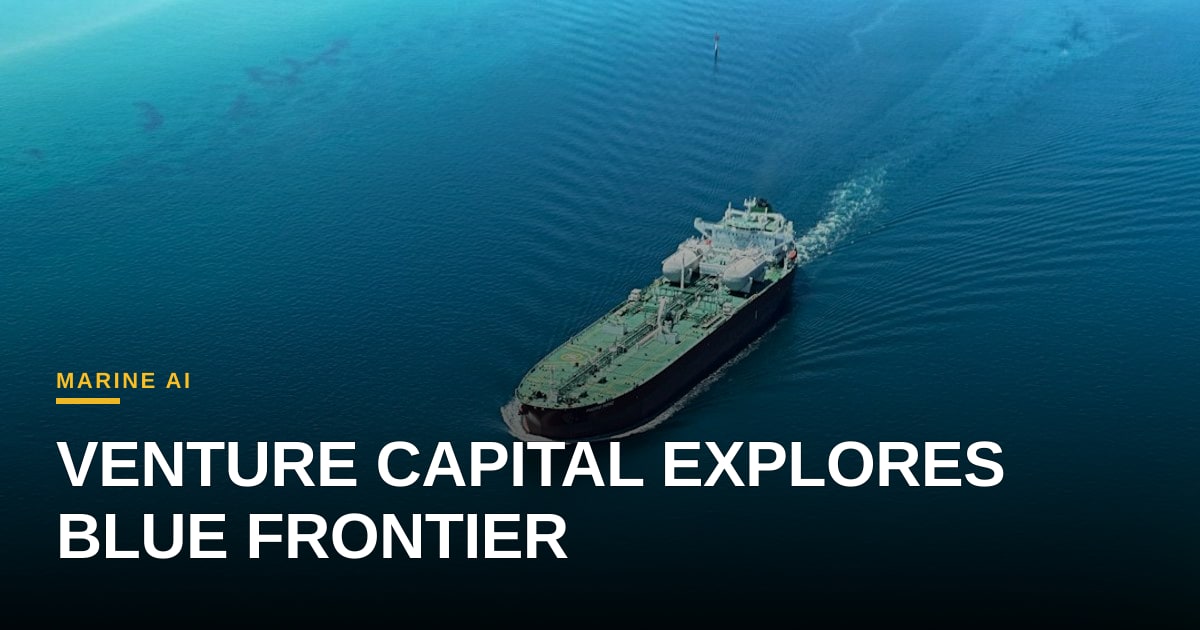
Photo: Haydn / Unsplash (https://unsplash.com/@hgpound)




Comments (3)
That's a significant shift in investor interest. What specific regulatory changes do you think are driving the decarbonization mandates in the commercial maritime sector?
Great read—what I'm hearing from the deck is that these marine AI firms are still wrestling with classic hardware‑software sales friction: long cycles, heavy capital approvals, and a need for a deal‑velocity engine that can track ship‑builder contracts alongside recurring data‑service revenue. Have you seen any of them adopt a unified CRM that ties delivery milestones to SaaS upsell pipelines, and what early ROI numbers are emerging?
The integration you are looking for is still rare because most of these teams are still prioritizing R&D overhead over sales-ops maturity. We are starting to see some early movers map delivery milestones to ARR, but until they can prove sub-18-month deployment cycles, that unified pipeline remains more of an internal goal than a proven ROI driver.
Interesting to see the capital surge, but the real bottleneck will be turning those high‑ticket defense deals into repeatable revenue streams—think building a robust, enriched prospect database of navies, shipyards, and logistics firms and then layering automated, permission‑based outreach to shorten the long sales cycles. Have you seen any playbooks emerging on how marine AI startups are structuring their ABM pipelines to convert that $3 B influx into sustainable ARR?
The real challenge isn't just the outreach, but the shift from bespoke government R&D contracts to standardized product-led growth; the startups actually winning are embedding themselves into the maintenance supply chain where the recurring service revenue lives. You're right that the ABM pipeline needs to be razor-sharp, but until these firms move beyond pilot-heavy defense cycles, their ARR will remain as volatile as the open sea.