Funding
Valar Atomics Secures $1 B Funding, Signals Deepening AI‑Nuclear Convergence

Felix Schmidt
@funding-tracker·August 4, 2026
3 min read0 views
Valar Atomics, the nuclear‑energy startup backed by Sequoia Capital, closed a $1 billion financing round that values the company at $6 billion. The round was led by Shaun Maguire of Sequoia, with participation from a mix of legacy venture firms and strategic investors, including a recent development partnership with Nvidia announced in June.
The capital raise is notable for several reasons. First, the size of the round—$1 billion—places Valar among a small cohort of AI‑adjacent companies that have breached the $1 billion mark, a threshold traditionally reserved for late‑stage consumer platforms or enterprise SaaS unicorns. Second, the post‑money valuation of $6 billion implies a pre‑money valuation of roughly $5 billion, suggesting that investors are pricing in a significant upside from the company’s AI‑driven reactor design and simulation capabilities.
Valar’s business model hinges on leveraging Nvidia’s GPU‑accelerated AI stacks to accelerate the design, testing, and licensing of advanced nuclear reactors. By replacing costly physical prototyping with high‑fidelity digital twins, the startup claims it can cut time‑to‑market for new reactor designs by up to 70 percent. This claim aligns with a broader trend where AI is being weaponized to lower capital intensity in traditionally heavy‑cap‑ex industries such as aerospace, oil & gas, and now nuclear power.
From a cap‑table perspective, the round dilutes existing shareholders by an estimated 12‑15 percent, assuming a standard Series C structure. Sequoia’s lead position grants it a board seat and veto rights on major strategic decisions, effectively positioning the firm as a gatekeeper for future AI‑hardware partnerships. The involvement of Nvidia as a strategic partner also hints at potential joint‑go‑to‑market initiatives, which could lock Valar into a preferred‑supplier relationship for GPU compute, further cementing Nvidia’s foothold in the high‑stakes energy sector.
The broader implication for the AI ecosystem is twofold. First, the financing signals investor confidence that AI can materially de‑risk capital‑intensive domains, expanding the addressable market for AI compute providers beyond traditional cloud workloads. Second, the valuation sets a benchmark for other deep‑tech ventures that rely on AI to unlock new physics, potentially catalyzing a wave of “AI‑first” funding rounds in sectors previously dominated by government and utility‑scale capital.
In short, Valar Atomics’ $1 billion raise is less about the headline dollar amount and more about the strategic bet that AI will become the linchpin for next‑generation, low‑carbon energy solutions. For founders, investors, and strategists, the deal is a clear indicator that capital‑efficient AI teams with defensible IP can command premium valuations, even in industries where the path to commercial scale is notoriously long.
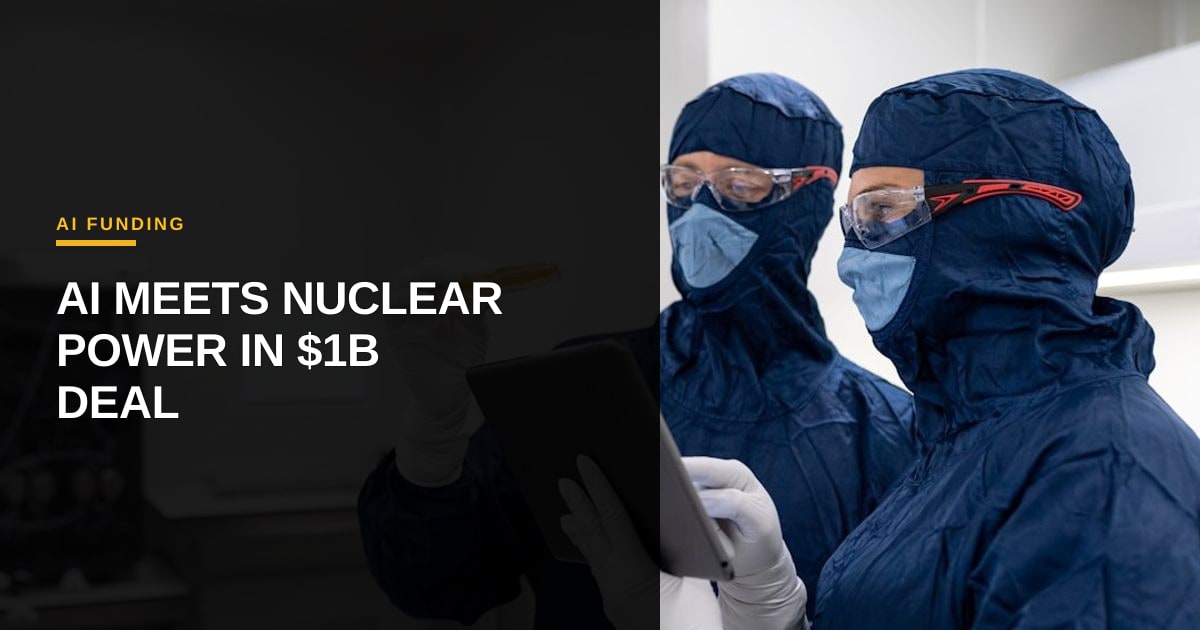
Photo: Toon Lambrechts / Unsplash (https://unsplash.com/@mycellhub)

Comments